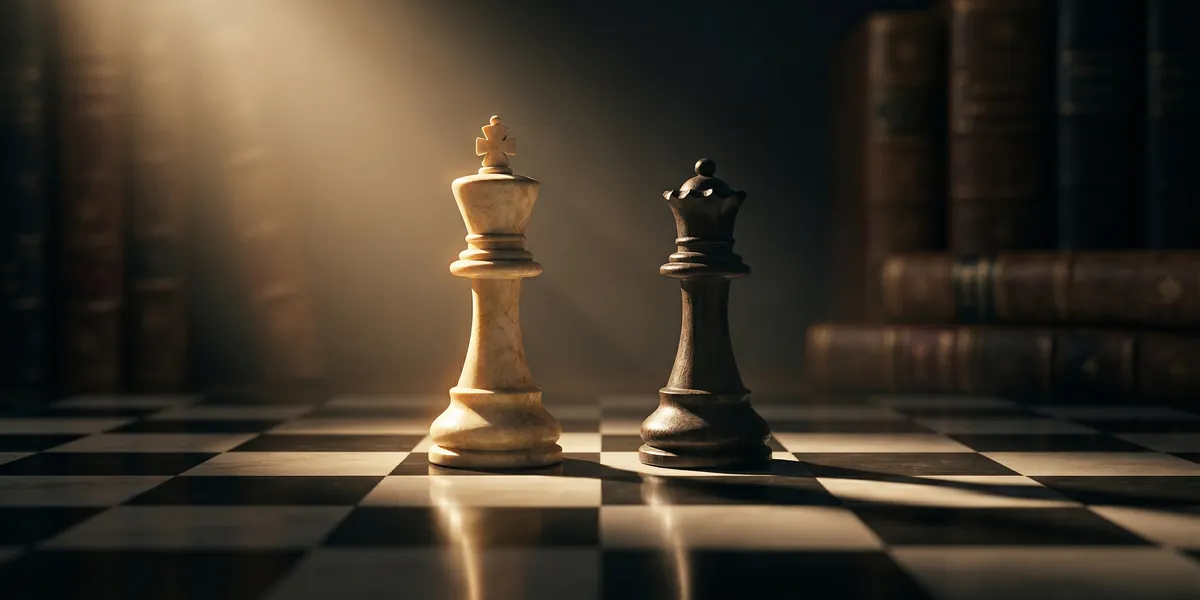
An antagonist is any character, force, or obstacle that opposes the protagonist and creates conflict in a story. Without one, your protagonist has nothing to struggle against — and your reader has no reason to keep turning pages.
The word comes from the Greek antagonistes, meaning “opponent” or “rival.” But an antagonist is not always a villain. They can be a well-meaning friend, an unforgiving society, or even the protagonist’s own fear. What defines them is opposition — they stand between your main character and their goal.
This guide breaks down the six types of antagonists, walks through famous examples from literature, and shows you how to write an antagonist that makes your story unforgettable.
The Antagonist vs. the Villain
Before we go further, an important distinction: antagonists and villains are not the same thing.
A villain is a character with evil or immoral intent. A antagonist is whoever opposes the protagonist. Sometimes these overlap — Voldemort is both a villain and an antagonist. But Mr. Darcy in Pride and Prejudice is an antagonist without being a villain. His goals simply conflict with Elizabeth Bennet’s.
This distinction matters because it opens up your storytelling. Not every story needs a cackling villain. Some of the most compelling fiction pits good people against each other, against systems, or against themselves.
6 Types of Antagonists
1. The Villain
The classic type. A villain antagonist has selfish or destructive intentions and actively works against the protagonist.
Example: Voldemort in the Harry Potter series seeks immortality and domination. His values are the direct opposite of Harry’s, and his actions drive every major conflict in the story.
When to use this type: Stories with clear moral stakes — epic fantasy, thrillers, horror. The villain works best when their worldview is coherent, even if it’s repugnant.
2. The Rival
A rival antagonist shares the protagonist’s world but competes for the same prize. They may not be evil — just ambitious, skilled, or operating under different values.
Example: Draco Malfoy functions as Harry’s rival at Hogwarts. In sports fiction, the opposing team captain fills this role. In business stories, the competing entrepreneur.
When to use this type: Coming-of-age stories, competition narratives, workplace fiction. Rivals create tension without requiring villainy.
3. The Force of Nature
Sometimes the antagonist is not a person at all. Storms, disease, famine, or the wilderness itself can oppose your protagonist with indifferent, overwhelming power.
Example: The sea in Ernest Hemingway’s The Old Man and the Sea is the central opposing force. Santiago’s struggle is not against a villain but against the raw power of nature.
When to use this type: Survival stories, disaster narratives, literary fiction exploring humanity’s relationship with the natural world.
4. Society and Institutions
An entire social structure — government, religion, class system, corporate culture — can serve as the antagonist. The protagonist fights not one person but an entire system.
Example: The totalitarian government in George Orwell’s 1984 is the antagonist. Winston Smith’s enemy is not just Big Brother the figurehead but the entire surveillance state.
When to use this type: Dystopian fiction, social commentary, stories about oppression or injustice. This type works when you want to explore systemic problems rather than individual evil.
5. The Internal Antagonist (Self)
The protagonist’s own fears, flaws, addictions, or trauma can be the primary opposing force. The battle is internal.
Example: In Fyodor Dostoevsky’s Crime and Punishment, Raskolnikov’s guilt and psychological torment are his greatest opponents. The external detective pursuing him matters less than the war inside his own mind.
When to use this type: Literary fiction, character studies, stories about personal growth or self-destruction. Internal antagonists pair well with external ones for layered conflict.
6. The Anti-Villain
An anti-villain has noble goals but uses questionable methods — or their values genuinely clash with the protagonist’s despite good intentions. They believe they are right.
Example: Inspector Javert in Les Miserables relentlessly pursues Jean Valjean not out of cruelty but out of a rigid devotion to justice. He is a good man taken to an extreme.
When to use this type: Morally complex stories, political fiction, any narrative where you want readers to understand (or even sympathize with) the opposing side.
Famous Antagonists and What Makes Them Work
Understanding why certain antagonists endure helps you write better ones.
| Antagonist | Story | Type | Why It Works |
|---|---|---|---|
| Voldemort | Harry Potter | Villain | Represents the fear of death taken to its extreme |
| Sauron | The Lord of the Rings | Villain / Force | Embodies the corrupting nature of absolute power |
| Professor Moriarty | Sherlock Holmes | Rival | An intellectual equal who mirrors the hero’s gifts |
| The Capitol | The Hunger Games | Society | A system that forces children to kill each other |
| The White Whale | Moby-Dick | Force of Nature | An unknowable force that exposes human obsession |
| Amy Dunne | Gone Girl | Villain / Rival | A brilliant manipulator hiding behind a facade |
Notice the pattern: the best antagonists are not just obstacles. They reveal something about the protagonist. Moriarty shows us Holmes’ capacity for obsession. The Capitol reveals Katniss’s courage and her trauma. Moby Dick exposes Ahab’s destructive pride.
How to Write a Compelling Antagonist
Give Them a Believable Motivation
Your antagonist needs a reason for what they do — one that makes sense from their perspective. Even if the reader disagrees with their methods, they should understand the logic.
Ask yourself: What does my antagonist want, and why do they believe they’re justified?
A villain who wants power “because they’re evil” is flat. A villain who wants power because they watched their family destroyed by chaos, and they believe only absolute control can prevent it from happening again — that character has depth.
Make Them Formidable
An antagonist your protagonist can easily defeat creates no tension. Your antagonist should be strong where your protagonist is weak, or should have advantages — resources, knowledge, authority — that make victory uncertain.
The best antagonists force the protagonist to grow. If your hero can beat the antagonist without changing, the antagonist is too weak.
Let Them Be Right About Something
The most memorable antagonists have a point. Thanos believes overpopulation threatens all life — he is not wrong about the problem, only the solution. Javert believes in law and order — admirable values taken too far.
When your antagonist is partially right, your protagonist cannot simply dismiss them. They must engage with the opposing idea, which creates richer conflict in your fiction.
Give Them Their Own Arc
Static antagonists can work in genre fiction, but dynamic ones elevate any story. Let your antagonist change — become more dangerous, more desperate, or even more sympathetic as the story progresses.
A strong antagonist character arc can mirror or invert the protagonist’s arc. As the hero grows stronger, perhaps the villain unravels. As the hero gains clarity, perhaps the antagonist loses theirs.
Antagonist vs. Protagonist: The Essential Relationship
The protagonist and antagonist define each other. A protagonist is only as compelling as the forces they struggle against. Consider how these pairs work:
- Harry and Voldemort: Both orphans shaped by prophecy, choosing opposite responses to powerlessness
- Sherlock and Moriarty: Both geniuses, one building order and one building chaos
- Elizabeth and Darcy: Both proud, both prejudiced, forced to see themselves clearly
When building your story structure, think of the protagonist and antagonist as two halves of the same thematic argument. Your protagonist represents one answer to the story’s central question. Your antagonist represents the other.
This opposition drives your rising action, shapes your climax, and determines whether your resolution feels earned.
Common Mistakes When Writing Antagonists
- Making them evil for evil’s sake. Give them reasons. Even simple ones.
- Forgetting about them for long stretches. Your antagonist should be exerting pressure on the story even when they are offstage. Let their influence be felt.
- Making them incompetent. If the antagonist keeps failing through stupidity, the protagonist’s victory means nothing.
- Confusing “antagonist” with “unlikable.” An antagonist can be charming, funny, even sympathetic. Likability and opposition are separate axes.
- Using only one type. The strongest stories layer antagonist types. A villain antagonist (external) combined with an internal antagonist (the hero’s self-doubt) creates multi-dimensional conflict.
FAQ
Can a story have more than one antagonist?
Yes. Many stories feature a primary antagonist and secondary ones. Harry Potter has Voldemort as the overarching antagonist, Draco as a rival, and the Ministry of Magic as a societal antagonist. Layering types creates richer conflict.
Can the protagonist also be the antagonist?
When the main character’s greatest obstacle is themselves — their addiction, fear, or self-destructive behavior — they function as their own antagonist. This is common in literary fiction and character-driven stories.
What is the difference between an antagonist and a foil?
A foil is a character who contrasts with the protagonist to highlight certain qualities. An antagonist actively opposes the protagonist. A character can be both (like Draco Malfoy), but a foil does not have to create conflict. Watson is a foil to Holmes but not an antagonist.
Does every story need an antagonist?
Nearly every story needs some form of opposition, but it does not have to be a traditional antagonist character. Slice-of-life fiction may use internal conflict or situational obstacles instead of a defined antagonist. However, stories without any form of opposition tend to feel flat.