Dramatic irony occurs when the audience knows something that the characters do not. It is one of the oldest storytelling devices in existence — Sophocles used it 2,500 years ago — and it remains one of the most reliable ways to generate tension, dread, and emotional power on the page.
The reader knows the bomb is under the table. The characters order lunch. Every word of their casual conversation becomes charged with the knowledge they lack. That charge is dramatic irony.
How dramatic irony works
Dramatic irony requires two conditions:
-
The audience possesses critical information. This information must matter — it must change how the audience interprets the scene.
-
The characters lack that information. They act, speak, and decide based on incomplete understanding.
The tension lives in the gap between what the reader knows and what the character believes. Every action the character takes carries a double meaning — what it means to the character, and what it means to the reader who knows the truth.
This is not the same as a plot twist. A plot twist surprises the reader. Dramatic irony tortures the reader slowly. Both are effective. They work on entirely different mechanisms.
Famous examples
Oedipus Rex — Sophocles
The audience knows from the opening that Oedipus killed his father and married his mother. Oedipus does not. He launches an investigation to find the killer who brought a plague upon Thebes, and every step of that investigation brings him closer to the truth about himself.
When Oedipus declares that he will punish the murderer and drive him from the city, the audience understands the horror of what he is actually promising. Oedipus is pronouncing his own sentence. He just does not know it yet.
The entire play is a sustained exercise in dramatic irony. The investigation is the tragedy. The audience watches a man destroy himself with the very intelligence and determination that make him admirable.
Romeo and Juliet — Shakespeare
Romeo enters the Capulet tomb and sees Juliet, whom the audience knows is not dead but sleeping under the effect of Friar Laurence’s potion. Romeo does not know this. He speaks to her, grieves, takes poison, and dies.
Juliet wakes to find Romeo dead beside her.
The audience wants to intervene. They want to shout the information that would save both lives. The impossibility of that intervention is what makes the scene devastating. Shakespeare gives the audience the power of knowledge and the powerlessness of being unable to act on it.
Othello — Shakespeare
The audience watches Iago construct his lies from the very beginning. Every manipulation is visible. When Othello calls Iago “honest Iago,” the audience winces because they know the full extent of his dishonesty.
Shakespeare sustains this irony across five acts. Scene after scene, Othello trusts the man destroying him. The dramatic irony does not produce a single shock — it produces continuous dread. The reader is trapped in the audience, watching a catastrophe unfold in slow motion.
”The Cask of Amontillado” — Poe
The narrator, Montresor, tells the reader in the first paragraph that he intends to murder Fortunato. Fortunato does not know this. He follows Montresor into the catacombs willingly, drawn by the promise of rare wine.
Every friendly gesture from Montresor — every toast, every expression of concern for Fortunato’s health — is laced with the reader’s knowledge of what awaits. The horror is not the murder itself. It is watching Fortunato walk cheerfully toward his own death.
Horror fiction and film
The horror genre depends on dramatic irony more than any other. The audience sees the killer in the closet. The character enters the room. The audience hears the ominous music. The character hears nothing.
This is Hitchcock’s distinction between surprise and suspense: “If you show the audience that there is a bomb under a table and then the bomb goes off, you have fifteen seconds of surprise. If you show the audience the bomb under the table and then show the characters having an ordinary conversation for ten minutes, you have ten minutes of suspense.”
Dramatic irony converts information into time. The longer the gap between what the audience knows and when the character discovers it, the greater the tension.
Dramatic irony vs. suspense
These two concepts overlap but are not identical.
Suspense is uncertainty about the outcome. The reader does not know what will happen and reads forward to find out.
Dramatic irony is certainty about the reader’s knowledge combined with uncertainty about when the character will learn. The reader knows what is true but does not know when the truth will surface — or what will happen when it does.
Both create forward momentum. But suspense asks “what will happen?” while dramatic irony asks “when will they find out — and what will it cost?”
You can use both simultaneously. The reader knows the letter contains devastating news (dramatic irony). They do not know when the character will open it or how they will respond (suspense). The combination is more powerful than either alone.
How to set it up in your fiction
Give the reader information early. Dramatic irony requires the reader to know something before the character does. This means you need a scene, a revelation, or a piece of evidence that the reader receives but the relevant character does not.
Techniques for delivering this information:
- Multiple POVs: Show one character’s actions from another character’s perspective. The villain’s plan, witnessed by the reader through the villain’s POV, becomes dramatic irony in every scene with the unsuspecting protagonist.
- Prologues and flash-forwards: Open with an outcome, then rewind. The reader knows where things end and watches the characters march toward that ending.
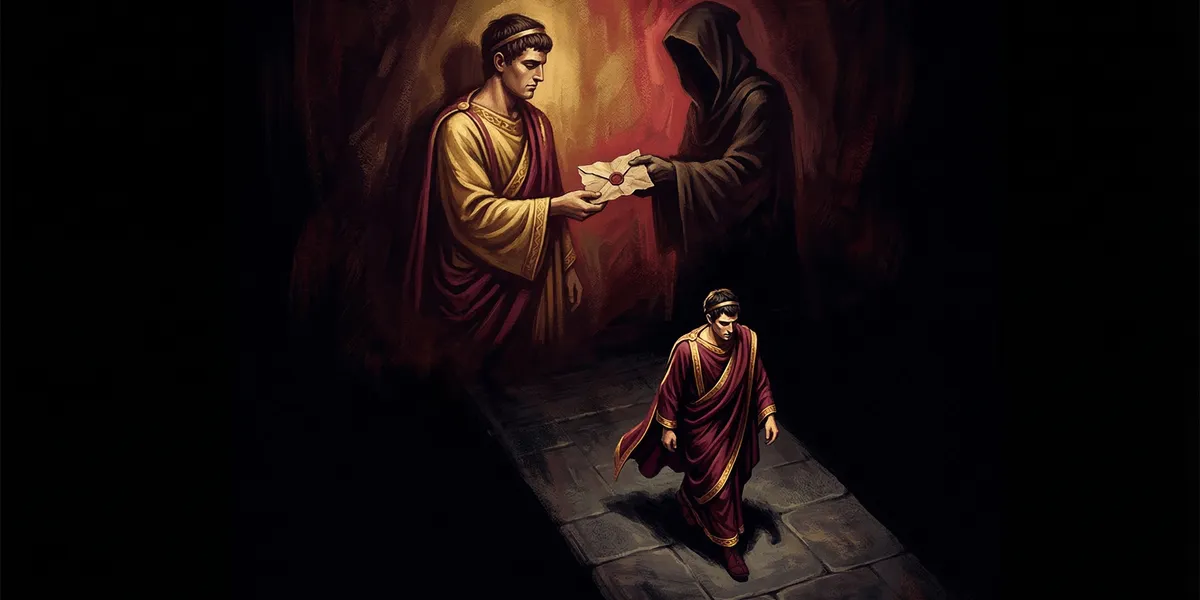
- Dramatic revelation to the reader: A letter discovered, a conversation overheard, a secret shown — anything that gives the reader knowledge a character lacks.
Sustain the gap. Do not resolve the irony quickly. The longer the character remains ignorant, the more tension accumulates. Write scenes where the character almost discovers the truth but does not. Write scenes where they say things that carry unintentional double meaning.
Make the character’s ignorance active. The character should not just lack information — they should be making decisions based on their incomplete understanding. These decisions should be reasonable, even admirable. The tragedy of dramatic irony is that the character is not stupid. They are simply working with the wrong information.
Plan the reveal. The moment the character finally learns what the reader already knows is the climactic release of all accumulated tension. This scene must land. It should feel inevitable and devastating — the reader has been waiting for it and dreading it simultaneously.
For the broader context of all three irony types, see irony in literature. For techniques on building tension and dread, see how to write suspense. For a related technique of planting information early, see foreshadowing.