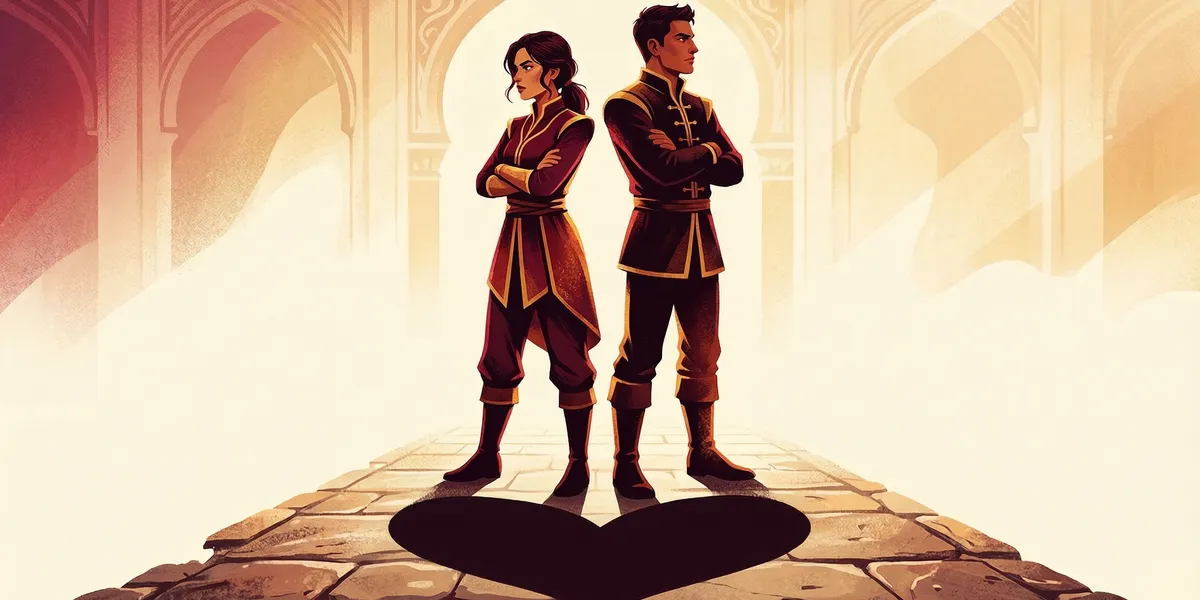
Enemies to lovers is the trope where two characters who genuinely dislike each other — or stand in direct opposition — slowly, reluctantly, inevitably fall in love. It is romance at its most electric because every interaction carries dual voltage: conflict and attraction running through the same wire.
The reason it works is simple. Hate requires attention. You cannot despise someone you are indifferent to. And attention, in fiction, is the raw material of chemistry.
What Makes Enemies to Lovers Different
This is not two people who mildly annoy each other. Real enemies-to-lovers stories require genuine animosity — opposing goals, clashing values, or a history that makes warmth feel impossible. The gap between where they start and where they end up is what gives the trope its emotional power.
Elizabeth Bennet does not find Darcy slightly irritating. She finds him morally repugnant. He insulted her family, undermined her sister’s happiness, and embodied every form of aristocratic arrogance she despises. That is why the turn hits so hard. The distance the characters travel is what makes the destination satisfying.
The trope works across every subgenre. Contemporary romance gives you rival coworkers and competing businesses. Fantasy gives you warriors on opposite sides of a war. Historical gives you arranged marriages between feuding families. The setting changes. The emotional engine stays the same.
Why Readers Love It
Three forces make enemies to lovers irresistible to readers.
Tension equals chemistry. When two characters argue, challenge each other, and refuse to back down, the energy between them is palpable. Readers feel the friction. And friction, in romance, reads as heat. A well-written argument between enemies can be more intimate than a love scene between strangers.
The transformation is the story. Readers know the characters will fall in love — the genre promises that. What they do not know is how two people who seem fundamentally incompatible will find their way to each other. That question drives every page.
Vulnerability hits harder. When a character who has shown nothing but armor finally lets someone see underneath it, the emotional impact is enormous. The first moment of genuine kindness between enemies carries more weight than a hundred declarations of love between characters who have always been nice to each other.
The Key Beats
Every strong enemies-to-lovers story moves through a recognizable emotional arc. The pacing varies, but the beats stay consistent.
The Initial Conflict
The characters meet and the animosity is immediate and justified. This is where most writers make their first mistake — making the conflict too shallow. “They got off on the wrong foot” is not enough. The best enemies-to-lovers setups create conflict rooted in genuine opposition.
They want the same promotion. They represent opposing sides of a legal case. One of them did something that genuinely hurt the other. The hate has to feel earned, or the love will feel cheap.
Forced Interaction
Something keeps pulling them into each other’s orbit. They share a workspace, a mission, a friend group, a forced proximity situation. They cannot simply walk away. This is crucial — without repeated interaction, there is no opportunity for the walls to crack.
Grudging Respect
They begin to notice things that do not fit their narrative. The person they despise is unexpectedly kind to a stranger. Fiercely loyal to a friend. Quietly competent in a way they cannot dismiss. The hate starts developing hairline fractures.
This beat works best when it is involuntary. The character does not want to admire their enemy. They resent noticing. But they cannot unsee it.
The Moment They See Each Other Differently
One scene changes everything. It might be a moment of vulnerability — the enemy breaks down, reveals a wound, shows the person underneath the armor. It might be an act of unexpected sacrifice. Whatever it is, the protagonist suddenly sees their enemy as a full human being, and the old narrative collapses.
This is the pivot point of the entire trope. Everything before it builds tension. Everything after it builds longing.
Denial
The character fights the shift. They do not want to feel this. Falling for your enemy is inconvenient, confusing, and threatens everything you believed about yourself and them. The internal resistance creates some of the best scenes in the genre — characters being cruel because they are scared, picking fights because the alternative is admitting what they feel.
Surrender
The moment they stop fighting it. The first kiss, the confession, the scene where one of them finally says what has been building for the entire book. If you have earned it — if the hate was real, the turn was gradual, and the vulnerability was honest — this moment will make your reader’s chest ache.
Famous Examples Worth Studying
Pride and Prejudice by Jane Austen — The template. Elizabeth and Darcy’s journey from mutual contempt to mutual understanding is the gold standard. Study how Austen uses misunderstanding as fuel and how Darcy’s letter is the turning point.
The Hating Game by Sally Thorne — A modern office rivals story that demonstrates how to keep the banter sharp and the tension building across every chapter. The elevator scene is a masterclass in proximity as weapon.
Red, White & Royal Blue by Casey McQuiston — Enemies to lovers across a political divide. Shows how the trope works when the initial conflict is public and the falling happens in private.
The Cruel Prince by Holly Black — Fantasy enemies to lovers where the power dynamics shift constantly. Demonstrates that the trope can carry real danger, not just verbal sparring.
How to Write It Well
Make the hate justified. Your reader needs to understand why these characters despise each other. If the animosity feels arbitrary, the entire arc falls apart. Give them real reasons — competing goals, genuine harm done, fundamental value clashes.
Do not rush the turn. The slow erosion of hatred is the whole point. If your characters go from enemies to kissing in three chapters, you have skipped the best part. Let the grudging respect simmer. Let the denial stretch. Readers came for the tension — give it to them.
The first kind moment is everything. When one enemy does something unexpectedly gentle for the other — defends them publicly, remembers a small detail, shows up when no one else did — that moment should land like a thunderclap. Earn it by making kindness feel genuinely surprising between these two people.
Let the arguments have substance. The best enemies-to-lovers banter is not just witty insults. It reveals character. Each argument should teach the reader something new about who these people are and what they care about.
Both characters need to change. The turn cannot be one-sided. If only one character evolves while the other was secretly wonderful all along, you lose the transformative power of the trope. Both people need to grow. Both need to be wrong about something.
Common Mistakes
The hate is just mild annoyance. If your characters are mildly snarky with each other but there is no real conflict, you are writing banter, not enemies to lovers. The animosity needs teeth.
No real reason for the conflict. “They just rubbed each other the wrong way” is not a foundation for a hate-to-love arc. Ground the conflict in something concrete.
One character is clearly right. If one person is obviously the villain and the other is obviously the hero, you do not have enemies to lovers. You have a bully romance. Both characters need to have a point, even if both are also wrong.
Rushing past the black moment. The scene where the relationship seems destroyed — where old wounds reopen and the characters retreat to their corners — needs to breathe. Do not resolve it in two pages. Let the reader sit in the pain.
Writing the Trope with Structure
The enemies-to-lovers arc maps naturally onto the romance beat sheet because the trope has its own built-in escalation. The meet cute is a meet hostile. The midpoint escalation is the moment the character realizes they are falling. The black moment often involves a reversion — one character retreating back behind enemy lines because the vulnerability feels too dangerous.
If you are writing enemies to lovers and want structural support for the arc, Chapter’s fiction software includes a romance beat sheet, trope library, and heat-level controls that help you pace the tension from first clash to final surrender. Sarah M. used it to go from idea to published romance in five days — her book hit number twelve in Romance Contemporary on Amazon.