Findaway Voices pricing is simple on paper: $0 to register, and you keep 80% of every royalty the platform receives from its retail and library partners. The service now runs as Voices by INaudio, and it makes its money from that 20% cut, not from upfront fees.
The part most authors miss is that 80% applies to what the retailer pays, not to your list price. Every figure below comes from INaudio’s own help center, checked October 2026.
In this breakdown, you’ll get:
- What Findaway Voices charges, and what it does not
- The real per-sale payout by channel, with worked numbers
- How list pricing, $0 pricing, and promotions work
- Where Findaway Voices beats Chapter, and where Chapter fits in
Here’s the money, line by line.
How Much Does Findaway Voices Cost?
Findaway Voices costs nothing upfront. The Voices by INaudio site offers free registration, and the platform earns a 20% share of the royalties it collects for you. There is no subscription, no per-title fee, and no exclusivity contract.
A quick name check, since it confuses everyone. Spotify bought Findaway in 2022, then sold the wide-distribution business back to Findaway’s original founders in 2025 under the INaudio name. Our Findaway Voices review covers that timeline in full.
| Cost item | Findaway Voices (Voices by INaudio) |
|---|---|
| Account registration | Free |
| Upload and distribution | No upfront charge found on official pages |
| Platform share | 20% of royalties received from partners |
| Your share | 80% of royalties received from partners |
| Exclusivity | None |
| Rights | You keep 100% |
| Production (narration) | Your cost, arranged separately |
The exclusivity and rights lines come straight from INaudio’s What makes Voices by INaudio different? article.
What Royalty Does Findaway Voices Pay?
Findaway Voices pays you 80% of the royalties it receives from each partner. Those partners pay INaudio a share of your list price or of their revenue, depending on the business model. According to INaudio’s per-sale earnings article, partner rates fall into three ranges:
| Sales model | What INaudio receives | What you keep (80% of that) |
|---|---|---|
| À la carte (single purchase) | 40% to 50% of list price | 32% to 40% of list price |
| Subscription | 30% to 40% of list price | 24% to 32% of list price |
| Revenue share | 25% to 45% of revenue receipts | 20% to 36% of revenue receipts |
Library lending runs on separate models, such as cost per checkout. INaudio’s cost per checkout article does not publish rates and points you to your distribution agreement instead.
What Do You Actually Earn Per Sale?
On a $20 audiobook, you earn roughly $4.80 to $8.00 per sale through Findaway Voices, depending on the channel. That is the 80% share applied to what each retailer pays INaudio, not to the $20 sticker price.
Here is the math for a $20 list price:
- À la carte at 50%: retailer pays $10, INaudio keeps $2, you get $8.00
- À la carte at 40%: retailer pays $8, INaudio keeps $1.60, you get $6.40
- Subscription at 40%: retailer pays $8, you get $6.40
- Subscription at 30%: retailer pays $6, you get $4.80
Revenue-share and pool subscriptions pay from a shared pot, so per-listen income varies month to month. You cannot predict those channels from list price alone.
For context on choosing that $20 number in the first place, our audiobook pricing guide breaks down price bands by length and genre.
Who Sets the Price on Findaway Voices?
You set your audiobook’s list price on Findaway Voices, and INaudio sends it downstream to every retailer that lets publishers set pricing. For most partners, your royalty is calculated from that list price, even when the store discounts the book to shoppers.
INaudio’s list price article adds three useful details:
- A pricing calculator on the Metadata tab suggests retail and library list prices based on length, genre, and fiction or nonfiction
- Those suggestions are optional, and you can change your price later to experiment
- Payment is based on list price for “most” partners, not all of them
Audible is the big exception. It ignores publisher-set prices and sets its own consumer price, which is the same reason ACX authors don’t control their price either.
Can You Set a $0 Price?
Yes, Findaway Voices lets you list an audiobook at $0. INaudio’s $0 pricing article says Apple, Barnes and Noble, Chirp, and Downpour accept free titles. OverDrive does not, and pool or subscription partners such as Storytel, Kobo, Nextory, and Spotify’s pool simply ignore the free price.
Can You Run Discounts?
Yes. INaudio supports promotional pricing at Apple, Barnes and Noble, Chirp, and Spotify, set from the Marketing tab. That makes a launch discount or series-starter sale something you can actually schedule.
When Does Findaway Voices Pay You?
Findaway Voices pays monthly, within 30 days of receiving money from each retailer. INaudio’s payment article notes that most sellers report monthly, while a few report quarterly, so some income arrives later than the sale.
Minimum payout thresholds depend on the payment method you choose. INaudio lists them inside your Payment Profile rather than on a public page, so check there before you plan around a first payout date.
What Findaway Voices Pricing Does Not Include
The biggest cost in audiobook publishing is production, and Findaway Voices does not cover it. You arrive with finished audio files. Recording, narration, editing, and mastering are on you.
That production bill dwarfs any distribution fee. Professional narrators charge per finished hour, and our audiobook narrator cost breakdown puts a typical 10-hour book anywhere from about $1,000 to $4,000.
Your cheaper paths are to record your own audiobook or use approved AI narration. If you go the AI route, read how to create an audiobook with AI first, because retailers apply their own rules on top of the distributor’s.
Findaway Voices vs ACX: Which Pays More?
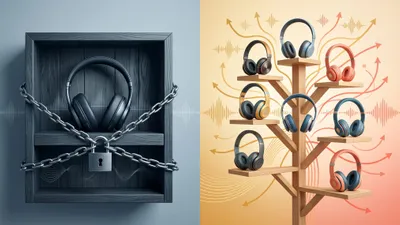
Neither wins outright. ACX pays a fixed royalty share on Audible’s price but locks you into Audible’s ecosystem if you go exclusive. Findaway Voices pays 80% of partner royalties across dozens of stores and libraries, with no exclusivity and price control at most of them.
| Findaway Voices | ACX | |
|---|---|---|
| Cost to join | Free | Free |
| Who sets price | You, at most partners | Audible |
| Reach | Wide retail, subscription, library, K-12 | Audible and Amazon |
| Exclusivity | None | Optional, pays more |
| Narrator marketplace | Not a confirmed current feature | Yes, built in |
Our ACX pricing breakdown has the current ACX royalty rates, and ACX vs Findaway Voices walks through which to pick for your catalog. If you want more options, see our list of Findaway Voices alternatives.
Where Findaway Voices Beats Chapter
Findaway Voices does a job Chapter does not do at all: it distributes finished audiobooks. Chapter is an AI book writing platform. It helps you write the manuscript, and it does not narrate, upload, or sell audio to Apple, Kobo, or OverDrive.
Findaway Voices also wins on entry cost. It is free to join and only earns when you sell, while Chapter costs $97 one time and has no free tier or trial.
If your book is already written and recorded, Findaway Voices is the tool you need next, and Chapter adds nothing to that step.
The Step Before Distribution: Writing the Book
Our Pick — Chapter
Every audiobook starts as a finished manuscript, and that is the stage where most authors stall. Chapter guides you from idea to complete book, fiction or nonfiction, so you have something worth narrating and distributing.
Best for: Authors who have not finished the book yet Pricing: $97 one time, 2 books included (fiction or nonfiction), 30-day money-back guarantee Why we built it: Distribution fees only matter once the book exists, and finishing it is the harder problem.
More than 2,147 authors have used Chapter to create over 5,000 books. Explore Chapter for nonfiction or Chapter for fiction, and see our full guide to creating an audiobook for the steps after the writing is done.
FAQ
Is Findaway Voices free?
Yes, Findaway Voices is free to join. Voices by INaudio offers free registration and earns a 20% share of the royalties it collects from retailers. You pay nothing upfront to distribute, but you still pay for audiobook production such as narration and editing yourself.
What percentage does Findaway Voices take?
Findaway Voices takes 20% of the royalties it receives from partner retailers and libraries, and you keep 80%. Because retailers first take their own cut, your share works out to roughly 24% to 40% of list price on à la carte and subscription sales.
Is Findaway Voices still around in 2026?
Yes, Findaway Voices still operates in 2026 under the name Voices by INaudio. Spotify sold the wide-distribution business to Findaway’s original founders in 2025. The 80% royalty share, no exclusivity, and author-set list pricing carried over to the new company.
How often does Findaway Voices pay royalties?
Findaway Voices pays royalties monthly, within 30 days of receiving payment from each retailer. Some partners report quarterly, so certain sales show up later. Minimum payout thresholds vary by payment method and appear in your Payment Profile.