You can become a book editor without a specific degree, a publishing industry connection, or years of gatekeeping. What you do need is a sharp eye for language, a genuine love of books, and a willingness to build your skills deliberately. This guide walks you through every step, from choosing your editing specialty to landing paying clients.
Understand What Book Editors Actually Do
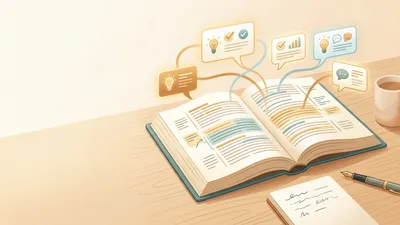
Book editing is not just fixing typos. Professional editors shape manuscripts at every level, from big-picture story structure down to individual comma placement. The work varies dramatically depending on the type of editing you specialize in.
Most authors need multiple rounds of editing before a manuscript is publication-ready. Understanding the full editing spectrum helps you decide where you fit and what skills to develop first.
The publishing industry employs editors in two main settings: traditional publishing houses (where editors acquire and develop manuscripts) and freelance editing (where you work directly with authors). Both paths are legitimate careers, though freelancing has grown significantly as self-publishing has expanded the market.
Choose Your Editing Specialty
There are four main types of book editing, each requiring different skills and commanding different rates. Most editors eventually specialize in one or two.
Developmental Editing
Developmental editors work on the big picture. You evaluate story structure, character arcs, pacing, plot holes, point of view, and overall narrative coherence. This is the most intensive (and highest-paid) form of editing.
A developmental editor might tell an author their second act drags because the protagonist has no clear obstacle, or that a subplot needs to be cut entirely. You need strong storytelling instincts and the ability to articulate why something isn’t working, not just that it isn’t.
Typical rates: $0.04-$0.08 per word, or $48-$84 per hour according to the Editorial Freelancers Association.
Line Editing
Line editors refine prose at the sentence level. You focus on voice, style, word choice, rhythm, and readability. The goal is making every sentence as strong as it can be while preserving the author’s voice.
This specialty requires an exceptional ear for language. You’re not just correcting errors. You’re improving how the writing sounds and feels.
Typical rates: $0.05-$0.06 per word, or $54-$59 per hour.
Copy Editing
Copy editors handle grammar, punctuation, spelling, consistency, and factual accuracy. You enforce style guides (Chicago Manual of Style is standard for book publishing), catch continuity errors, and ensure the manuscript follows consistent formatting.
If a character has blue eyes on page 12 and brown eyes on page 200, the copy editor catches it. This specialty rewards meticulous, detail-oriented thinkers.
Typical rates: $0.03-$0.08 per word, or $43-$59 per hour.
Proofreading
Proofreaders are the final quality check before publication. You catch typos, formatting errors, and any mistakes that slipped through earlier editing rounds. This is the most entry-level friendly specialty and often where new editors start.
Typical rates: $0.02-$0.06 per word, or $37-$54 per hour.
| Type | Focus | Skill Level | Avg. Per-Word Rate |
|---|---|---|---|
| Developmental | Story structure, pacing, character | Advanced | $0.04-$0.08 |
| Line editing | Voice, style, sentence quality | Intermediate-Advanced | $0.05-$0.06 |
| Copy editing | Grammar, consistency, accuracy | Intermediate | $0.03-$0.08 |
| Proofreading | Typos, formatting, final check | Entry-level friendly | $0.02-$0.06 |
Build Your Education and Skills
A bachelor’s degree in English, journalism, communications, or a related field is common among book editors, but it is not strictly required. According to the Bureau of Labor Statistics, most editor positions require a bachelor’s degree, but practical skills and demonstrable expertise matter more than the specific diploma.
Formal Education Options
- Bachelor’s degree in English, creative writing, journalism, or communications provides a solid foundation
- Publishing certificate programs from universities like NYU, Columbia, or Denver offer focused training
- Master’s in Publishing or Fine Arts can help for acquisitions editor roles at major publishing houses
Self-Directed Learning
If you’re not pursuing a degree, focus on these fundamentals:
- Study the Chicago Manual of Style. This is the standard reference for book publishing in the United States. Know it thoroughly.
- Read widely and critically. Analyze what makes published books work (or fail) at a structural level.
- Take targeted courses. The Editorial Freelancers Association offers courses on developmental editing, copy editing, and business skills for freelancers. Reedsy also publishes in-depth guides for aspiring editors.
- Practice on real manuscripts. Volunteer to edit for writing groups, beta read for indie authors, or offer discounted rates to build experience.
Essential Skills to Develop
Beyond grammar knowledge, successful book editors need:
- Critical reading ability — seeing what’s on the page and what’s missing
- Communication skills — delivering honest feedback diplomatically
- Genre awareness — understanding conventions and reader expectations for different genres
- Time management — meeting deadlines while maintaining quality
- Business skills — marketing, invoicing, client management (if freelancing)
Get Practical Experience
Reading about editing theory only gets you so far. You need hands-on manuscript experience, and there are several ways to get it.
Entry-Level Publishing Roles
If you want to work in traditional publishing, the typical path starts with an editorial assistant or manuscript reader position at a publishing house. These roles pay modestly but teach you how professional publishing works from the inside.
Look for opportunities at:
- Major publishers (Penguin Random House, HarperCollins, Simon & Schuster, Hachette, Macmillan)
- Independent and university presses
- Literary agencies (reading and evaluating query letters and manuscripts)
- Literary magazines and journals
Freelance Starting Points
If you’re building a freelance editing career, start here:
- Beta read for free. Join writing communities and offer to read manuscripts. This builds your critical eye without the pressure of paid work.
- Edit for writing groups. Local and online writing groups often need editors for anthologies or group projects.
- Offer sample edits. Most freelance editors provide a free sample edit of 1,000-2,000 words. Practice doing these until your feedback is consistently thorough and actionable.
- Take on discounted projects. Your first 3-5 paid projects should be priced below market rate. You’re building a portfolio, not maximizing revenue yet.
Internships
Publishing internships remain one of the best ways to break into the industry. Many publishers offer summer internships or part-time programs. These are competitive, but they provide unmatched exposure to the editorial process.
Build Your Portfolio and Online Presence
No client hires an editor without proof of competence. Your portfolio demonstrates your skills.
What to Include
- Before/after editing samples (with author permission) showing your editorial judgment
- Testimonials from authors you’ve worked with
- A clear description of what types of editing you offer and for which genres
- Your editorial process — how you work with authors from intake to delivery
Where to Establish Yourself
- Personal website with your services, rates, portfolio, and contact information
- Reedsy marketplace — a well-known platform connecting editors with authors
- Editorial Freelancers Association directory — membership gets you listed in their searchable database
- Social media — many editors build followings by sharing editing tips on Twitter/X, Instagram, or TikTok
Set Your Rates
New editors typically start at the lower end of industry rates and increase as they build experience and a reputation. The EFA rates chart provides a useful benchmark. Don’t undercharge dramatically — it signals inexperience and attracts difficult clients.
For an 80,000-word novel, total editing costs typically range from $1,920 to $4,560 depending on the type of editing, according to industry rate data.
Understand the Business Side
Editing skill alone won’t sustain a career. You need to run the business side effectively too.
Finding Clients
- Freelance marketplaces: Reedsy, Upwork, and the EFA job board
- Writing conferences: Attend and network at events like Writer’s Digest Conference or local writing festivals
- Online communities: Writing subreddits, Facebook groups for indie authors, and writing Discord servers
- Referrals: Your best marketing channel. Deliver excellent work, and authors recommend you to other authors.
Managing Client Relationships
- Always use a contract specifying scope, timeline, payment terms, and revision rounds
- Provide a sample edit before committing to a full project
- Set clear expectations about turnaround time (most editors need 2-4 weeks for a full manuscript)
- Communicate proactively if your timeline shifts
Career Growth and Income
The median annual salary for editors is $75,260 per year, according to the Bureau of Labor Statistics. Freelance income varies widely — new editors might earn $20,000-$30,000 in their first year, while established freelancers with a steady client base can earn $60,000-$100,000+.
The employment outlook for editors is projected to grow about 1% from 2024 to 2034. However, the self-publishing market has created significant demand for freelance editors that traditional employment statistics don’t fully capture.
How AI Is Changing Book Editing
AI writing tools have reshaped the publishing landscape, and editors should understand how they fit into this new ecosystem.
Tools like Chapter.pub help authors generate and structure book drafts using AI, which means more manuscripts are being produced than ever. This is good news for editors — AI-generated content still needs a human editor’s eye for voice, nuance, emotional resonance, and factual accuracy.
Smart editors are positioning themselves as essential partners for AI-assisted authors. The manuscripts may come together faster, but the editorial judgment required to refine them into publishable books remains deeply human work. If anything, the rise of AI writing tools has increased demand for skilled editors who can polish AI-assisted drafts into compelling, authentic books.
Common Mistakes to Avoid
- Skipping specialization. Trying to offer every type of editing from day one dilutes your expertise. Pick one specialty to start, then expand.
- Undercharging. Low rates attract clients who don’t value editing. Price yourself fairly from the start, even if that means fewer clients initially.
- Neglecting your own writing skills. The best editors are also strong writers. Keep writing regularly to maintain your craft.
- Ignoring the business side. Editing skill without marketing, networking, and client management skills leads to an empty calendar.
- Editing without a contract. Scope creep, payment disputes, and unrealistic expectations all stem from handshake agreements. Always use a contract.
FAQ
Do you need a degree to become a book editor?
No. While a bachelor’s degree in English or a related field is common, it is not required. Demonstrable skill, a strong portfolio, and professional development (courses, certifications, mentorship) can substitute for a formal degree. What matters most is your ability to improve a manuscript.
How long does it take to become a book editor?
Most editors spend 1-3 years building foundational skills and a portfolio before earning a sustainable income. If you’re starting with a relevant degree and strong language skills, you could land your first paid projects within 6-12 months of focused effort.
How much do book editors earn?
Income varies significantly. The median salary for in-house editors is $75,260 per year. Freelance editors’ earnings depend on specialty, experience, and client volume. Entry-level freelancers might earn $20,000-$30,000, while established professionals can earn $60,000-$100,000+ annually.
What’s the difference between a book editor and a proofreader?
Proofreading is one type of book editing focused on catching typos and formatting errors in a near-final manuscript. Book editing encompasses a broader range of services including developmental editing (structure and story), line editing (prose quality), and copy editing (grammar and consistency), in addition to proofreading.
Can you become a book editor with no experience?
Yes, but you need to build experience deliberately. Start by beta reading, editing for writing groups, taking editing courses, and offering sample edits. Your first few paid projects should be priced accessibly while you build your portfolio and testimonials.