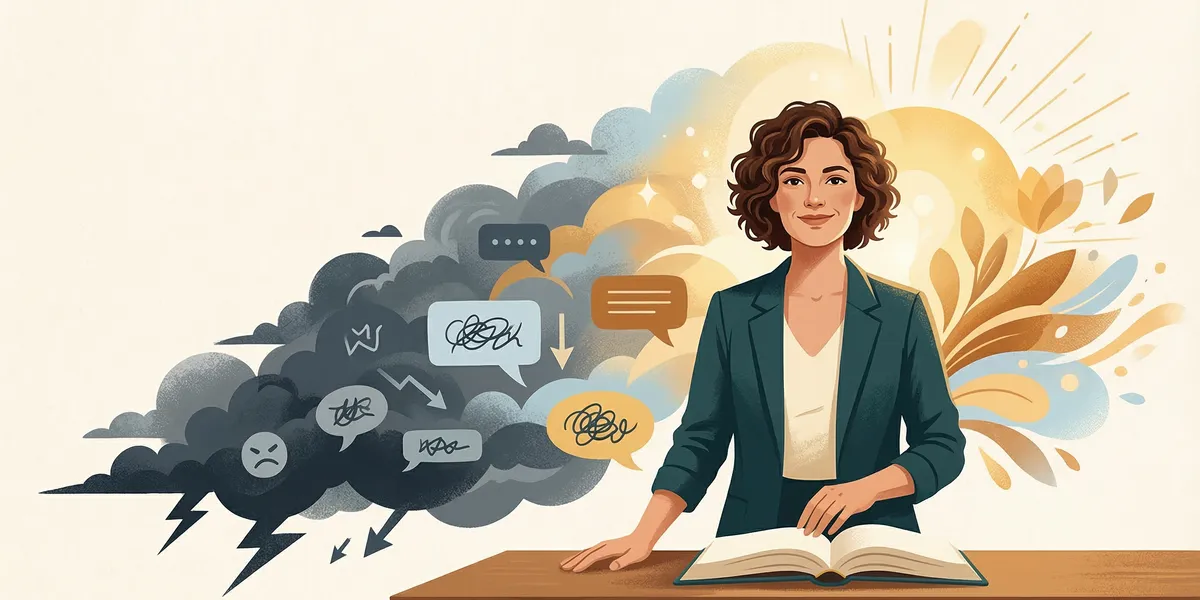
Your first negative book review will feel personal. It is not — but it will feel that way. Someone read your book, the thing you spent months or years building, and they did not like it. Worse, they said so publicly, on the internet, for everyone to see.
This is normal. Every published author deals with it. Here is how to handle negative reviews without spiraling, and how to extract the occasional useful signal from the noise.
Negative Reviews Are Inevitable
No book in the history of publishing has been universally loved. This is not an exaggeration.
Harry Potter and the Sorcerer’s Stone has one-star reviews on Goodreads. So does To Kill a Mockingbird. So does Pride and Prejudice. The Bible has one-star reviews. If the best-selling, most beloved books ever written cannot avoid negative reviews, yours will not either.
This is not a failure. It is proof that your book reached real readers — and real readers have different tastes, different expectations, and different moods on the day they read your work.
A book with nothing but five-star reviews is a book nobody is reading, or a book whose reviews are all from the author’s friends. A few negative reviews mixed with positive ones is the sign of a real, living, commercially active book.
Types of Negative Reviews
Not all negative reviews are created equal. Learning to categorize them makes them easier to process.
Constructive Criticism
“The first half was compelling, but the pacing fell apart after the midpoint. The subplot with the sister felt unresolved.”
This is the most useful type. The reviewer is telling you specifically what did not work and why. It may sting, but it is genuine feedback — the kind your beta readers should have caught.
The “Not For Me” Review
“I don’t usually read thrillers and this didn’t change my mind.”
This review says nothing about your book’s quality. The reader picked up a book in a genre they do not enjoy and was surprised to not enjoy it. These reviews are irrelevant to your target audience and can be safely ignored.
Personal Attacks
“This author clearly has no talent and should stop writing immediately.”
This is not a review. It is someone having a bad day and choosing your book as the target. It reveals nothing about your work. Do not engage with it. Do not think about it. Move on.
Troll Reviews
One-word reviews, reviews that reference a completely different book, reviews from people who clearly did not read past the first page. Amazon and Goodreads have systems for reporting these, though the process can be slow.
Expectation Mismatch
“I thought this was going to be a romance, but it was more of a literary fiction with a romance subplot.”
This is a marketing problem, not a writing problem. It means your cover, description, or category placement is attracting the wrong readers. This review is actually useful data for improving your book’s positioning.
The Rules for Handling Negative Reviews
Rule 1: Never Respond
Never. Not to any negative review. Not on any platform. Not even to politely correct a factual error. Not even when the reviewer is obviously wrong about something in your book.
This is the single most important rule in author-reviewer relations, and it has no exceptions.
When an author responds to a negative review, three things happen. The response draws attention to the review, making more people read it. The author looks defensive and unprofessional regardless of how polite the response is. And the situation almost always escalates, because the reviewer now feels attacked and doubles down.
The Author’s Guild and every major publishing professional will give you the same advice: never engage with reviewers. Read the review, feel your feelings, and close the tab.
Rule 2: Wait Before Reading Reviews
Do not check your reviews daily. If you have just launched a book, the temptation is enormous — resist it. Check once a week at most. Better yet, have a trusted friend or assistant screen them and only share useful feedback.
If you have just received a negative review and feel the emotional punch, wait 48 hours before reading any more reviews. Your emotional state immediately after reading criticism is not the right state for processing more criticism.
Rule 3: Look for Patterns
One reviewer says your pacing is slow. That is one opinion. Five reviewers say your pacing is slow. That is data.
Patterns across multiple negative reviews are the most valuable feedback you can receive. They tell you, with confidence, what is not working. One person’s pet peeve is meaningless. Five people flagging the same issue is a revision roadmap for your next book.
Rule 4: Remember Who Reviews Are For
Reviews are not written for you. They are written for other readers deciding whether to buy your book. A review that says “I found the romance unconvincing” helps a romance reader decide whether this is their kind of book. It is consumer guidance, not personal feedback.
Once you internalize this, negative reviews become less painful. They are not attacking you. They are talking to other readers about their reading experience.
Rule 5: Count the Ratio
If you have 50 reviews and 45 are positive, you are doing exceptionally well. Most published books never reach 50 reviews at all. Five negative reviews in that context are statistical noise.
The emotional weight of a negative review is disproportionate to its actual significance. One harsh one-star review feels bigger than ten glowing five-star reviews. This is a cognitive bias called negativity bias, and recognizing it helps you put reviews in perspective.
What Not to Do
Do not respond publicly. Worth repeating. Do not do it.
Do not have friends or family attack the reviewer. This is even worse than responding yourself. Readers can spot coordinated attacks, and they will side with the reviewer every time.
Do not change your published book based on one review. A single reviewer’s opinion is not enough to warrant revisions. If you are going to revise, do it based on patterns across many reviews, feedback from your editor, or your own considered creative judgment.
Do not stalk the reviewer’s profile. Looking at their other reviews to find evidence that they are “always negative” or “don’t understand good writing” is a coping mechanism that helps no one. Close the tab.
Do not screenshot and share on social media. Even anonymized, sharing negative reviews publicly comes across as thin-skinned and invites pile-ons that can damage your reputation more than the original review.
The One-Star Review Club
You are in excellent company. Here are real one-star reviews of beloved books.
The Great Gatsby by F. Scott Fitzgerald: “I literally cannot understand why this book is considered great literature.”
1984 by George Orwell: “Boring. Depressing. Why would anyone enjoy reading this.”
The Lord of the Rings by J.R.R. Tolkien: “Did we really need 300 pages of walking?”
Beloved by Toni Morrison: “Tried three times. Could not finish.”
The Catcher in the Rye by J.D. Salinger: “Holden is the most annoying character in the history of fiction.”
Every one of these books has sold millions of copies and shaped modern literature. Every one of them has readers who genuinely disliked them. If Fitzgerald and Tolkien cannot please everyone, neither can you — and that is perfectly fine.
Using Negative Reviews for Your Next Book
The real power of negative reviews is not in what they say about the book that is already published. It is in what they teach you about the book you are going to write next.
Pacing complaints tell you to tighten your structure. If multiple readers say the middle dragged, your next book needs a stronger midpoint and more aggressive subplot management.
Character complaints tell you to deepen motivation and consistency. If readers do not buy a character’s choices, the groundwork was not laid early enough.
Ending complaints tell you to deliver on your promises. Readers who say the ending was unsatisfying often mean the book set up expectations it did not pay off.
Confusion complaints tell you to improve clarity. If readers are lost, the information they needed was either missing, buried, or delivered too late.
None of this means you should write to avoid criticism. You should write the book you want to write. But understanding the patterns in your negative feedback makes you a sharper, more self-aware writer.
When Negative Reviews Signal a Real Problem
Sometimes negative reviews are not just opinions — they are warnings.
If your average rating is below 3.5 stars after 20+ reviews, something structural may be wrong. Consider hiring a developmental editor for your next project, or getting more thorough beta reader feedback before publishing.
If multiple reviews mention the same specific problem (confusing timeline, flat protagonist, abrupt ending), take it seriously. These are not taste differences. They are craft issues you can improve.
If negative reviews mention production quality (typos, formatting errors, poor cover), these are fixable immediately. Update the file, upload a corrected version, and move on. Production issues are not reflections of your writing ability.
Building Emotional Resilience
Handling negative reviews gets easier with practice, but it never becomes painless. Here are strategies that help long-term.
Keep an evidence file. Save your best positive reviews, reader emails, and any metrics you are proud of. When a negative review hits hard, open this file. The evidence that your work matters is already there.
Talk to other writers. Every published author has stories about brutal reviews. Hearing that others survive — and thrive — after negative feedback normalizes the experience. A writing group is invaluable for this.
Remember your why. You wrote the book because you had something to say. One reader’s disapproval does not erase that. The book still exists. Other people still love it. Your work still matters.
Separate your identity from your reviews. You are not your book’s star rating. Your value as a writer is not determined by strangers on the internet. The book is a product you made. The reviews are opinions about that product. You are a person who makes things.
Write the next book. The single best cure for negative review anxiety is being deep in a new project. When you are excited about what you are creating next, the reviews of the last book recede into background noise where they belong.
If negative reviews are causing persistent anxiety, interfering with your ability to write, or affecting your mental health beyond normal disappointment, consider speaking with a therapist. This is not weakness — it is professionalism. Many working authors do this.
The Bottom Line
Negative reviews are part of publishing. You cannot avoid them, you should not respond to them, and you definitely should not let them stop you from writing.
Read them, look for patterns, learn what you can, and keep going. The authors who build lasting careers are not the ones who never get bad reviews. They are the ones who get bad reviews, process them, and build their platform anyway.
Your next book is already better because you survived the feedback on this one. That is the real value of criticism — not the individual review, but the resilience and craft awareness it builds over time.
Now close the review tab and go write something.