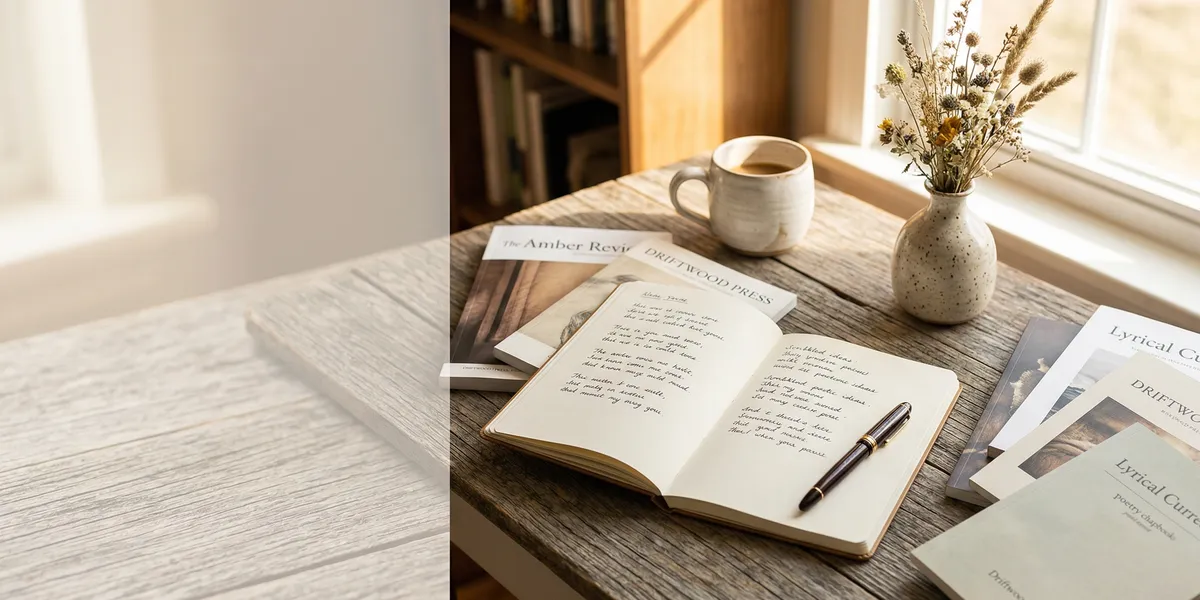
You can get published as a poet — even without connections or an MFA. Most published poets started exactly where you are right now, submitting one poem at a time to journals that matched their voice.
In this guide, you’ll learn:
- The 7-step path from unpublished poet to published author
- Where to submit your poems for the best chance of acceptance
- How to build a publication record that leads to a full collection
- When self-publishing makes more sense than the traditional route
Here’s how to make it happen, step by step.
Start With a Consistent Writing Practice
Before you think about publication, you need a body of strong work to draw from. Most poetry collections contain 30 to 100 poems, and you’ll need even more in your drafts folder because not every poem makes the cut.
Write daily, even if it’s just for 15 minutes. Keep a dedicated notebook or digital file for raw drafts. The goal isn’t perfection — it’s volume and variety.
Set a personal target: 3 to 5 new poems per week. At that pace, you’ll have a solid body of work within 3 to 6 months.
Join a Poetry Workshop or Critique Group
Getting feedback from other poets sharpens your craft faster than writing alone. A good workshop teaches you to see your blind spots and strengthens your editorial eye.
Look for workshop groups through your local library, community college, or organizations like the Academy of American Poets. Online workshops through Writers.com and The Poetry School offer flexible options if you can’t attend in person.
The relationships you build in these groups also become your first reader network — poets who can review your submissions before you send them out.
Submit Individual Poems to Literary Journals
This is the most traditional path to getting published as a poet. You submit 3 to 6 poems at a time to literary magazines, following each publication’s specific guidelines.
How to Find the Right Journals
Start with journals you actually read and admire. If you don’t read poetry journals yet, that’s your first homework assignment. Browse options through:
- Poets & Writers — Searchable database of literary magazines
- Duotrope — Submission tracker with acceptance rate data
- The Submissions Grinder — Free alternative to Duotrope
- Submittable — Platform many journals use for submissions
Submission Best Practices
Read the guidelines twice. Every journal has specific rules about format, poem count, simultaneous submissions, and cover letters. Breaking these rules guarantees rejection.
Match your style to the journal. A formal sonnet sequence probably isn’t right for a journal that publishes experimental prose poetry. Read at least 3 recent issues before submitting.
Track everything. Use a spreadsheet or tool like Submittable to log where you’ve sent each poem, the date, and the response. This prevents accidental simultaneous submission violations.
Expect rejection. Career poets report having poems rejected 15 to 20 times before acceptance. Rejection isn’t personal — it’s part of the process.
Enter Poetry Contests and Awards
Poetry contests offer another proven path to publication, plus prize money and recognition. Many contest winners get their winning poems published in anthologies or special journal issues.
Where to find legitimate contests:
- Poets & Writers contest database — Vetted listings with deadlines
- Poetry Foundation — Lists major awards and fellowships
- Rattle Poetry — Runs popular open competitions
- The Pushcart Prize — Nominated by journal editors, one of the most prestigious honors
Watch for red flags. Legitimate contests charge reasonable entry fees ($10 to $30 typically). Avoid any contest that charges high fees, promises publication to all entrants, or requires you to buy an anthology to see your work.
Some major contests to target include the Yale Younger Poets Prize, the National Poetry Series, and first-book contests from presses like Graywolf and Copper Canyon.
Build Your Poetry Platform
Publishers and editors notice poets who have a visible presence. You don’t need a massive following — you need a consistent, authentic one.
Share Your Work Online
Post poems on your personal website or blog. Share excerpts on social media platforms where poetry communities thrive — Instagram (with its visual poetry culture) and literary Twitter/X are particularly active.
Consider publishing on platforms like Medium or starting a free Substack newsletter to build a direct reader base.
Create a Poet’s Website
Your website is your professional home base. Include:
- A bio and photo
- A list of publications and awards
- Sample poems (3 to 5 strong ones)
- Contact information for editors and event organizers
Keep it clean and simple. Your poems are the star — not the design.
Publish Your First Poetry Collection
Once you’ve published 15 to 30 individual poems in journals, you have the track record most publishers want to see. Now it’s time to think about a full collection.
The Chapbook Route
A chapbook is a short poetry collection, usually 20 to 40 pages. It’s often a poet’s first published book. Many small presses run annual chapbook competitions, and winning one is a respected credential.
Search for chapbook contests on Poets & Writers and NewPages. Entry fees typically range from $15 to $25.
The Full-Length Collection
A standard poetry collection runs 48 to 100 pages. You have three main paths:
1. Submit to poetry presses during open reading periods. Small and independent presses like Graywolf Press, Copper Canyon Press, and BOA Editions accept unsolicited manuscripts during specific windows.
2. Win a first-book contest. Many presses discover debut poets through manuscript competitions. The winner gets their book published, often with a cash prize.
3. Query a literary agent. For poets aiming at major publishers (Knopf, Penguin, Norton), a literary agent can open doors. Be aware that landing a poetry agent is competitive — having a strong publication history helps enormously.
Self-Publishing Your Poetry Collection
Traditional publishing isn’t the only path. Self-publishing gives you full creative control over your work — from poem selection to cover design to pricing.
Our Pick — Chapter
Chapter’s AI writing assistant helps you organize, refine, and format your poetry collection for publication. Write and arrange your poems with AI-powered feedback, then export a print-ready manuscript.
Best for: Poets who want creative control and faster time-to-publication Pricing: $97 one-time (nonfiction tools) Why we built it: Every poet deserves a professional publishing path without gatekeepers
You can also self-publish through Amazon KDP for free distribution, or use platforms like IngramSpark for wider bookstore reach. Check our guide on self-publishing costs to plan your budget.
Market Your Published Poetry
Getting published is only half the equation. You need readers to find your work.
Readings and events. Open mics, bookstore readings, and literary festivals put your poetry in front of live audiences. Many indie bookstores host regular poetry nights — contact yours to get on the schedule.
Social media consistency. Share one poem per week on your platforms. Use relevant hashtags and engage with other poets. The poetry community online is generous with support.
Email list. Start collecting reader emails through your website. A small, engaged email list outperforms a large social following for book sales.
Book reviews. Send review copies to poetry bloggers, literary journals that run reviews, and poets you admire. A few honest reviews go a long way.
Common Mistakes to Avoid
- Submitting to journals you’ve never read. Editors can tell immediately.
- Sending your entire manuscript unsolicited. Follow submission limits (usually 3 to 6 poems).
- Paying to be published. Vanity presses charge you to print your book but offer no distribution or legitimacy. Real publishers pay you — or at least don’t charge.
- Waiting until your work is “perfect.” Perfectionism kills publishing momentum. Submit good work and keep improving.
- Ignoring simultaneous submission policies. If a journal says no simultaneous subs, respect that or risk burning bridges.
How Long Does It Take to Get Published as a Poet?
How long it takes to get published as a poet depends on your submission volume and the type of publication. Most poets land their first journal publication within 6 to 12 months of consistent submitting. A first chapbook typically takes 2 to 3 years of active work. A full-length collection from a respected press often takes 5 to 10 years of building your publication record.
The timeline shrinks if you self-publish. You can go from finished manuscript to published book in as little as 2 to 4 weeks.
Do You Need an MFA to Get Published as a Poet?
You do not need an MFA to get published as a poet. While an MFA program provides structured time to write, workshop feedback, and publishing connections, plenty of successful poets never attended one.
What matters more than a degree is the quality of your poems and your willingness to submit them consistently. Focus on craft, read widely, and engage with the poetry community.
Can You Make Money Publishing Poetry?
You can make money publishing poetry, but most poets earn modest income from their writing. Individual poem publications pay anywhere from $0 to $300 per poem, with most literary journals paying between $25 and $100 or offering contributor copies.
Poetry collections from small presses typically earn $500 to $2,000 in royalties. Self-published poets who build a loyal audience can earn more through direct sales and readings.
The real financial opportunities often come from adjacent work — teaching, workshops, speaking engagements, and fellowships. Many poets supplement their income through these channels.
FAQ
How do I submit a poem to a literary journal?
To submit a poem to a literary journal, read the journal’s submission guidelines carefully, prepare 3 to 6 poems in the requested format, write a brief cover letter, and submit through their preferred platform (usually Submittable or email). Always follow word count limits and formatting requirements exactly.
What is the easiest way to get poetry published?
The easiest way to get poetry published is to submit to online literary journals with higher acceptance rates or to self-publish your work through platforms like Amazon KDP or Chapter. Online journals typically respond faster and accept more submissions than print publications.
How many poems should I have before trying to publish?
You should have at least 20 to 30 polished poems before seriously pursuing publication. This gives you enough material to submit to multiple journals simultaneously (3 to 6 poems each) without running out of your best work. For a full collection, aim for 50 to 100 finished poems.
Do poetry publishers accept unsolicited manuscripts?
Some poetry publishers do accept unsolicited manuscripts, but most only during specific open reading periods. Presses like Graywolf, Copper Canyon, and BOA Editions announce submission windows annually. Many others discover new poets exclusively through contests and competitions.
Is self-publishing poetry worth it?
Self-publishing poetry is absolutely worth it if you want creative control and faster publication. You set the timeline, choose the cover, and keep higher royalties per sale. Tools like Chapter help you format and publish professionally without a traditional press.