You can publish a children’s book in 2026 through self-publishing platforms like Amazon KDP, traditional publishers, or hybrid publishing services — and the process is more accessible than ever.
In this guide, you’ll learn:
- How to match your manuscript to the right age group and word count
- The step-by-step process from writing to publication
- How to find and work with a professional illustrator
- Whether self-publishing or traditional publishing is right for your book
Here’s everything you need to know to get your children’s book into young readers’ hands.
What Age Group Is Your Children’s Book For?
Before you write a single word, you need to know your target reader’s age. Children’s books aren’t one category — they’re several, and each has different rules for word count, vocabulary, and illustration needs.
Here’s what each age group looks like:
| Age Group | Category | Word Count | Illustrations |
|---|---|---|---|
| 0-3 | Board books | 0-100 words | Full illustrations on every page |
| 4-6 | Picture books | 500-1,000 words | Full illustrations on every spread |
| 5-8 | Early readers | 1,000-2,500 words | Frequent illustrations |
| 7-10 | Chapter books | 5,000-15,000 words | Occasional spot illustrations |
| 9-12 | Middle grade | 25,000-50,000 words | Few or no illustrations |
Getting this right matters. A picture book with 3,000 words will frustrate a 4-year-old’s parent. A chapter book with too-simple vocabulary will bore a 9-year-old.
Children’s books represent roughly 35% of the overall print book market — making it one of the most commercially significant categories in publishing. You’re entering a large, active market.
How to Write a Children’s Book Manuscript
Writing for children is harder than most people expect. You need to tell a complete story with far fewer words than an adult novel, and every sentence has to earn its place.
Keep your language age-appropriate. Read 10-15 bestselling books in your target age group before writing. Pay attention to vocabulary, sentence length, and how much of the story the illustrations carry versus the text.
Use a clear story structure. Even a 500-word picture book needs a beginning, middle, and end. Your main character should want something, face an obstacle, and change by the final page.
Read your manuscript out loud. Children’s books — especially picture books — are read aloud by parents. If your sentences are clunky or hard to pronounce, you’ll lose your audience. Rhythm and flow matter as much as plot.
For picture books, write in page spreads. Most picture books are 32 pages (including title page and copyright). That gives you roughly 14-15 spreads for your story. Plan which text goes on which spread before you start drafting.
How to Find and Work With an Illustrator
Illustrations are the heartbeat of children’s books, especially for ages 0-8. They don’t just decorate — they tell half the story. Finding the right illustrator is one of the most important decisions you’ll make.
Where to find children’s book illustrators:
- Reedsy — Curated marketplace with vetted illustrators
- Fiverr and Upwork — Broader range of price points
- SCBWI (Society of Children’s Book Writers and Illustrators) — Professional network
- Behance and Dribbble — Portfolio sites where you can browse styles
Budget expectations: Professional children’s book illustration typically costs $2,000-$10,000 for a full picture book, depending on the illustrator’s experience and the number of pages.
Create a detailed art brief. For each spread, describe what’s happening, the mood, and any specific visual elements. Give your illustrator creative freedom within these guidelines — the best illustrations come from collaboration, not rigid direction.
In 2026, many authors use AI image tools like Midjourney or Leonardo to create mood boards and rough layout concepts before hiring an illustrator. This helps you communicate your vision clearly and saves revision time.
Should You Self-Publish or Go Traditional?
This is the biggest decision in the publishing process. Both paths work — but they’re suited to different goals and budgets.
Traditional Publishing
You submit your manuscript to literary agents or publishers. If accepted, the publisher handles editing, illustration, printing, and distribution. You receive an advance and royalties (typically 5-10% of cover price).
Pros: No upfront cost, professional production, bookstore distribution, credibility.
Cons: Extremely competitive (less than 1% of submissions accepted), slow (18-24 months to publication), you give up creative control and rights.
Best for: Authors willing to wait, who want bookstore placement and don’t mind sharing revenue.
Self-Publishing
You handle the entire process yourself — or hire professionals for each step. You keep full rights and earn higher royalties (up to 60-70% on platforms like Amazon KDP).
Pros: Full creative control, faster time to market (weeks, not years), higher per-book royalties.
Cons: Upfront investment required, you handle your own marketing, harder to get into physical bookstores.
Best for: Authors who want control, have a marketing plan, and are willing to invest in professional production.
Hybrid Publishing
A middle path where you pay a publishing service to produce your book but retain your rights. Quality varies widely — research any hybrid publisher thoroughly before committing.
How to Edit a Children’s Book
Your children’s book needs professional editing, no exceptions. Children’s books require specialized editors who understand pacing, age-appropriate language, and how text works alongside illustrations.
Developmental editing comes first. A developmental editor evaluates your story structure, pacing, character development, and whether your manuscript works for the target age group. Expect to pay $300-$800 for a picture book.
Copy editing and proofreading catch grammar, spelling, and consistency issues. Even in a 500-word picture book, one typo looks unprofessional. Budget $100-$300 for this step.
Get beta readers before you hire an editor. Share your manuscript with 3-5 parents of children in your target age group. Watch them read it to their kids. Do the children stay engaged? Do they ask to hear it again? That’s your best quality signal.
How to Format Your Children’s Book
Formatting a children’s book is different from formatting an adult book. You’re designing a visual experience, not just typesetting text.
Choose your trim size. Common children’s book sizes include:
| Format | Common Sizes | Best For |
|---|---|---|
| Square | 8” x 8”, 8.5” x 8.5” | Picture books |
| Landscape | 10” x 8”, 11” x 8.5” | Illustration-heavy books |
| Portrait | 6” x 9”, 7” x 10” | Chapter books, early readers |
Font size matters. Use 16-24 point fonts for picture books and early readers. Children’s eyes are still developing, and larger text improves readability. Chapter books can use 12-14 point fonts.
Paper quality affects the experience. For illustration-heavy books, use 80# or 100# gloss text paper to make colors pop. Board books need thick, durable cardstock. Matte paper works well for text-heavy chapter books.
You can format your book using tools like Atticus, Adobe InDesign, or Canva. For print-on-demand through Amazon KDP, you’ll need to export your interior as a print-ready PDF.
How Much Does It Cost to Publish a Children’s Book?
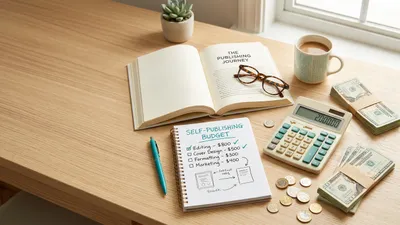
Costs vary dramatically depending on your publishing path and how much you do yourself. Here’s a realistic breakdown for self-publishing a picture book:
| Expense | Budget Range |
|---|---|
| Illustration (full picture book) | $2,000-$10,000 |
| Editing (developmental + copy) | $400-$1,100 |
| Book formatting/layout | $200-$500 |
| Cover design | $200-$600 |
| ISBN | $0-$125 (free on KDP, $125 from Bowker) |
| Proof copies | $50-$100 |
| Marketing budget | $500-$2,000 |
| Total | $3,350-$14,425 |
You can reduce costs by illustrating the book yourself, using a free ISBN from your publishing platform, and handling your own formatting. But don’t cut corners on illustration quality — it’s the single biggest factor in a children’s book’s success.
For traditional publishing, your upfront cost is essentially $0. The publisher covers production costs and pays you an advance (typically $1,000-$10,000 for a first-time children’s author).
How to Publish a Children’s Book on Amazon KDP
Amazon KDP is the most popular platform for self-publishing children’s books. Here’s the step-by-step process:
1. Create your KDP account. Go to kdp.amazon.com and sign up with your Amazon account.
2. Choose your format. For most children’s books, you’ll want paperback. KDP also supports hardcover and Kindle ebook. Picture books work best in print — ebook formatting can be tricky with full-page illustrations.
3. Upload your files. You’ll need your interior PDF and a cover file that meets KDP’s specifications. KDP provides cover templates with the exact dimensions for your page count and trim size.
4. Set your price. KDP pays 60% royalties for paperback books priced between $1.99 and $250. For a 32-page color picture book, printing costs typically run $3-$5, so most authors price between $9.99 and $16.99.
5. Choose your keywords. You get 7 keyword slots on KDP. Use specific phrases like “picture book about kindness for ages 4-6” rather than generic terms like “children’s book.” Check out our guide on Amazon keywords for books for detailed strategies.
6. Select categories. Choose the most specific BISAC categories available. “Juvenile Fiction > Social Themes > Friendship” converts better than “Juvenile Fiction > General.”
7. Publish and order proofs. Review a physical proof copy before making your book available. Colors and formatting can look different in print than on screen.
Your book typically goes live within 24-72 hours after approval.
How to Get an ISBN for a Children’s Book
An ISBN (International Standard Book Number) identifies your book in the global publishing system. You have two options:
Free ISBN from KDP. Amazon provides a free ISBN when you publish through KDP. The downside: it’s tied to Amazon and identifies the publisher as “Independently published.”
Purchase your own ISBN. Buy from Bowker (the official US ISBN agency). A single ISBN costs $125; a pack of 10 costs $295. Your own ISBN lists you (or your imprint) as the publisher and works across all platforms.
You need a separate ISBN for each format — one for paperback, one for hardcover, one for ebook. If you plan to publish across multiple platforms, purchasing your own ISBNs gives you more flexibility.
How to Market a Children’s Book
Publishing your book is only half the work. Without marketing, even a beautifully illustrated children’s book will struggle to find readers.
Build a launch plan before you publish. Start marketing at least 4-6 weeks before your release date. Create a landing page, collect email signups from interested parents, and schedule social media content.
Social media works differently for children’s books. Instagram and TikTok (#BookTok, #KidLit) are your best platforms. Post read-aloud clips, behind-the-scenes illustration process videos, and spreads from the book. Parents discover children’s books through visual content.
Get reviews early. Send advance copies to parenting bloggers, librarians, and children’s book reviewers. Even 10-15 honest reviews on Amazon dramatically improve your book’s visibility. Check our guide on book marketing with AI for more strategies.
Local events drive sales. Children’s book authors benefit enormously from in-person events — school visits, library readings, and bookstore story times. Parents buy books they’ve seen their children react to in real time.
Run Amazon ads. Amazon advertising is particularly effective for children’s books because parents search with high purchase intent. A $5-$10 daily ad budget can drive meaningful sales for a well-targeted children’s book.
Writing Your Children’s Book With AI
AI tools can significantly speed up the writing process for children’s books. You can use AI to brainstorm story concepts, draft text, and refine your language for the target age group.
Our Pick — Chapter
Chapter helps you write your children’s book manuscript faster with AI-powered drafting and editing tools. Generate story outlines, refine your prose, and get your manuscript ready for illustration.
Best for: Authors who want AI assistance with the writing and editing process Pricing: $97 one-time (nonfiction) | Varies (fiction) Why we built it: Over 2,147 authors have used Chapter to create 5,000+ books — including children’s authors who want to speed up their manuscript development while keeping their creative voice.
AI works best for the text portion of your children’s book. Use it to generate multiple versions of your story, experiment with different vocabulary levels, and tighten your prose. The illustrations, formatting, and publishing process still benefit from human expertise.
Common Mistakes to Avoid
- Writing for adults, not children. Your audience is kids. Don’t use vocabulary they can’t understand or themes they can’t relate to. Read your draft to actual children and watch their reactions.
- Skipping the illustrator. Trying to publish a picture book with clip art or AI-generated illustrations without professional refinement. Children (and parents) notice quality.
- Ignoring word count guidelines. A 2,500-word picture book will get rejected by publishers and bore young listeners. Stay within your category’s expected range.
- Pricing too low. Children’s books are expensive to produce because of color printing. Don’t price your $5,000 picture book at $4.99 — you’ll lose money on every sale.
- Not getting a physical proof. Screen colors and print colors are different. Always order and review a proof copy before publishing.
How Long Does It Take to Publish a Children’s Book?
Publishing a children’s book typically takes 3-12 months for self-publishing and 18-36 months for traditional publishing. The illustration phase usually takes the longest — a professional illustrator needs 3-6 months for a full picture book.
Here’s a rough timeline for self-publishing:
| Phase | Timeline |
|---|---|
| Writing and revising | 1-3 months |
| Finding an illustrator | 2-4 weeks |
| Illustration production | 3-6 months |
| Editing | 2-4 weeks |
| Formatting and proofing | 1-2 weeks |
| KDP upload and approval | 3-7 days |
You can compress this timeline by having your manuscript fully polished before you start looking for an illustrator, and by handling editing and formatting in parallel with illustration production.
Can You Publish a Children’s Book With No Experience?
Yes — many successful children’s authors published their first book with no prior publishing experience. The key is investing in professional help where it matters (illustration and editing) and learning the business side of publishing.
Join SCBWI (Society of Children’s Book Writers and Illustrators) to connect with other children’s authors, attend workshops, and access resources specifically for your genre. Local writing groups and online communities like r/childrensbooks and r/selfpublish are also valuable.
Start with one book. Learn the process. Your second book will be faster, cheaper, and better — because you’ll know exactly what to expect.
Do You Need a Literary Agent for a Children’s Book?
You need a literary agent if you want to pursue traditional publishing with a major publisher. Most large publishers (Penguin Random House, HarperCollins, Scholastic) don’t accept unsolicited manuscripts.
You don’t need an agent for self-publishing. If you’re going the KDP route, you handle everything yourself.
To find a children’s book agent, check QueryTracker, Publishers Marketplace, and the SCBWI agent directory. Research their recent sales, genre preferences, and submission guidelines before querying.
FAQ
How much does it cost to publish a children’s book?
Publishing a children’s book costs $3,350-$14,425 for self-publishing, with illustration being the largest expense at $2,000-$10,000. Traditional publishing costs you nothing upfront — the publisher covers production and pays you an advance. Your total cost depends on whether you hire professionals for editing, formatting, and cover design, or handle those steps yourself.
Can I publish a children’s book on Amazon for free?
You can publish a children’s book on Amazon KDP with no upfront fees — Amazon deducts printing costs from your royalties instead. You’ll need to provide a print-ready interior PDF and cover file. However, producing a quality children’s book still requires investment in illustration and editing, even if the publishing platform itself is free.
How many pages should a children’s book be?
A standard picture book is 32 pages (including front matter), which gives you 14-15 spreads for your story. Board books typically have 12-16 pages, early readers run 32-64 pages, and chapter books range from 60-120 pages. The 32-page picture book format is an industry standard because it fits standard printing press signatures.
Do I need to copyright my children’s book?
Your children’s book is automatically copyrighted the moment you write it — registration is optional but recommended. Registering with the U.S. Copyright Office ($65 online) gives you legal advantages if someone copies your work. If you’re publishing through KDP or a traditional publisher, your copyright is established at publication. Learn more in our guide on how to copyright a book.
How do I find an illustrator for my children’s book?
Find children’s book illustrators through professional marketplaces like Reedsy, SCBWI’s illustrator directory, Fiverr, and Upwork. Review their portfolios for style compatibility with your story. Budget $2,000-$10,000 for a full picture book. Request sample illustrations before committing, and always use a written contract that specifies deliverables, timeline, revision rounds, and rights ownership.