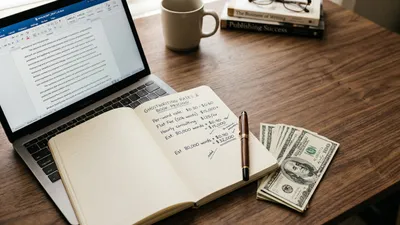
You can write a good book in 2026 — even if you’ve never written one before. The secret isn’t raw talent. It’s a repeatable process that turns a vague idea into a finished manuscript readers love.
In this guide, you’ll learn:
- The exact pre-writing work that makes drafts flow faster
- How to outline a book that keeps readers turning pages
- A daily writing routine that actually produces words
- Editing and revision strategies that separate good books from forgettable ones
- The tools (including AI) that cut months off your timeline
Here’s the full step-by-step process.
What Makes a Book “Good” in the First Place?
A good book is one that delivers on a clear promise to a specific reader. For fiction, that means emotional payoff, believable characters, and a story that earns its ending. For nonfiction, it means a reader finishes with a tangible transformation — new knowledge, a solved problem, or a shifted belief.
Every writing decision you make should serve this standard. If a scene, chapter, or sentence doesn’t pull your reader closer to that promise, it’s not working yet.
At Chapter.pub, we’ve watched 2,147+ authors publish 5,000+ books. The ones that resonate share three traits: clarity of purpose, respect for the reader’s time, and an honest voice. You can build all three on purpose.
Step 1: Find a Book Idea Worth Writing
Most aspiring authors stall here — not because they have no ideas, but because they have too many. The fix is to stress-test each idea against three questions.
Who is this book for? Get specific. Not “women who love romance” — try “women in their 30s who want steamy small-town romance with strong female leads.” Specificity is a feature, not a limitation.
What promise does it make? Fiction promises an emotional experience. Nonfiction promises a transformation. Write your promise in one sentence. If you can’t, keep digging.
Why you? Your unique angle, lived experience, or obsession is your moat. Readers can get information anywhere. They can only get your perspective from you.
If you’re stuck on ideas, our book writing ideas guide has over 100 starting points broken down by genre.
Step 2: Choose the Right Genre and Study It
The biggest rookie mistake is writing “a book” instead of a book in a specific genre. Genre is a contract with the reader — and breaking it is how good stories get 2-star reviews.
Spend two weeks reading the top 10 bestsellers in your target genre. Take notes on:
- Average word count (readers have genre-specific expectations)
- Pacing and chapter length
- Common tropes and conventions
- How authors open chapter one
Romance readers expect a happily-ever-after. Thriller readers expect a ticking clock. Self-help readers expect a clear promise and fast payoff. Meeting these expectations isn’t selling out — it’s basic respect for your audience.
Step 3: Build a Detailed Outline (Yes, Even If You “Hate Outlining”)
Pantsers — writers who draft without outlines — often spend months fixing structural problems that a one-week outline would have prevented. You don’t need a 40-page treatment, but you do need a map.
For fiction, try the Save the Cat! Beat Sheet or the Three-Act Structure. Both give you 10-15 key beats to hit across your manuscript. For nonfiction, outline chapter by chapter with a single sentence describing the core argument and the transformation each chapter delivers.
A good outline answers three questions for every chapter:
- What does the reader know at the start of this chapter?
- What do they know or feel by the end?
- Why do they need to turn the page?
For a deeper dive, see our complete book outline template.
The 40-50 Word Outline Rule
Every chapter should be summarizable in 40-50 words. If you can’t, the chapter is doing too much. Split it, cut it, or re-scope it before you write a single scene.
Step 4: Set a Realistic Writing Schedule
The biggest predictor of whether you’ll finish your book isn’t talent — it’s consistency. Stephen King writes 2,000 words a day, every day. You probably won’t match that on day one, and you don’t need to.
Here’s a schedule that works for most first-time authors:
| Time Available | Daily Word Count | Time to 80,000 Words |
|---|---|---|
| 30 min/day | 500 words | ~5 months |
| 1 hour/day | 1,000 words | ~3 months |
| 2 hours/day | 2,000 words | ~6 weeks |
| Weekends only | 2,500/session | ~8 months |
Pick the smallest number you can commit to without fail. Consistency beats intensity every single time. Writing 500 words a day for six months will always beat a manic 5,000-word weekend followed by three months of nothing.
Put your writing time on the calendar. Treat it like a dentist appointment. According to a University College London study, it takes an average of 66 days to form a new habit — so the first two months are the hardest.
Step 5: Write the First Draft (The Ugly Truth)
Your first draft will be bad. This isn’t pessimism — it’s physics. Anne Lamott famously called these “shitty first drafts,” and every working author writes them. The goal is not quality. The goal is completion.
Three rules for the drafting phase:
- Don’t edit while you write. Editing and drafting use different parts of your brain. Switching between them kills momentum.
- Skip scenes you’re stuck on. Type
[FIX THIS LATER]and move forward. Non-linear drafting is faster than staring at a blank page. - Protect your word count like a religion. Hit your daily target, then stop. Leaving a sentence unfinished makes tomorrow’s session easier.
If you want to accelerate this phase, tools like Chapter can help you generate scenes, expand outlines, and break through blocks. More on that in step 8.
Step 6: Show, Don’t Tell (The Rule Every Writer Should Master)
This is the single biggest difference between amateur and professional prose. Showing means dramatizing through action, dialogue, and sensory detail. Telling means summarizing through exposition.
Telling: Sarah was angry. Showing: Sarah’s hand tightened around the coffee mug until her knuckles went white.
The second version lets the reader feel Sarah’s anger instead of being told about it. Good books are built from sentences like that — hundreds of them, stacked on top of each other.
Our guide on show don’t tell breaks down the technique with 20+ examples from published novels.
Step 7: Revise Like a Ruthless Editor
Revision is where good books become great books. Most first-time authors revise too little and too gently. Here’s a three-pass revision system that actually works:
Pass 1 — Structure (2-3 weeks). Ignore prose entirely. Does every chapter earn its place? Are there plot holes? Does the pacing drag in act two? Cut entire chapters if they don’t serve the story.
Pass 2 — Scene and Character (2-3 weeks). Now go scene by scene. Is each character’s motivation clear? Does every scene advance plot, develop character, or both? Cut anything that does neither.
Pass 3 — Line Edits (2-3 weeks). Finally, focus on prose. Cut adverbs. Replace weak verbs. Tighten dialogue. Read every sentence aloud. If it stumbles off your tongue, fix it.
Between Pass 1 and Pass 2, let the manuscript rest for at least two weeks. You need distance to see it clearly. Stephen King’s On Writing recommends six weeks — take that if you can.
Step 8: Use Tools That Actually Help
You don’t need fancy software to write a book, but the right tools cut weeks off your timeline. Here’s what the modern author’s toolkit looks like in 2026:
Our Pick — Chapter
Chapter is our AI book writing platform built specifically for authors who want to draft, outline, and edit full-length books faster — without sacrificing voice or quality. Unlike generic AI chatbots, Chapter understands book structure, genre conventions, and long-form narrative flow.
Best for: First-time authors, nonfiction writers, and fiction authors who want AI assistance without losing creative control Pricing: $97 one-time (nonfiction) | Varies (fiction) Why we built it: After coaching thousands of authors, we saw that the #1 blocker wasn’t ideas — it was the grinding work of turning an outline into a finished draft. Chapter automates that grind while keeping you in the creative driver’s seat.
Chapter’s authors have published bestsellers, landed speaking gigs for 20,000+ attendees, and generated over $60K in book-driven revenue in 48 hours. We’ve been featured in USA Today and the New York Times.
Other tools worth knowing:
- Scrivener — Long-form writing app with research and scene management (one-time license)
- ProWritingAid — Grammar, style, and readability editor
- Vellum — Industry-standard ebook and print formatting (Mac only)
- Google Docs — Free, collaborative, surprisingly capable for full-length books
If you’re curious how Chapter compares, our book writing software roundup reviews the top 12 options with honest pros and cons.
Step 9: Get Feedback Before You Think You’re Ready
Your manuscript is not finished when you feel finished. It’s finished when trusted readers confirm it’s working. Here’s the feedback hierarchy from most to least useful:
- Developmental editor (paid, $1,000-$5,000) — Big-picture structural feedback
- Writing group (free, ongoing) — Regular feedback from fellow writers
- Beta readers (free, 3-10 people) — Target-audience readers who fit your genre
- Friends and family (free, but biased) — Use sparingly, for emotional support
Send your manuscript to 3-5 beta readers with specific questions: Where did you get bored? Where did you lose track? Which characters did you care about? Did the ending pay off? Open-ended “what did you think?” gets you useless answers like “it was good.”
Wait for at least three readers to flag the same problem before you change anything. One outlier opinion often isn’t signal — it’s noise.
Step 10: Decide How to Publish
Once your manuscript is polished, you have three paths:
Traditional publishing means querying literary agents, who then pitch publishers. Advantages: no upfront cost, bookstore distribution, prestige. Disadvantages: 1-3% acceptance rate, 12-24 month timeline, royalty rates of 7-15%.
Self-publishing means you become the publisher. Upload to Amazon KDP, IngramSpark, or Draft2Digital. Advantages: full control, 35-70% royalties, weeks not years. Disadvantages: you handle cover, formatting, and marketing yourself.
Hybrid publishing is a paid middle ground — a hybrid press handles production in exchange for fees. Be cautious: many hybrid presses are vanity operations in disguise. Check the Independent Book Publishers Association standards before signing anything.
Most first-time authors in 2026 go self-published. The numbers work better, the timeline is faster, and you keep creative control.
Common Mistakes to Avoid
- Starting with a prologue nobody asked for. Unless it’s essential, start with chapter one and a hook.
- Writing to impress other writers. Write to serve your readers.
- Confusing length with quality. A tight 60,000-word novel beats a bloated 120,000-word one.
- Skipping the outline because “it’ll stifle creativity.” Outlines free creativity by solving structural problems upfront.
- Publishing before you’re ready. A rushed book is forever attached to your author name. Be patient.
How Long Does It Take to Write a Good Book?
A good book typically takes 6 to 18 months to write, including drafting, revision, and editing. First-time authors often take 12-18 months for a novel of 80,000 words. Nonfiction books run faster — 3-6 months is realistic if you have the expertise and a clear outline.
Using AI writing tools like Chapter can cut this timeline significantly. Some of our authors have produced publishable drafts in 30-60 days without sacrificing quality. Learn more in our guide on how long it takes to write a book.
Can Anyone Really Write a Good Book?
Yes — anyone who can form clear sentences and commit to a daily practice can write a good book. Natural talent matters less than most people think. What separates published authors from aspiring ones is persistence, not genius. The writers who finish are the writers who show up.
If imposter syndrome is holding you back, see our post on how to write a book when you’re not a writer.
Do You Need to Be a Great Reader to Write a Great Book?
Yes. Reading widely and deeply is the single highest-leverage activity for any writer. Every working author is first a voracious reader. Your reading becomes the training data for your writing brain — the patterns, rhythms, and instincts you absorb shape everything you produce. Read at least 30 books a year in and outside your genre.
FAQ
How do I start writing a book if I have no experience?
Start by reading widely in your genre, then outline a book using a proven structure like the Three-Act Structure or Save the Cat. Next, commit to writing 500-1,000 words a day for 90 days. Don’t worry about quality on the first draft — just finish it. Experience comes from doing, not waiting.
What is the hardest part of writing a book?
The hardest part of writing a book is finishing the first draft. Most aspiring authors quit somewhere between 20,000 and 50,000 words — the “messy middle” where the initial excitement fades. The solution is a daily writing habit and an outline that tells you exactly what comes next.
How many words should a good book be?
Most good books fall between 60,000 and 90,000 words, depending on genre. Thrillers and romance run 70,000-90,000. Literary fiction averages 80,000-100,000. Nonfiction is usually 40,000-60,000. Memoirs land around 70,000-90,000. Stay within your genre’s expected range.
Can AI write a good book for me?
AI can dramatically accelerate the writing process, but the best books still involve meaningful human direction. Tools like Chapter use AI to generate drafts, expand outlines, and unblock writers — but you steer the creative vision, make the emotional choices, and finalize the voice. The result is a book you can genuinely call yours, written in a fraction of the time.
How do I know if my book is actually good?
Get feedback from 3-5 beta readers in your target audience and look for patterns. If multiple readers flag the same problem — pacing, a confusing subplot, a flat character — that’s a real issue. One reader complaining about a specific scene often isn’t. Your own sense of the book is unreliable. External readers in your niche are the only honest mirror.
Writing a good book isn’t reserved for the gifted few. It’s a craft — one with learnable rules, repeatable processes, and a clear path from blank page to published manuscript. Start with step one today. By this time next year, you could be holding your finished book in your hands.
Ready to speed up the process? Try Chapter free and see how 2,147+ authors have turned their ideas into finished books.