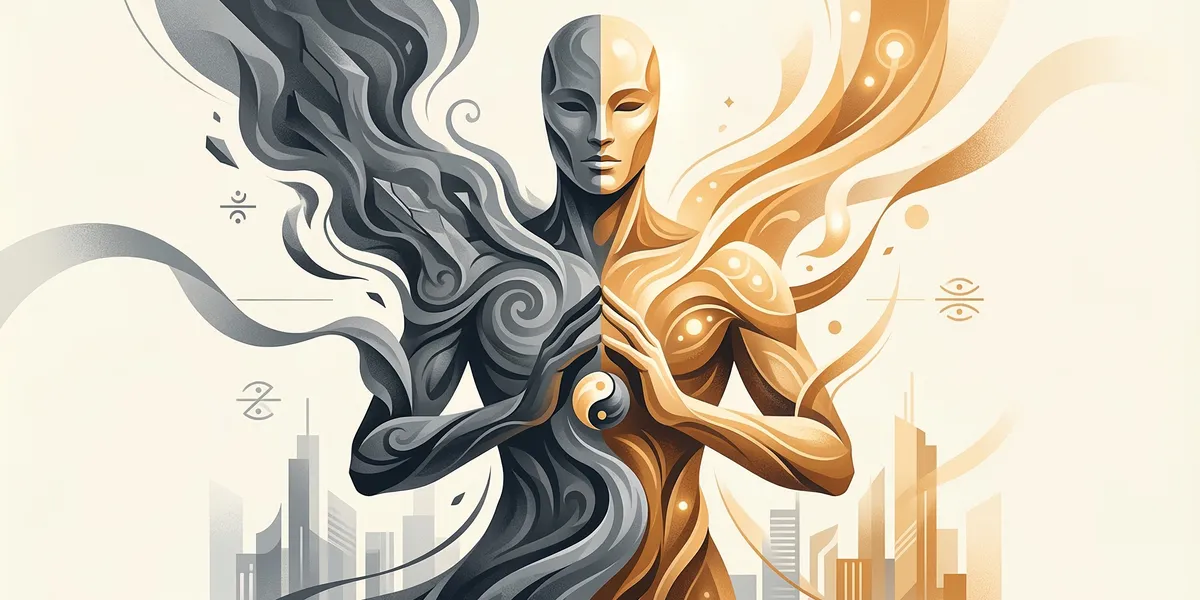
A morally gray character is one whose actions can’t be neatly filed under “good” or “evil.” They do bad things for understandable reasons. Good things by terrible means. They sit in the space between hero and villain — and that space is where the most compelling fiction lives.
Morally gray characters dominate modern storytelling because readers have grown past the simplicity of pure heroes and irredeemable villains. Moral complexity reflects reality, and fiction that reflects reality resonates.
What “Morally Gray” Actually Means
Morally gray doesn’t mean “a good person who sometimes makes mistakes.” That’s just a realistic character. And it doesn’t mean “a bad person with one redeeming quality.” That’s a villain with a hobby.
True moral grayness exists when the reader cannot definitively say whether the character is good or bad — and when different readers, discussing the same character, reach genuinely different conclusions.
Tyrion Lannister in George R.R. Martin’s A Song of Ice and Fire is morally gray. He’s witty, intelligent, and occasionally compassionate. He also enables an oppressive regime, kills his own father, and makes choices driven more by self-preservation than principle. Is he a good person in bad circumstances? A bad person with good instincts? The question has no clean answer. That’s the point.
A morally gray character forces the reader into active moral engagement. They can’t passively receive the story’s judgment. They have to form their own.
Why Morally Gray Characters Dominate Modern Fiction
The shift toward moral complexity in fiction tracks with broader cultural changes. Audiences are more skeptical of simple narratives. They’ve seen enough of the real world to know that “good guys” and “bad guys” are inadequate categories for human behavior.
Readers are tired of pure heroes. The knight in shining armor who always does the right thing can feel flat, preachy, or naive. Morally gray characters feel like people — complicated, contradictory, and unpredictable.
Moral complexity creates tension. When a character might do the right thing or the wrong thing — and the reader genuinely doesn’t know which — every decision becomes suspenseful. A pure hero’s choices are predictable. A morally gray character’s choices are not.
Gray characters generate discussion. The most-discussed characters in fiction are almost never the paragons of virtue. They’re the ones readers argue about. “Was that justified?” “Did they have a choice?” “Would you have done the same thing?” That conversation keeps stories alive long after the last page.
The Morality Spectrum
Not all morally gray is the same. Understanding where your character sits on the spectrum helps you maintain consistency and manage reader expectations.
Light Gray: Good Person, Hard Choices
They genuinely want to do the right thing but live in a world where the right thing is unclear or comes at an unbearable cost. Their moral struggles are real, and they sometimes choose wrong — but they feel the weight of it.
Example: Katniss Everdeen. She’s essentially decent, but the Hunger Games force her into situations where survival requires violence, manipulation, and political performance. Her grayness comes from circumstance, not disposition.
Medium Gray: Self-Interest with a Conscience
They’re primarily motivated by personal goals — survival, power, revenge, ambition — but possess enough moral awareness to occasionally be troubled by their choices. They’re not evil. They’re just not willing to lose for the sake of being good.
Example: Kaz Brekker in Six of Crows. He’s a criminal mastermind who will manipulate, threaten, and deceive to achieve his goals. But he has a fierce code of loyalty to his crew, and his underlying motivation — revenge against the man who destroyed his brother — is sympathetic even when his methods are not.
Dark Gray: Willing to Cross Lines
They regularly do things most people would consider wrong. They might hurt innocents, betray allies, or commit violence casually. But they have a logic, a worldview that makes their behavior internally consistent. The reader can understand the reasoning even while finding the actions repellant.
Example: Cersei Lannister. She’s ruthless, vindictive, and willing to destroy anyone who threatens her power or her children. She’s also a woman operating in a patriarchal system that has systematically brutalized her. Her villainy is real, but its roots are comprehensible.
Near-Black: Almost Villain
They do terrible things with minimal remorse. The reader’s investment comes not from sympathy but from fascination — from wanting to understand a mind that works this way. A thin thread of humanity keeps them from being a straightforward villain.
Example: Villanelle in Killing Eve. She’s a psychopathic assassin who kills casually and with evident pleasure. The thread of humanity is her genuine emotional connection to Eve — something she doesn’t understand and can’t control. Without that connection, she’d be a monster. With it, she’s morally gray.
Techniques for Writing Morally Gray Characters
Put Them in No-Win Situations
The most effective way to create moral grayness is to make every available choice costly. When there is no clean option — when doing good requires doing harm, when saving one person means sacrificing another — the character’s choice reveals who they really are.
The trolley problem exists in philosophy textbooks for a reason. In fiction, you can build a version of it into every major decision your character faces. The key is making sure both options have real consequences that the narrative acknowledges.
Give Them Competing Loyalties
A character torn between two legitimate but incompatible obligations will produce moral complexity naturally. Loyalty to family vs. loyalty to country. Love for one person vs. duty to many. Personal code vs. group survival.
The competing loyalties create internal conflict that externalizes through choices. The reader watches the character sacrifice one good thing for another and has to decide whether the trade was justified.
Show the Cost of Their Choices
Every morally questionable action should have visible consequences. People get hurt. Relationships fracture. The character carries psychological weight from what they’ve done. If a character makes hard choices and nothing bad happens as a result, the moral complexity evaporates.
The cost is what separates a morally gray character from a power fantasy. In a power fantasy, the protagonist does whatever they want and everything works out. In morally gray fiction, choices have weight because they leave marks.
Let the Reader Argue
Don’t resolve the moral question for your audience. Don’t have a wise mentor character explain that the protagonist was right all along. Don’t use the narrative itself to validate or condemn every choice.
Present the action. Present the consequences. Present the character’s reasoning. Then let the reader decide.
The most memorable morally gray characters are the ones readers disagree about. If your beta readers are split on whether a character’s big decision was justified, you’ve done your job.
Make Their Morality Internally Consistent
A morally gray character needs a coherent moral framework — it just doesn’t have to be the reader’s framework. They need rules, priorities, and values that explain their pattern of behavior even when individual actions seem contradictory.
If a character kills without hesitation in chapter three but refuses to lie in chapter ten, the reader needs to understand why. Maybe the character values directness — they’ll shoot you, but they won’t deceive you. That’s a moral code. It’s not the reader’s moral code, but it’s internally consistent, and that consistency is what makes the character feel real.
Making the Reader Want to Debate
The ultimate goal of a morally gray character is to make the reader think. Not to tell them what to think — to provoke the thinking.
Provide evidence for multiple interpretations. Give the reader enough information to argue that the character is good and enough to argue they’re bad. Let both cases be legitimate.
Avoid authorial judgment. The narrative tone should not tip the scales. Describe what the character does and let the actions speak. The moment you editorialize — “she knew it was wrong” or “he had no choice” — you’re resolving ambiguity that should remain open.
Use other characters as mirrors. Different characters in the story should interpret the morally gray character differently. One ally sees them as a hero. One sees them as a monster. Both are right. The reader gets to decide whose perspective they align with.
Let the character believe they’re justified. Morally gray characters rarely see themselves as wrong. They have reasons. They have context. They have a version of the story where their actions make sense. Let the reader hear that version — and then weigh it against the evidence.
Common Mistakes
Edgy without substance. A character who swears, smokes, and wears black isn’t morally gray. They’re a costume. Moral grayness is about decisions and their consequences, not aesthetic choices.
Gray equals emotionless. Some writers make morally gray characters cold and detached, as if moral complexity requires an absence of feeling. The opposite is true. The most compelling morally gray characters feel deeply — they just make hard choices despite (or because of) those feelings.
Inconsistent morality without reason. If a character’s moral behavior shifts randomly from scene to scene, they’re not gray — they’re poorly written. The character needs a consistent internal logic, even if that logic produces unpredictable behavior.
Resolving the grayness. Don’t let your ending declare definitively that the character was good all along or bad all along. A redemption arc can work within moral grayness, but it shouldn’t erase it. The character can grow while remaining complex.
All gray, no anchor. If a character has no values at all — nothing they care about, nothing they protect, no line they won’t cross — they’re not morally gray. They’re empty. Give them at least one fierce, non-negotiable commitment. That anchor is what makes the grayness meaningful.
Building Your Morally Gray Character: A Framework
- Start with their core value. What do they care about more than anything? Family? Freedom? Power? Survival? Justice? This value drives every decision.
- Create a conflict with that value. Put them in a situation where pursuing their core value requires sacrificing something else that matters — ethics, relationships, safety.
- Define their line. What won’t they do, no matter what? Every morally gray character needs at least one absolute limit. That limit tells the reader who they are at their core.
- Build their justification. How does the character explain their behavior to themselves? Their internal narrative should be persuasive enough that the reader at least pauses before rejecting it.
- Map the consequences. Every morally questionable action should cost something. Track the cumulative toll across the character arc. Let the weight build.
- Test the grayness. After drafting, ask three different people: “Is this character a good person or a bad person?” If they all give the same answer, you haven’t achieved moral grayness. If they argue, you have.
The best morally gray characters remind us that the world doesn’t divide cleanly into heroes and villains. They sit in the uncomfortable middle where real human behavior lives — making choices that are simultaneously understandable and unforgivable, justified and wrong, selfish and brave.
That discomfort is not a flaw in your writing. It is the entire point.