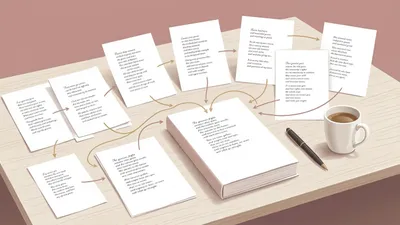
You can write a short story collection even if you only have a handful of drafts right now. The process is more about curation and arrangement than raw page count.
In this guide, you’ll learn:
- How to choose a unifying theme that holds your collection together
- The step-by-step process for writing enough stories to fill a book
- How to arrange your stories for maximum emotional impact
- What publishers and readers actually expect from a collection
Here’s how to build yours from the ground up.
What Is a Short Story Collection?
A short story collection is a book of individual short stories — typically 10 to 15 — written by the same author and gathered under a single cover. Unlike a novel that follows one continuous narrative, each story in a collection stands alone while contributing to a larger whole.
Collections differ from anthologies, which feature work from multiple authors. Your collection is entirely yours — your voice, your vision, your arrangement.
Most published collections run between 40,000 and 80,000 words. That’s roughly 10 to 15 stories averaging 3,000 to 5,000 words each, though you have room to mix shorter pieces with longer ones.
How to Choose a Theme for Your Collection
Every strong collection has a thread connecting its stories. That thread doesn’t need to be obvious — it just needs to exist.
Thematic unity means your stories share a concern, an obsession, or a lens. Think of it as a conversation between stories rather than a strict rulebook.
Here are approaches that work:
- Shared subject matter. All stories explore grief, immigration, small-town life, or coming of age. The topic stays consistent while the characters and situations change.
- Consistent setting. Every story takes place in the same town, neighborhood, or time period. The setting becomes a character.
- Recurring characters. A loosely connected cast appears across stories. Readers piece together relationships from different angles.
- Tonal or stylistic unity. The stories share a voice or mood — dark humor, quiet melancholy, surreal logic — even when the plots vary.
- Structural experimentation. Each story uses a different form (letters, lists, interviews, second person) to explore the same question from multiple angles.
You don’t need to pick your theme before you start writing. Many authors discover it after drafting several stories and noticing the patterns.
Step 1: Write More Stories Than You Need
Aim to write 18 to 25 stories knowing you’ll cut some. Not every story belongs in the final collection, and having surplus material gives you the freedom to be selective.
If you’re starting from scratch, set a production schedule. One story per week gives you 20 drafts in five months — more than enough raw material.
Use these strategies to generate story ideas quickly:
- Mine your existing work. Pull from abandoned novel chapters, writing exercises, and old workshop pieces. Revision can transform fragments into standalone stories.
- Write in clusters. Once you’ve identified your theme, brainstorm 10 variations on it. Write the ones that excite you most.
- Vary your approach. Mix lengths, points of view, time periods, and tones. A collection with nothing but 4,000-word third-person stories in past tense will feel monotonous.
- Use writing prompts as starting points. Short story ideas and genre-specific prompts can spark stories you wouldn’t have imagined otherwise.
The goal at this stage is volume, not perfection. You’ll revise later.
Step 2: Select Your Strongest Stories
Once you have a surplus of drafts, read through them with fresh eyes and start cutting.
Ask yourself three questions about each story:
- Does it stand alone? A reader should be able to pick up any single story and feel satisfied by the ending. If a story only makes sense in context, it’s not ready.
- Does it serve the collection’s theme? Even loosely connected collections need coherence. A brilliant story that doesn’t fit the conversation between your other pieces might belong in a different project.
- Is the quality consistent? One weak story drags down everything around it. Better to have 11 strong stories than 14 with three that feel like filler.
Get outside feedback. Share your top 15 candidates with a trusted reader and ask which ones they’d cut. You’ll be surprised — the story you love most might not be the one that serves the collection best.
A finished collection typically includes 10 to 15 stories. Aim for a total word count between 40,000 and 60,000 words for a standard trade collection.
Step 3: Create an Emotional Arc Through Arrangement
The order of your stories is as important as the stories themselves. A collection isn’t a random stack — it’s a curated reading experience with its own rhythm.
Start with a strong opener. Your first story sets the tone for the entire book. Choose something that hooks readers immediately and establishes what your collection is about. It doesn’t need to be your absolute best piece, but it must be compelling and representative.
End with your most resonant story. The last story is what readers carry with them. Pick the one that lingers — the story that makes someone sit quietly after finishing it.
Alternate pace and intensity. Follow a long, emotionally heavy story with something shorter and lighter. This prevents reader fatigue and creates rhythm.
Here’s a practical arrangement strategy:
| Position | Purpose | Story Characteristics |
|---|---|---|
| Story 1 | Hook the reader | Strong voice, accessible, sets the theme |
| Stories 2-4 | Build range | Vary length, tone, and perspective |
| Story 5-6 | Anchor piece | Your longest or most ambitious story (the centerpiece) |
| Stories 7-9 | Deepen the theme | Surprise the reader with unexpected angles |
| Story 10-12 | Build toward the close | Increasing emotional weight |
| Final story | Leave a lasting impression | Your most resonant, thought-provoking piece |
Scatter your flash fiction. If you’ve included very short pieces (under 1,500 words), place them between longer stories as breathing room. They function like palate cleansers.
Try reading the entire collection in order in one sitting. Notice where your attention drifts — that’s where the arrangement needs work.
Step 4: Revise Each Story for the Collection Context
Once your stories are selected and arranged, go through each one again. Revision at the collection level is different from revising individual stories.
Watch for:
- Repetitive openings. If three stories start with a character waking up, change two of them. Readers notice patterns across stories more than you’d expect.
- Character name overlap. Two protagonists named Sarah will confuse readers. Do a name audit across the entire collection.
- Tonal inconsistency. Each story has its own voice, but the collection should feel like it was written by the same person. Sand down any pieces that feel like they came from a different writer.
- Echoing details. If multiple stories use the same metaphor, setting detail, or plot device, decide which one gets to keep it and revise the others.
This is also the stage to refine transitions. The last line of one story and the first line of the next should feel intentional, even though they’re separate works.
Step 5: Write the Front and Back Matter
Your collection needs more than just the stories. These elements frame the reading experience.
Title. The collection’s title should do one of three things: name the longest or most important story, introduce the theme, or create intrigue. Many successful collections are titled after one of their stories — it’s the simplest approach and it works.
Table of contents. Always include one. Readers of collections flip back and forth more than novel readers do.
Acknowledgments. If any stories were previously published in literary magazines or anthologies, credit the original publications. This is standard practice and shows your work has been vetted.
Author bio. Keep it brief. One paragraph covering your writing credentials, where you live, and where readers can find more of your work.
Epigraph (optional). A well-chosen quote at the beginning of the collection can signal your theme before the first story begins.
Step 6: Get Professional Feedback and Edit
Before you publish, your collection needs editing at two levels.
Story-level editing. Each individual story should be polished — clean prose, tight dialogue, no plot holes. If you haven’t already worked with beta readers or a writing group, now is the time.
Collection-level editing. A developmental editor or experienced reader should evaluate the collection as a whole. They’ll catch issues you can’t see: pacing problems, thematic gaps, arrangement weaknesses, and stories that don’t earn their place.
Consider hiring a professional editor who has experience with story collections specifically. Novel editors and collection editors look for different things.
How to Publish a Short Story Collection
You have three main paths to publication, and the right choice depends on your goals, timeline, and existing platform.
Traditional Publishing
Submit to literary agents who represent short fiction, or send directly to independent presses that accept unagented submissions. Collections are a harder sell than novels at major publishers, but independent and university presses actively seek them.
Build your case by publishing individual stories in literary magazines and contests first. A collection where half the stories have publication credits is significantly easier to place.
Self-Publishing
Self-publishing gives you full control over timeline, design, and pricing. You’ll need to handle formatting, cover design, and distribution yourself — but you keep all the revenue and creative control.
Our Pick — Chapter
Chapter helps you draft, organize, and refine your short stories with AI-assisted writing tools. You can work on individual stories, then compile them into a collection-ready manuscript with consistent formatting.
Best for: Fiction writers who want AI assistance with drafting and revision Why we built it: Writing 15 polished short stories is a massive creative undertaking — Chapter helps you maintain quality and momentum across the entire collection.
For a detailed walkthrough of the publishing process, see our guide on how to publish a short story collection.
Hybrid Approach
Publish individual stories in magazines and journals first to build an audience and refine each piece, then compile the collection for self-publishing or pitch it to a press with your publication credits as proof of quality.
How Many Stories Should Be in a Collection?
A short story collection typically contains 10 to 15 stories with a total word count between 40,000 and 80,000 words. Some collections go shorter — as few as 7 or 8 stories — while others push past 20.
The right number depends on your story lengths. A collection of flash fiction might include 30 to 50 very short pieces. A collection anchored by novellas might only have 5 or 6.
| Collection Type | Story Count | Typical Word Count |
|---|---|---|
| Flash fiction collection | 25-50 stories | 20,000-35,000 words |
| Standard collection | 10-15 stories | 40,000-70,000 words |
| Long story collection | 7-10 stories | 50,000-80,000 words |
| Novella collection | 3-6 stories | 40,000-60,000 words |
The publishing standard for debut collections is 10 to 12 stories and 45,000 to 55,000 words. Hitting that range gives you the best chance with agents and publishers.
How Long Does It Take to Write a Short Story Collection?
Most writers take one to three years to complete a collection from first draft to final manuscript. The timeline depends on how many stories you already have, how much revision they need, and whether you’re submitting individual pieces to magazines along the way.
Here’s a realistic timeline if you’re starting from scratch:
- Months 1-6: Write 15-20 first drafts (one per week)
- Months 7-9: Revise, get feedback, and select the strongest 10-12
- Months 10-11: Arrange the collection, revise for cohesion
- Month 12: Final polish and preparation for publication
If you already have a backlog of stories from workshops, journals, or personal writing, you can compress this significantly. Some writers assemble collections from a decade of accumulated work.
Common Mistakes to Avoid
- Including every story you’ve ever written. Curation matters more than volume. A tight collection of 10 stories beats a bloated collection of 20 where half are filler.
- Arranging stories chronologically by when you wrote them. Your writing order has nothing to do with the best reading order. Arrange by emotional arc, not creation date.
- Ignoring variety. A collection where every story is the same length, same POV, and same structure numbs the reader. Vary your approach deliberately.
- Skipping the opening story choice. Your first story is your collection’s handshake. Don’t default to putting your oldest piece first — choose your most inviting one.
- Treating the collection as an afterthought. The arrangement, title, and framing matter as much as the individual stories. A collection is a book, not a filing cabinet.
Do You Need a Theme for a Short Story Collection?
You don’t need a rigid theme, but you need thematic coherence — a sense that these stories belong together. The connection can be subtle: shared emotional territory, a consistent voice, or a recurring question that each story approaches differently.
Collections without any unifying thread feel like grab bags. Readers and publishers want to understand why these specific stories were gathered into this specific book.
If you’re struggling to find your theme, read through your stories and list the emotions, settings, and conflicts that appear most often. The theme is usually already there — you just haven’t named it yet.
Can You Mix Genres in a Short Story Collection?
You can mix genres if the collection has a stronger unifying element holding it together. A shared setting, recurring characters, or consistent thematic concern can bridge genre differences.
For example, a collection about small-town secrets could include a literary realism piece, a ghost story, a mystery, and a dark comedy — all set in the same town. The setting creates coherence while the genre shifts keep readers engaged.
However, a collection that jumps from hard science fiction to literary realism to romance with no connecting thread will confuse readers and make the book harder to market. Genre variety works when it serves a purpose.
FAQ
How do you structure a short story collection?
You structure a short story collection by opening with your most compelling story, alternating between long and short pieces for rhythm, placing your strongest work at the beginning and end, and building an emotional arc across the full book. Most collections include 10 to 15 stories organized around a unifying theme or shared concern.
How many words should a short story collection be?
A short story collection should be 40,000 to 80,000 words total. The standard for debut collections at traditional publishers is 45,000 to 55,000 words across 10 to 12 stories. Flash fiction collections can be shorter (20,000-35,000 words), while collections featuring novellas may reach 80,000 words.
Can you self-publish a short story collection?
Yes, you can self-publish a short story collection through platforms like Amazon KDP, IngramSpark, or Draft2Digital. Self-publishing gives you full creative control over story selection, arrangement, cover design, and pricing. Many successful collections combine stories previously published in literary magazines with new, unpublished work.
How do you choose which stories to include?
Choose stories for your collection based on three criteria: each story must stand alone as a complete work, it must serve the collection’s theme or unifying vision, and it must meet your quality standard consistently. Write more stories than you need — aim for 18 to 25 drafts — then cut down to your strongest 10 to 15.
Should you publish stories individually before collecting them?
Publishing individual stories in literary magazines and writing contests before collecting them is a proven strategy. It builds your reputation, provides editorial feedback that strengthens each piece, and gives you publication credits that make your collection more attractive to agents and publishers. Many award-winning collections started as individually published stories.