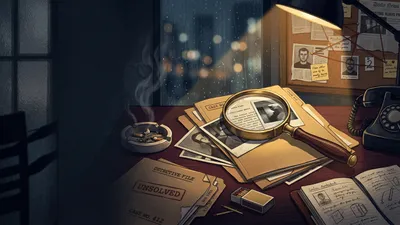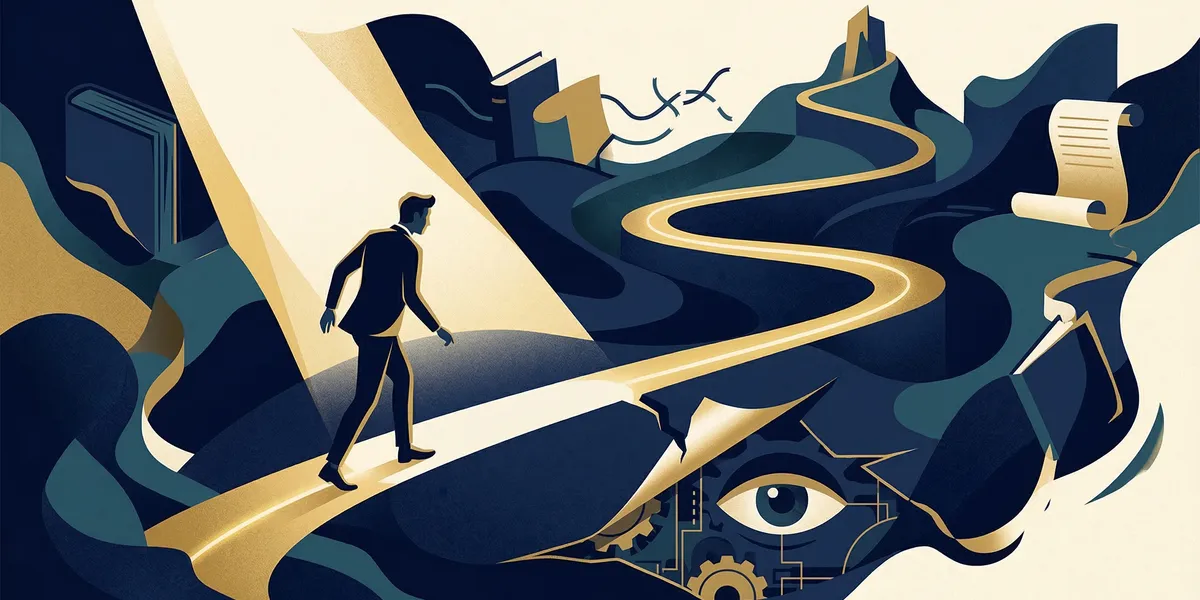
A twist ending does not just surprise the reader. It changes the meaning of everything that came before it.
That is the difference between a twist ending and a plot twist. A plot twist redirects the story at some midpoint — a betrayal, a revelation, a sudden reversal. A twist ending reframes the entire narrative. When it works, the reader finishes the last page and immediately wants to start over, because the story they thought they were reading was not the story at all.
The Reread Test
The simplest way to evaluate a twist ending: does the story improve on a second read?
A great twist ending makes a second reading richer than the first. You notice the clues you missed. You see the double meanings in dialogue. You realize the author was telling you the truth the whole time, and you just did not understand what you were hearing.
The Sixth Sense passes this test. On a second viewing, every scene with Bruce Willis takes on new meaning. The clues were there — his wife ignoring him at dinner, the cold, the fact that no one but the boy speaks to him directly. The twist does not cheat. It recontextualizes.
Gone Girl passes this test. The first half is a missing-person thriller. After the twist, you reread those early chapters and see Amy constructing every piece of evidence, manipulating every detail, writing those diary entries with calculated precision. The “loving wife” was performing. The story was always a different kind of horror.
If your twist makes the first read feel like a waste — if the reader thinks “well, none of that mattered” — the twist has failed.
Types of Twist Endings
Reality was not what it seemed. The world, situation, or context the reader understood turns out to be fundamentally different. The character was dead the whole time. The paradise was a simulation. The war was a lie. This type requires meticulous consistency — every detail in the story must work under both interpretations.
The unreliable narrator. The person telling the story was lying, deluded, or omitting critical information. Agatha Christie’s The Murder of Roger Ackroyd pulled this off in 1926 and readers are still arguing about whether it was fair. The narrator committed the murder and simply did not mention it. This type requires establishing the narrator’s credibility early so the betrayal hits harder.
The hero was the villain. The protagonist — the character the reader was rooting for — turns out to be the antagonist. Or their actions, framed as heroic throughout, are revealed to have been destructive. This works best when the reader’s sympathy was genuine, because the twist forces them to question their own moral judgments.
It was all connected. Seemingly unrelated storylines, characters, or events converge in the final pages, revealing that the whole story was a single, interconnected pattern. David Mitchell’s Cloud Atlas operates this way, as does the film Magnolia. The twist is structural — not one revelation but the sudden perception of a hidden architecture.
The meaning inverts. The story’s apparent theme — love conquers all, good triumphs over evil — is reversed by the ending. The love story was actually about control. The triumph was actually a tragedy. This is the subtlest type of twist and the hardest to execute because it requires the reader to rethink the story’s emotional core, not just its plot.
How to Plant Clues
The clues are the difference between a fair twist and a cheat. If there are no clues, the twist feels like the author just made something up at the end. If the clues are too obvious, there is no twist at all.
Hide in plain sight. The best clues are details that seem to mean one thing on a first read and something entirely different on a second. In The Sixth Sense, the cold temperature in scenes with Malcolm seems like atmospheric detail. On a second viewing, it is a sign of ghostly presence. The clue was visible. Its meaning was hidden.
Use misdirection. A magician does not hide the trick — they direct your attention elsewhere. In fiction, you can plant a clue in the same scene as a more dramatic event. The reader’s attention goes to the drama, and the clue slips past unnoticed.
Let characters tell the truth. Sometimes a character can say exactly what is really happening, and the reader will not believe them — because the reader has built a different story in their head. The reader dismisses the truth as a joke, a metaphor, or a character quirk. This is one of the most satisfying forms of foreshadowing because the reader will feel foolish in the best possible way when they look back.
Use Chekhov’s Gun in reverse. Chekhov’s principle says every element in a story should be necessary. In a twist ending, you can use this against the reader — introduce an element that seems to serve one narrative purpose, then reveal it served a completely different one. The gun on the wall was never going to be fired. It was evidence.
Vary your clue types. Mix visual details, dialogue, character behavior, and structural cues. If all your clues are in dialogue, a careful reader will catch the pattern. Spread them across different narrative channels, and each individual clue becomes harder to isolate.
The Fair Play Principle
This comes from mystery writing, but it applies to all twist endings: the reader should have a fair chance to figure it out.
That does not mean the reader should figure it out. It means they could have, if they had been paying close enough attention. When the twist lands and the reader looks back, they should feel the clues were there — not that the author withheld essential information.
Agatha Christie was meticulous about this. Her solutions are surprising but never arbitrary. Every piece of evidence was available. Every suspect had a motive. The reader had the same information the detective had — they just did not assemble it correctly.
If you have to introduce new information in the final chapter to make your twist work, it is not a twist. It is a surprise, and there is a significant difference.
Famous Twist Endings Worth Studying
- Agatha Christie, The Murder of Roger Ackroyd — the narrator did it
- Gillian Flynn, Gone Girl — the victim engineered everything
- Dennis Lehane, Shutter Island — the investigator was the patient
- Chuck Palahniuk, Fight Club — the two main characters were one person
- Shirley Jackson, We Have Always Lived in the Castle — the slow reveal of what Merricat actually did
- Daphne du Maurier, Rebecca — the idealized dead wife was nothing like the narrator imagined
Study these not just for the twists themselves but for the craft of clue placement. Notice how early the authors start laying groundwork. Notice what they show you that you dismissed.
Common Mistakes
No clues at all. A twist with no foreshadowing is not clever. It is arbitrary. The reader does not feel outsmarted — they feel cheated. Always plant clues, even subtle ones.
Contradicting established facts. If your twist requires a detail from chapter three to be retroactively false — not reinterpreted, but actually wrong — the twist breaks the reader’s trust. Every fact in the story must remain true under the twist’s new interpretation.
The twist negates reader investment. “It was all a dream.” “None of it was real.” “The character was dead the entire time and nothing they did mattered.” These twists tell the reader that their emotional investment was wasted. A twist should add meaning, not subtract it.
Telegraphing too clearly. If the reader sees the twist coming from chapter two, you have no surprise — just a long, predictable wait. Workshop your twist. If beta readers catch it early, your clues need to be more subtle or your misdirection needs to be stronger.
Twist for twist’s sake. Not every story needs a twist ending. If your story works beautifully as a straight narrative, a forced twist will undermine it. Twist endings should feel inevitable in retrospect — like the story was always heading here, and you just did not see it.
When a Twist Ending Works
The best twist endings are not tricks. They are revelations.
They do not make the reader feel fooled. They make the reader feel that the story was deeper, sadder, more complex, or more beautiful than they realized. The twist is not the point — the new understanding is the point.
Write a story that works on its surface level. Plant your clues with care and subtlety. Misdirect with honesty, not deception. And when you pull back the curtain in the final pages, make sure what the reader sees is not just different from what they expected — but more true.
That is the difference between a surprise and a revelation. A surprise makes you gasp. A revelation makes you see.