You can learn how to write poetry. You do not need formal training, an MFA, or some innate gift that only a few people receive at birth. Poetry is a craft, and like all crafts, it improves with practice, study, and honest revision.
This guide covers the full arc of learning to write poetry — from building your first habits to understanding the tools that make poems work. Whether you are writing your first poem or returning after years away, these techniques will sharpen your work.
Start by reading poetry
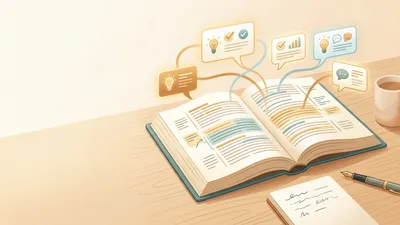
Every poet starts as a reader. Reading poetry teaches you what poems can do — how they move, surprise, and land — in ways that no writing manual can replicate.
You do not need to read everything. Start with poets whose work makes you feel something. Read widely across eras and styles. Read Mary Oliver for precise nature imagery. Read Terrance Hayes for inventive form. Read Warsan Shire for raw emotional immediacy.
Three practical reading habits:
- Read one poem every morning before you check your phone. The Poetry Foundation and poets.org both offer free daily poems.
- When a poem hits you, read it again. Then read it a third time and ask: how did the poet do that?
- Copy out poems you admire by hand. This old practice forces you to notice every word choice, every line break, every silence.
Reading widely also prevents you from writing in a vacuum. The global poetry market has grown to an estimated $1.3 billion annually, with poetry book sales reaching 9.8 million physical copies in the US in 2024. More people are reading and writing poetry than at any point in modern history. You are joining an active, growing community.
Build a daily writing practice
Talent matters less than consistency. Poets who write regularly produce better work than poets who wait for inspiration.
Start with ten minutes a day. Set a timer, pick a starting point, and write without stopping. Do not edit. Do not judge. The goal is volume, not perfection.
Prompts that actually work:
- Describe a specific object in your house using only sensory details — no abstract words allowed.
- Write about a memory triggered by a smell.
- Take a line from a poem you read this morning and use it as your opening. Then go somewhere the original poet did not.
- Write about something you saw on your walk today. Describe it so precisely that a stranger could find it.
Keep a notebook or a notes app dedicated to fragments — single lines, images, overheard phrases, strange combinations of words. These fragments become raw material for poems. Many working poets, including Naomi Shihab Nye, have described the notebook habit as essential to their process.
If you want structured prompt ideas to get started, browse our collection of 300 writing prompts or try these creative writing exercises for beginners.
Learn the essential tools of poetry
Poetry has a toolkit, just like carpentry or cooking. You do not need to master every tool before you start, but understanding what is available will expand what your poems can do.
Imagery
Imagery is the foundation. A poem lives or dies on the quality of its images — the specific, sensory details that make a reader see, hear, feel, taste, or smell what you describe.
Abstract language weakens poems. Instead of writing “she was sad,” write what sadness looks like in this specific moment: the unwashed coffee cup on the counter, the dog leash still hanging by the door, the way she holds her phone without calling anyone.
For a deeper dive into this technique, read our guide on imagery in writing.
Sound
Poetry is meant to be heard. Even when readers encounter a poem on a page, they hear it internally. Sound is what separates poetry from prose broken into short lines.
The key sound tools:
- Alliteration — repeating consonant sounds at the beginning of words. “Peter Piper” is the cliche version. Done well, alliteration creates momentum without calling attention to itself.
- Assonance — repeating vowel sounds within words. Long vowels slow a line down. Short vowels speed it up.
- Consonance — repeating consonant sounds anywhere in words, not just the beginning.
- Rhythm — the pattern of stressed and unstressed syllables. Even in free verse, rhythm matters. Read your poems aloud. Your ear will catch what your eye misses.
Figurative language
Metaphor and simile are the poet’s core tools for making connections. A metaphor says one thing is another. A simile says one thing is like another.
But do not stop at metaphor. Poetry uses personification, synecdoche, metonymy, hyperbole, and irony. Each device creates a different kind of surprise. The Poetry Foundation’s glossary of poetic terms is a solid reference when you encounter an unfamiliar technique.
For an overview of all the tools available, see our guide to literary devices.
Line breaks
Where you break a line changes how a poem breathes. A line break can create suspense, emphasize a word, introduce ambiguity, or control pacing.
Compare:
I told her I loved her and she laughed
Versus:
I told her I loved her
and she laughed
The second version creates a pause — a held breath — between the confession and the reaction. That pause is the poem.
General principles for line breaks:
- Break at moments of tension or surprise
- Avoid breaking in the middle of a phrase unless the disruption is intentional
- Read your line breaks aloud. If you stumble, the reader will too.
Understand poetic forms
Form gives a poem structure. Some poets work exclusively in free verse. Others find that constraints spark creativity. Most end up somewhere in between.
Here are the forms worth learning:
| Form | Structure | Best For |
|---|---|---|
| Free verse | No set rules for rhyme or meter | Personal expression, modern voice |
| Sonnet | 14 lines, usually iambic pentameter | Love, argument, turn of thought |
| Haiku | 3 lines (5-7-5 syllables) | Single moments, nature, brevity |
| Villanelle | 19 lines, two repeating refrains | Obsession, grief, circular thought |
| Ghazal | Couplets with a refrain and rhyme scheme | Longing, loss, beauty |
| Pantoum | Repeating lines in a specific pattern | Memory, dreamlike states |
| Prose poem | No line breaks, but uses poetic techniques | Narrative moments, blurred genres |
If you are just starting, free verse is the best entry point. It lets you focus on imagery, voice, and meaning without worrying about syllable counts or rhyme schemes.
Once free verse feels comfortable, try a form with constraints. The sonnet’s 14-line limit forces precision. The villanelle’s repetition reveals what happens when you revisit the same phrase in different contexts.
For a detailed walkthrough of writing your first poem in any of these forms, see our guide on how to write a poem.
Develop your poetic voice
Voice is what makes your poetry yours. It is the combination of your word choices, your rhythms, your obsessions, and the way you see the world.
Voice does not arrive fully formed. It develops through two activities: writing a lot and reading a lot.
Three exercises for finding your voice:
-
Imitation exercise. Choose a poet you admire. Write a poem in their style — same sentence lengths, same kind of imagery, same tone. Then write another poem on the same subject in your natural voice. The gap between the two reveals what makes you you.
-
Subject inventory. List the ten things you think about most. The things that keep you up at night, the images that recur in your mind, the questions you cannot answer. These are your subjects. Your voice lives where your obsessions intersect with your language.
-
Read your work aloud. Record yourself reading your poems. Listen for the moments where your voice sounds most natural, most alive, most like talking to someone you trust. Build from those moments.
Your voice will also change over time. That is not a failure — it is growth. The poet you are at 25 is not the poet you will be at 40, and that is exactly how it should work.
Revise ruthlessly
First drafts are raw material. The real work of poetry happens in revision.
Revision is not proofreading. It is re-seeing your poem — questioning every word, every image, every line break. Most poems get better by getting shorter.
A revision process that works:
-
Wait. Put the draft away for at least 24 hours. When you come back, you will see it as a reader rather than the person who wrote it.
-
Read aloud. Every single time. Your ear catches problems your eye skips over — awkward rhythms, dead phrases, places where the poem loses energy.
-
Cut the first stanza. Many poems begin with throat-clearing — a warm-up that the poet needed but the reader does not. Try cutting your opening stanza entirely. Poets like Billy Collins have recommended this technique, and it works more often than you would expect.
-
Hunt for abstractions. Circle every abstract word — love, beauty, sadness, darkness, hope. Replace each one with a concrete image that creates the feeling instead of naming it.
-
Check the ending. The last line of a poem carries enormous weight. Does yours earn it? The best endings surprise, expand, or complicate what came before. The worst endings explain what the poem already showed.
-
Get feedback. Share your poem with a trusted reader — a writing group, a workshop, or a poet friend. You do not have to accept every suggestion, but outside eyes see what yours cannot.
The revision stage is where tools like Chapter can help. While poetry is deeply personal and no AI replaces your creative choices, Chapter’s editing tools can help you spot repeated words, evaluate line-level phrasing, and organize drafts of your poetry collection. When you are ready to move from individual poems to a full manuscript, having a writing workspace that supports long-form organization saves real time.
Read your poetry aloud to an audience
Poetry has an oral tradition stretching back thousands of years. Reading your work aloud — whether at an open mic, a workshop, or even for a single friend — teaches you things about your poems that solitary revision cannot.
When you read aloud, you discover:
- Where the poem loses the room
- Which lines land and which ones fall flat
- Whether your pacing works for listeners, not just readers
- How the poem sounds in a human voice rather than your inner monologue
Start small. Read to a friend or a partner. Record yourself and listen back. Then look for open mic nights at local bookstores, coffee shops, or community centers. The Poetry School and local writing communities often host beginner-friendly reading events.
If your goal is to eventually publish, sharing work publicly is also excellent practice for the poetry submission process.
Move from poems to a poetry collection
Once you have a body of work — twenty, thirty, forty poems — you may want to organize them into a collection. A poetry collection is not just a stack of your best poems. It is a curated sequence that creates an arc, a journey, or a conversation.
Think about:
- Theme. What threads connect your poems? Recurring images, subjects, questions?
- Sequence. Which poem should open the collection? Which one closes it? The order creates meaning that no individual poem carries on its own.
- Sections. Many collections divide into two to four sections, each with its own internal logic. Sections give readers breathing room and signal shifts in tone or subject.
Self-publishing has made poetry collections more accessible than ever. About 40% of new poetry books are now self-published, and platforms like Amazon KDP allow poets to reach readers without waiting for a traditional publisher.
For a complete walkthrough of turning your poems into a book, see our guide on how to publish a poetry collection.
Common mistakes to avoid
- Writing about feelings instead of showing them. Name the emotion, and the reader checks out. Show the image, and the reader feels it themselves.
- Using archaic language. Unless you are writing a deliberate pastiche, words like “thou,” “hath,” and “ere” make modern poems sound like costume parties. Write in the language you actually speak.
- Forcing rhyme. A forced rhyme is worse than no rhyme at all. If you are writing in a rhyming form, the rhyme should feel inevitable, not like a word chosen only because it rhymes.
- Explaining the poem in the poem. Trust your images. If you feel the need to add a stanza that explains what the poem means, the poem is not finished — it needs better images, not more explanation.
- Never revising. The first draft is never the finished poem. Poets who skip revision are leaving their best work on the table.
FAQ
How long does it take to learn to write poetry?
You can write your first poem today. Developing skill and confidence takes longer — most poets describe a meaningful shift after six months to a year of consistent practice. But the timeline is less important than the habit. Write regularly, read voraciously, and revise honestly.
Do poems have to rhyme?
No. The majority of contemporary poetry is free verse, which has no required rhyme scheme. Rhyme is one tool among many — useful when it serves the poem, distracting when it is forced.
Can AI help me write poetry?
AI tools can assist with brainstorming ideas, finding rhymes, and organizing a poetry manuscript. They work best as collaborators rather than replacements for your creative voice. Chapter is built specifically for writers and helps with drafting, editing, and organizing longer projects like poetry collections.
What is the difference between poetry and prose?
Poetry uses line breaks, heightened attention to sound, and compressed language to create meaning. Prose flows in continuous sentences and paragraphs. The boundary is blurry — prose poems exist — but the core distinction is that poetry treats the line, not the sentence, as its fundamental unit.
How do I know if my poem is good?
Read it aloud. Does it hold your attention? Does every word earn its place? Show it to readers you trust. A poem is working when it creates an experience in the reader — an image they can see, an emotion they can feel, a thought they had not considered before.