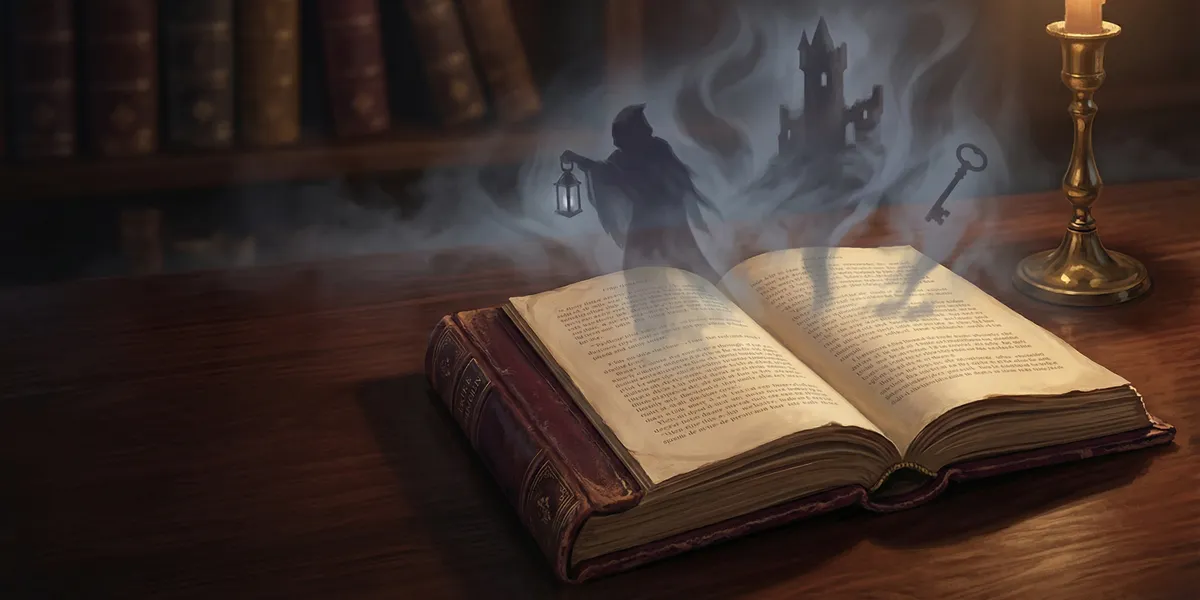
Yes, foreshadowing is a literary device — one of the most powerful tools in a writer’s toolkit. It creates suspense, builds tension, and makes your story feel both surprising and inevitable.
In this guide, you’ll learn:
- What foreshadowing is and why it qualifies as a literary device
- The five types of foreshadowing with clear examples
- How to plant clues in your writing without being too obvious
- The difference between foreshadowing and similar techniques
Here’s everything you need to know about this essential narrative technique.
What Is Foreshadowing?
Foreshadowing is a literary device where a writer plants hints or clues about events that will happen later in the story. These hints create a sense of anticipation in your reader’s mind. When the foreshadowed event finally happens, it feels earned — not random.
Think of it like a weather forecast for your plot. You show dark clouds gathering on the horizon long before the storm hits.
The key distinction: foreshadowing suggests what might happen without revealing it outright. Your reader feels something is coming. They just don’t know exactly what.
Why Foreshadowing Qualifies as a Literary Device
A literary device is any technique a writer uses deliberately to produce a specific effect on the reader. Foreshadowing meets every criterion.
It is intentional — you choose where to place the hints. It is structural — it connects different parts of your narrative. And it produces a specific emotional effect — suspense, dread, curiosity, or dramatic tension.
Foreshadowing sits alongside other narrative devices like dramatic irony, symbolism, and Chekhov’s Gun. In fact, Chekhov’s Gun is a specific type of foreshadowing — the principle that every element introduced in a story must serve a purpose.
The 5 Types of Foreshadowing
Not all foreshadowing works the same way. Each type creates a different relationship between the reader and the upcoming event.
1. Direct Foreshadowing
Direct foreshadowing explicitly tells the reader something is going to happen. The narrator or a character states the future outcome openly.
Example: “Little did she know, this would be the last time she saw her father alive.” The reader knows the outcome. The tension comes from watching it unfold.
When to use it: Opening chapters, prologues, or moments where you want dread rather than surprise.
2. Indirect Foreshadowing
Indirect foreshadowing plants subtle clues that only become meaningful in hindsight. The reader might not even notice them on a first read.
Example: A character always checks the locks twice before bed. Later, an intruder breaks in. That compulsive lock-checking hinted at a deep fear the character never voiced.
When to use it: Mysteries, thrillers, and any story where you want the “I should have seen it coming” reaction.
3. Symbolic Foreshadowing
Symbolic foreshadowing uses objects, weather, colors, or imagery to hint at future events. A storm brewing on the horizon before a conflict. A cracked mirror before a relationship shatters.
Example: In Shakespeare’s Julius Caesar, a violent thunderstorm and unusual animal behavior precede Caesar’s assassination. Nature mirrors the political upheaval about to erupt.
When to use it: Literary fiction, stories with thematic depth, or when you want to create atmospheric tension without stating anything directly.
4. The Red Herring
A red herring is false foreshadowing. You plant clues that deliberately mislead the reader, pointing them toward an outcome that never happens.
Example: A mystery novel focuses suspicion on one character through mounting evidence — only to reveal the real culprit was someone the reader dismissed early on.
When to use it: Mysteries, plot twists, and any story where misdirection serves the narrative. Use sparingly — too many red herrings frustrate readers.
5. Prophecy and Prediction
This type uses in-world prophecies, fortune-telling, or character predictions to foreshadow events. The prophecy might come true literally, be subverted, or be fulfilled in an unexpected way.
Example: The witches’ prophecies in Macbeth foreshadow both his rise and his downfall. Each prediction comes true — but not the way Macbeth expects.
When to use it: Fantasy, mythology-inspired fiction, or stories with a fatalistic theme.
Foreshadowing vs. Similar Literary Techniques
Writers often confuse foreshadowing with related techniques. Here’s how they differ:
| Technique | What It Does | Key Difference from Foreshadowing |
|---|---|---|
| Foreshadowing | Hints at future events | Suggests without revealing |
| Flashback | Shows past events | Looks backward, not forward |
| Flash-forward | Shows a future scene directly | Reveals the event explicitly |
| Chekhov’s Gun | Every element must pay off | A specific rule within foreshadowing |
| Dramatic irony | Audience knows what characters don’t | Can use foreshadowing as a tool |
The critical difference: foreshadowing hints. A flash-forward shows. Dramatic irony gives the audience knowledge the character lacks, which can be created through foreshadowing — but they are not the same thing.
How to Use Foreshadowing in Your Writing
Knowing the types is one thing. Planting effective foreshadowing is another. Here are practical techniques you can apply to your current project.
Plant Clues in Dialogue
Have a character say something that seems casual but carries weight later. A throwaway comment about a fear, a location, or a person becomes significant when the payoff arrives.
Keep the dialogue natural. If a line feels like it’s trying too hard to be a clue, your reader will spot it immediately.
Use Setting and Atmosphere
Weather, lighting, and environment can signal what’s ahead. A room that feels “wrong” before something bad happens. An unusually quiet forest before an ambush.
This works because readers process atmosphere subconsciously. They feel uneasy without knowing exactly why.
Embed Clues in Objects
Introduce an object early that becomes important later. A letter left unopened. A photograph face-down on a shelf. A key that doesn’t seem to fit any lock.
This is the Chekhov’s Gun principle at work. If you show the gun in act one, it needs to fire by act three.
Layer Multiple Hints
Don’t rely on a single clue. Layer three or four hints across different scenes — one in dialogue, one in setting, one in a character’s behavior. Each hint alone means nothing. Together, they create a pattern your reader feels but can’t quite articulate.
This layering is what separates masterful foreshadowing from heavy-handed plot telegraphing.
Common Mistakes to Avoid
- Being too obvious. If your reader can predict the twist from chapter two, you’ve foreshadowed too heavily. Subtlety is the goal.
- Being too subtle. If no reader catches any of your hints, the foreshadowing doesn’t serve its purpose. At least one clue should register subconsciously.
- Forgetting the payoff. Every piece of foreshadowing needs a resolution. Unfulfilled hints feel like plot holes.
- Overusing red herrings. One or two misdirections create intrigue. Five or six make readers feel manipulated and annoyed.
- Adding foreshadowing in revision without setup. If you decide during editing that a twist needs foreshadowing, go back and weave clues into earlier chapters organically — don’t just bolt them on.
Does Foreshadowing Only Work in Fiction?
No. Foreshadowing appears in nonfiction, film, television, music, and even journalism. A documentary might open with a shot of an empty courtroom before revealing the trial that fills it. A memoir might describe a childhood fear that connects to an adult turning point.
Any narrative form that moves through time can use foreshadowing. The technique belongs to storytelling itself — not to any single genre or medium.
How Long Should Foreshadowing Last?
The gap between the hint and the payoff depends on your story’s scope. In a short story, foreshadowing might pay off within a few pages. In a novel, you might plant a clue in chapter three that doesn’t resolve until chapter thirty.
Longer gaps create deeper satisfaction when the payoff lands. But they also demand more skill — the reader needs to retain the hint subconsciously without having it feel like a loose thread.
A good rule of thumb: match the significance of the foreshadowed event to the length of the setup. A minor plot beat needs a quick hint. A major twist deserves multiple clues planted across several chapters.
Can You Add Foreshadowing After Your First Draft?
Absolutely — and most experienced writers do exactly this. Write your first draft to discover your story. Then go back and plant hints that point toward the twists and reveals you’ve already written.
This backward approach is often more effective than trying to foreshadow during a first draft. You know exactly what needs setup because you’ve already written the payoff.
During revision, read each chapter and ask: “What happens later that I could hint at here?” Then add one subtle detail — a line of dialogue, an image, a character’s reaction — that connects forward.
FAQ
Is foreshadowing a literary device or a literary technique?
Foreshadowing is both a literary device and a literary technique. The terms are often used interchangeably. A literary device is any tool a writer uses to convey meaning beyond the literal text. A literary technique describes how that tool is applied. Foreshadowing fits both definitions because it is a deliberate strategy for creating suspense and narrative cohesion.
What is the difference between foreshadowing and suspense?
Foreshadowing is a tool that creates suspense, but they are not the same thing. Suspense is the emotional state of uncertainty and anticipation a reader feels. Foreshadowing is one method — among many — for producing that feeling. You can build suspense through pacing, withholding information, or raising stakes without using foreshadowing at all.
Can foreshadowing be unintentional?
Foreshadowing can appear unintentional, but true foreshadowing is a deliberate choice. Sometimes readers find connections the author didn’t plan — that’s coincidence, not foreshadowing. However, skilled writers often plant clues intuitively during drafting, then recognize and strengthen them during revision.
What is an example of foreshadowing in everyday language?
An everyday example of foreshadowing is saying “I have a bad feeling about this” before something goes wrong. In conversation, phrases like “mark my words” or “you’ll regret that” function as verbal foreshadowing. In writing, these statements give the audience a premonition of what’s to come.
How is foreshadowing different from a plot twist?
Foreshadowing prepares the reader for a plot twist — it does not replace one. A plot twist is the unexpected event itself. Foreshadowing is the groundwork that makes the twist feel earned rather than random. The best plot twists are both surprising and foreshadowed, so readers think “I should have seen that coming.”