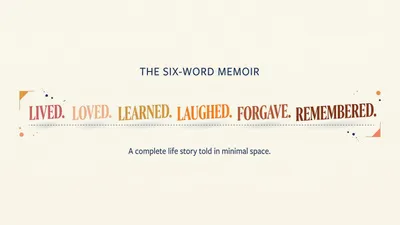
A memoir is a nonfiction narrative focused on a specific theme, period, or experience from the author’s life. Unlike autobiography, which covers an entire life story, a memoir zeroes in on one thread and pulls meaning from it.
If you have ever read a book that made you feel like you were living inside someone else’s memory, you were probably reading a memoir. It is one of the most powerful forms of nonfiction writing because it combines the truth of real experience with the emotional pull of storytelling.
What is a memoir?
The word “memoir” comes from the French mémoire, meaning memory. A memoir is a first-person account of lived experience, shaped around a central theme or question rather than a chronological timeline.
What separates a memoir from a diary or journal is craft. A memoirist selects specific scenes, arranges them with narrative structure, and writes with the same attention to language, character, and tension that a novelist would use. The events are true, but the storytelling is intentional.
A memoir does not require a famous life. It requires a specific lens. Mary Karr wrote three memoirs about growing up in a small Texas town. Tara Westover wrote about leaving a survivalist family to get an education. Neither was famous before their books. The specificity of their focus is what made the writing compelling.
Memoir vs autobiography
These two terms get confused constantly, but the distinction is straightforward.
| Memoir | Autobiography | |
|---|---|---|
| Scope | One theme, period, or experience | Entire life from birth onward |
| Structure | Thematic, often nonlinear | Chronological |
| Focus | Emotional truth and meaning | Factual record of events |
| Tone | Literary, reflective | Informative, documentary |
| Who writes them | Anyone with a story | Typically public figures |
An autobiography says: “Here is everything that happened to me.” A memoir says: “Here is the one thing that changed me, and what it meant.”
Barack Obama’s A Promised Land is an autobiography. It covers his early political career through his presidency in sequence. Paul Kalanithi’s When Breath Becomes Air is a memoir. It focuses entirely on what it means to face death as a young neurosurgeon.
For a deeper comparison, read our full guide on memoir vs autobiography.
Famous memoir examples
These five memoirs show the range of what the form can do. Each one takes a narrow slice of experience and turns it into something universal.
Educated by Tara Westover
Westover grew up in rural Idaho with a survivalist family that did not believe in public education or modern medicine. Her memoir traces her journey from that isolated childhood to earning a PhD from Cambridge. The theme is not just education — it is the cost of choosing knowledge over family loyalty.
The Glass Castle by Jeannette Walls
Walls writes about growing up with brilliant, deeply dysfunctional parents who moved the family constantly and lived in poverty by choice. The memoir works because Walls refuses to simplify her parents into villains. She holds love and damage in the same hand.
When Breath Becomes Air by Paul Kalanithi
Kalanithi was a neurosurgeon diagnosed with terminal lung cancer at 36. His memoir asks a single question: what makes life meaningful when you know it is ending? The book was published posthumously and became one of the most widely read memoirs of the past decade.
Know My Name by Chanel Miller
Miller was known only as “Emily Doe” in the Stanford sexual assault case before she reclaimed her identity with this memoir. It is a book about surviving trauma, but also about how institutions handle — and mishandle — justice. Her prose is precise and unflinching.
Born a Crime by Trevor Noah
Noah’s memoir covers his childhood in South Africa during and after apartheid. Born to a Black mother and a white father, his existence was literally a crime under apartheid law. The book moves between humor and brutality, showing how identity forms under impossible conditions.
Types of memoirs
Memoirs cluster around certain themes and life experiences. Knowing these categories helps you identify where your own story fits.
Coming-of-age memoirs focus on childhood, adolescence, and the formation of identity. Educated and The Glass Castle both fall here. The central question is usually: how did I become who I am?
Travel memoirs use physical journeys as a framework for internal transformation. Cheryl Strayed’s Wild is the most well-known recent example — a thousand-mile hike on the Pacific Crest Trail as a way to process grief and self-destruction.
Addiction and recovery memoirs document the cycle of substance abuse and the hard work of getting sober. Leslie Jamison’s The Recovering stands out because it weaves literary criticism into her personal story, examining how writers have romanticized drinking for centuries.
Grief memoirs sit with loss and its aftermath. Joan Didion’s The Year of Magical Thinking set the standard here. These memoirs work best when the writer resists the urge to wrap grief in a tidy resolution.
Cultural identity memoirs explore what it means to live between cultures, languages, or racial identities. Trevor Noah’s Born a Crime and Viet Thanh Nguyen’s work both belong in this category. The tension between belonging and otherness drives the narrative.
Professional and career memoirs use work as the lens. Kalanithi’s When Breath Becomes Air is a medical memoir. Anthony Bourdain’s Kitchen Confidential is a restaurant industry memoir. The job is not the point — the job reveals the person.
What makes a great memoir
Great memoirs share a few common qualities, regardless of subject matter.
A universal theme inside a personal story. The best memoirs are not interesting because of what happened to the writer. They are interesting because the writer found something in their experience that resonates with anyone. Westover’s memoir is about education, but it is really about the price of independence. Everyone understands that tension.
Emotional truth over factual perfection. Memoir is not journalism. You will not remember every word of a conversation from twenty years ago, and readers do not expect you to. What matters is emotional accuracy — capturing what the moment felt like, what it meant, how it shaped you. Mary Karr’s The Art of Memoir is the best guide on this distinction.
Scene-based writing. The strongest memoirs read like novels because they show rather than tell. Instead of writing “my father was unpredictable,” Jeannette Walls shows her father tossing her into a swimming pool at age four to teach her to swim. Scenes create the emotional experience that summary cannot.
A clear through-line. Every memoir needs a central question or tension that holds the narrative together. Without it, you have a collection of anecdotes. With it, you have a story. The through-line does not need to be obvious from page one, but the reader should feel it pulling them forward.
You do not need a famous life. This is the most common misconception about memoir writing. The majority of bestselling memoirs are written by people who were unknown before the book. What you need is a specific focus and the willingness to write honestly about it.
How to start writing your memoir
If you have a story worth telling — and you almost certainly do — here is how to begin.
Choose your through-line first. Do not start by listing everything that happened to you. Start by asking: what is the one theme, question, or transformation that ties my experiences together? Your through-line might be a relationship, a place, a career, an illness, or a single year that changed everything. Pick one. A memoir about everything is a memoir about nothing.
Identify your key scenes. Once you have your through-line, list the ten to fifteen moments that matter most. These are the scenes you will build the book around. Not every important event in your life belongs in your memoir — only the ones that serve your central theme. Be ruthless about cutting what does not fit.
Write the hard parts. The scenes you are most afraid to write are almost always the most important ones. Readers connect with vulnerability and honesty, not with the polished version of events you wish had happened. If you are not uncomfortable at some point during the writing process, you are probably not going deep enough.
Do not worry about chronological order. Many great memoirs jump around in time. Start with the scene that has the most energy, the one you can see and hear most clearly. You can figure out the structure later. Getting words on the page matters more than getting them in the right order on your first draft.
For a complete step-by-step process, read our full guide on how to write a memoir.
If you are ready to start structuring your memoir, Chapter’s nonfiction writing software helps you organize scenes, build your narrative arc, and write chapter by chapter with AI-assisted tools designed specifically for nonfiction authors.
Memoir writing is for everyone
You do not need permission to write a memoir. You do not need a publishing deal, a dramatic life story, or an MFA. You need a specific slice of your experience, the honesty to examine it, and the craft to shape it into a narrative that resonates.
Start with what makes a strong personal narrative. Learn the full process of writing a book. Then sit down and write the scene you cannot stop thinking about. That is where every great memoir begins.