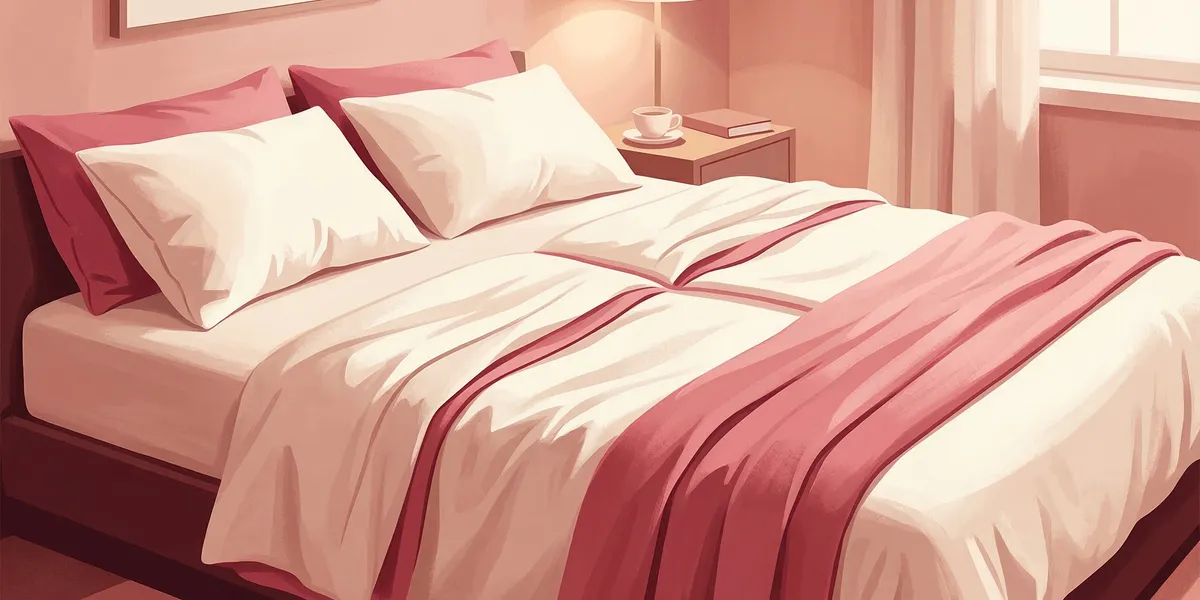
Only one bed is the romance trope where two characters — who are not yet together — are forced to share a single bed. There is always a reason they cannot get a second one. There is never a reason good enough to explain why the resulting tension is this effective. And yet, every single time, it is.
The trope works because it takes the subtext of attraction and makes it physical, immediate, and impossible to ignore. Two people lying inches apart in the dark, hyper-aware of every breath and movement, pretending they are not thinking about what would happen if they rolled closer. That is romance distilled to its most essential ingredients.
Why It Works Every Time
Forced Vulnerability
A bed is where people are most unguarded. No social masks, no professional armor, no carefully maintained distance. When two characters share a sleeping space, they are stripped of every buffer they normally hide behind. The darkness creates intimacy. The proximity creates awareness. The pretense of sleep creates permission to feel things they would never admit while awake.
The “Staying on Their Side” Tension
The invisible line down the middle of the bed is one of romance’s most powerful devices. Both characters commit to staying on their side. Both are rigidly aware of where that line is. And the reader knows — with absolute certainty — that line will not hold. The tension of waiting for it to break is the whole engine.
Physical Proximity Does the Emotional Work
In most romance, the writer has to manufacture reasons for characters to be close. With only one bed, proximity is built into the scene. Every accidental brush of skin, every moment one character wakes up to find the other has shifted closer, every morning where they wake up entangled — these moments do the work of advancing the emotional relationship through physical awareness.
Setups That Actually Work
The reason for the shared bed needs to feel organic. Readers accept the premise eagerly, but the setup still has to make basic sense.
The hotel mix-up. A conference, a wedding, a work trip — they booked separate rooms but the hotel overbooked, lost a reservation, or gave them a single king instead of two queens. This is the classic because it is endlessly plausible.
The cabin or storm. A remote location with limited sleeping options. A snowstorm traps them somewhere with one bed. A friend’s cabin with a single guest room. The isolation amplifies the tension because there is literally nowhere else to go.
Travel logistics. Road trips with budget motels. Backpacking with shared hostels. Visiting a small town where there is only one inn with one room left. Travel naturally limits options, making the setup feel inevitable rather than contrived.
The friend’s place. Crashing at a mutual friend’s apartment that has one guest bed. House-sitting together. The informality of the setting lowers defenses in a way hotel rooms do not.
The cover story. They are pretending to be a couple and the hosts gave them one room. This layers only one bed on top of fake dating, which doubles the tension.
The Escalation Arc
The best only-one-bed scenes follow a specific emotional trajectory. Rush it and you lose the tension. Draw it out and the reader stays on the edge.
Rigid Distance
The first night. Both characters are painfully formal about the arrangement. They negotiate sleeping sides. They establish rules. They build a pillow barrier. One offers to take the floor and the other insists it is fine. They lie there in the dark, stiff and wide awake, acutely aware of the other person’s breathing.
This stage should feel slightly absurd. Two adults behaving as though the bed is mined. The comedy and the tension are the same thing.
Accidental Contact
The pillow wall falls. Someone rolls over in their sleep. A hand lands somewhere it should not be. A leg brushes a leg. Both characters freeze. One pretends to still be asleep. The other lies perfectly still, waiting for a reaction that does not come.
These moments work because they are deniable. Neither character has to acknowledge what happened. But both of them felt it.
Pretending to Sleep
This is where the trope earns its reputation. One character is awake, listening to the other breathe, wondering if they are asleep or also lying there in the dark thinking. The interior monologue during these scenes — the hyperawareness, the self-negotiation, the wanting — is where the reader’s investment deepens from amusement to genuine emotional engagement.
Giving In
The moment one character stops fighting it. They turn toward the other instead of away. They let their arm stay where it landed. They whisper something in the dark. The tension that has been building across one or several nights finally breaks, and the release is proportional to how long you held it.
What Happens After the Bed Scene
The morning after is as important as the night itself. Many writers nail the tension and then fumble the aftermath. Do not skip it.
The morning entanglement. They wake up wrapped around each other despite starting on opposite sides. This is the trope’s signature image, and it works because it reveals what their subconscious minds want even when their waking minds resist. How they react to waking up entangled tells the reader everything about where the relationship stands.
The awkward breakfast. Neither knows how to act. Do they acknowledge what happened in the dark? Do they pretend nothing changed? The shift between nighttime honesty and daytime denial creates delicious tension that carries into the next scenes.
The second night. If there are multiple nights, the second one changes the dynamic entirely. Now both characters know what will happen. The pretense of the first night — that this is just practical, just logistics — is gone. Choosing to get into that bed again is a choice, and both of them know it.
Variations
Only one room. Same premise, slightly different execution. There is a bed and a couch, or a bed and a floor. One character insists on taking the uncomfortable option. The argument about who takes the bed creates its own intimacy.
Shared tent. Camping, festivals, survival situations. A tent is even more confined than a bed, which amplifies every element. The zipped-up enclosure creates a world of two.
Cramped backseat. A car breaks down. They need to sleep somewhere. The back of a vehicle forces proximity even more aggressively than a bed, and the discomfort adds a layer of vulnerability that the trope feeds on.
The couch nap. They fall asleep on the same couch during a movie. One wakes up with the other’s head on their shoulder. Lower stakes, same mechanism.
How to Write It Well
Make the setup natural. The reader wants to believe the situation. Establish why there is genuinely no alternative. The more plausible the constraint, the more the reader relaxes into the tension.
Slow the pacing down. This is a scene where you want the reader to feel every minute. Short sentences. Sensory details — the sound of breathing, the warmth radiating from the other person, the texture of the sheets. The slower you go, the more the tension builds.
Use the five senses. The darkness removes sight, which heightens everything else. What do they hear? The rhythm of breathing. A heartbeat through the mattress. What do they feel? The dip in the bed when the other person moves. The warmth of proximity. The brush of fabric. These sensory details make the scene visceral.
Interior monologue is your weapon. The character’s thoughts during a shared-bed scene are where the trope lives. The self-talk. The bargaining. “If I just stay perfectly still.” “Their breathing has changed — are they awake?” “If I move my hand two inches to the right…” Let the reader inside the character’s head.
The heat level is flexible. Only one bed works at every heat level, from sweet to explicit. In a closed-door romance, the tension of lying next to each other and not acting on it can be more powerful than any love scene. In a steamy romance, the bed becomes the location of inevitable surrender. Match the heat to your genre and audience.
Common Mistakes
No plausible reason for the situation. If there is obviously another option — another room, a couch, a friend’s place — and the characters just choose to share a bed, the reader loses trust. Eliminate the alternatives clearly.
Skipping the tension. If the characters get into bed and immediately fall asleep with no inner conflict, you have wasted the best scene in the trope. The lying-awake-in-the-dark moment is not optional. It is the entire point.
Making it uncomfortable instead of tense. There is a line between romantic tension and genuine discomfort. If one character clearly does not want to share and the other pressures them, the scene stops being romantic. Both characters should be reluctantly willing, with the emphasis on reluctantly.
Resolving everything in one night. Unless your book’s pacing calls for it, one shared bed should not resolve all the tension. The best uses of this trope leave something unfinished. They touched, but did not talk about it. They woke up entangled, but pretended it did not happen. The unresolved tension carries forward and makes every subsequent scene crackle.
Stacking the Trope
Only one bed rarely exists alone. It stacks naturally with other tropes to amplify the tension.
Forced proximity + only one bed. They are already trapped together — a cabin, a snowed-in situation, a work assignment. The bed is just the most intimate manifestation of a proximity they cannot escape.
Slow burn + only one bed. In a slow burn, the shared bed becomes a turning point. It is the scene where the attraction that has been simmering finally becomes impossible to deny, even if neither character acts on it yet.
Fake dating + only one bed. They are pretending to be a couple and someone gave them one room. Now they have to share a bed while maintaining a performance that is getting harder to distinguish from reality.
If you are writing only one bed and want to layer it with other romance tropes, Chapter’s fiction software includes a trope library and beat sheet system that helps you pace the tension across your entire novel — from the first awkward night to the morning they stop pretending.