You can publish a children’s book in 2026 through traditional publishing, self-publishing, or a hybrid approach — and you don’t need a literary agent to get started.
In this guide, you’ll learn:
- How to choose the right age category and format for your book
- The step-by-step process from manuscript to published book
- How much publishing a children’s book actually costs
- Which publishing path gives you the best return
Here’s everything you need to know.
What Type of Children’s Book Are You Publishing?
Before you write a single word, you need to know your age category. This affects your word count, page count, illustration needs, and publishing options.
Children’s publishing isn’t one market — it’s five distinct ones. Getting the category wrong means your book won’t reach the right readers.
| Category | Ages | Word Count | Pages | Illustrations |
|---|---|---|---|---|
| Board books | 0–3 | Under 100 words | 16–20 | Every page |
| Picture books | 2–8 | 200–1,000 words | 32 (standard) | Every spread |
| Early readers | 5–8 | 1,000–2,500 words | 32–64 | Frequent |
| Chapter books | 7–9 | 4,000–15,000 words | 50–100 | Few or none |
| Middle grade | 8–12 | 15,000–35,000 words | 100–250 | Rarely |
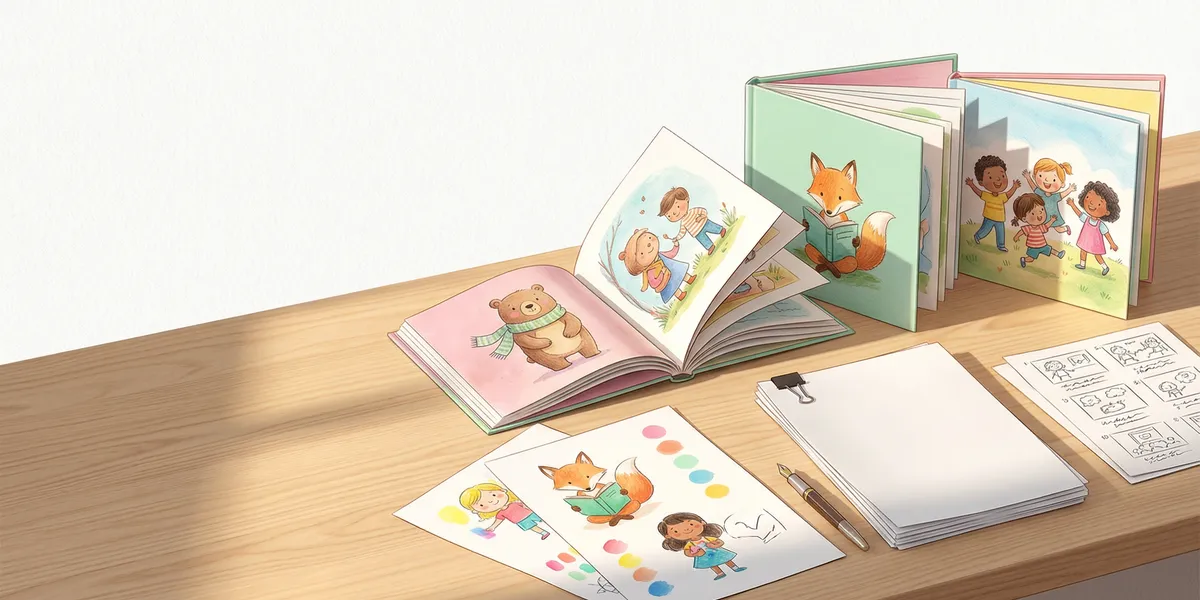
Picture books are the most common category for first-time children’s book authors. They follow a standard 32-page format and rely heavily on illustrations to carry the story.
If you’re writing a chapter book or middle grade novel, the process looks more like publishing any other book — with less emphasis on illustration and more on narrative structure.
How to Write a Children’s Book Manuscript
Your manuscript is the foundation. A weak story can’t be saved by great illustrations or a big marketing budget.
Keep it short. Picture book manuscripts rarely exceed 500 words. Every sentence needs to earn its place. Read your draft aloud — if a word doesn’t add rhythm, meaning, or humor, cut it.
Write for the read-aloud experience. Most children’s books are read by parents to kids. That means your prose needs to sound great spoken aloud. Use repetition, rhyme (if it comes naturally), and a pace that holds attention.
Think in spreads. A picture book is 32 pages, which gives you roughly 15 two-page spreads for your story (minus title page, copyright page, and endpapers). Map your story beats to those spreads so each turn of the page reveals something new.
Our Pick — Chapter
Chapter’s AI writing tools help you draft, refine, and structure your children’s book manuscript fast. You can generate story ideas, test different narrative structures, and polish your prose — all in one workspace.
Best for: Authors who want to move from idea to polished manuscript quickly Pricing: $97 one-time (nonfiction) | Varies (fiction) Why we built it: Writing a children’s book seems simple, but getting the pacing and language right is surprisingly hard — Chapter’s AI helps you nail it.
How to Find and Hire a Children’s Book Illustrator
For picture books and board books, your illustrator is your co-creator. The illustrations don’t just decorate the text — they carry half the story.
Here’s how to find the right illustrator:
- Browse portfolios on specialized platforms. Sites like Reedsy, Children’s Book Insider, and the Society of Children’s Book Writers and Illustrators (SCBWI) connect you with vetted illustrators.
- Review published books in your genre. Find picture books with art styles you love, then look up the illustrator in the credits.
- Request sample illustrations. Before committing, ask for a character study or sample spread based on your manuscript. Most professional illustrators offer this for a fee.
- Discuss style and revision terms upfront. Agree on the number of revision rounds, deadlines, and rights ownership before signing a contract.
Typical illustration costs for a 32-page picture book:
| Illustrator Level | Cost Range | What You Get |
|---|---|---|
| Emerging artist | $1,500–$3,000 | Quality work, less experience |
| Mid-career professional | $3,000–$8,000 | Polished, publication-ready art |
| Established illustrator | $8,000–$20,000+ | Award-winning caliber |
If you’re self-publishing, you own the illustrations (make sure your contract says this). If you go traditional, the publisher typically hires and pays the illustrator separately.
Traditional Publishing vs. Self-Publishing: Which Path Is Right?
This is the biggest decision you’ll make. Both paths can lead to a successful children’s book — but they work differently.
Traditional Publishing
With traditional publishing, a publisher handles editing, illustration (often), design, printing, distribution, and marketing. You earn royalties on each sale.
How it works:
- You submit your manuscript to publishers (many require a literary agent)
- If accepted, the publisher pays you an advance against future royalties
- The publisher controls the timeline, cover design, and pricing
- Your royalty rate is typically 5–10% of the list price
Best for: Authors who want established distribution, don’t mind waiting 18–24 months, and prefer not to invest their own money upfront.
The catch: Traditional publishing is competitive. Most publishers accept fewer than 5% of submissions. And you give up creative control over illustrations, cover design, and pricing.
Self-Publishing
With self-publishing, you handle everything — but you keep full creative control and a much larger share of revenue.
How it works:
- You hire your own editor, illustrator, and designer
- You upload to platforms like Amazon KDP, IngramSpark, or Barnes & Noble Press
- You set your own price and keep 35–70% of each sale
- Your book can be live within weeks, not years
Best for: Authors who want creative control, faster time-to-market, and higher per-book royalties.
The investment: You’ll spend $2,000–$15,000+ upfront on illustration, editing, and design. But you keep far more per sale than traditional publishing offers.
Quick Comparison
| Factor | Traditional | Self-Publishing |
|---|---|---|
| Upfront cost | $0 | $2,000–$15,000+ |
| Time to publish | 18–24 months | 2–6 months |
| Royalty rate | 5–10% | 35–70% |
| Creative control | Limited | Full |
| Distribution | Bookstores + online | Primarily online |
| ISBN | Publisher provides | You purchase or get a free one |
Step-by-Step: How to Self-Publish a Children’s Book
If you choose self-publishing, here’s the exact process:
1. Finalize Your Manuscript
Edit your manuscript until it’s tight. For picture books, every word matters. Hire a developmental editor who specializes in children’s books — they’ll catch pacing issues, age-inappropriate language, and structural problems.
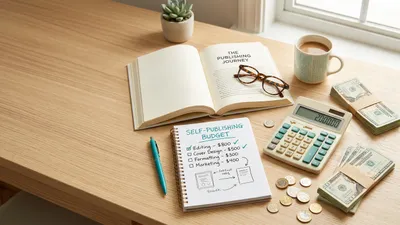
A children’s book editor typically costs $200–$800 depending on the manuscript length and the editor’s experience.
2. Commission Illustrations
Share your finalized manuscript with your illustrator. Provide notes on key scenes, character descriptions, and the emotional tone you want. Give them creative freedom within those guidelines — great illustrators bring ideas you’d never think of.
3. Design and Layout
Your book needs professional interior layout and a cover design. For picture books, the illustrator often creates the cover. For chapter books, you may need a separate cover designer.
Key specs for Amazon KDP picture books:
- Trim size: 8.5” x 8.5” or 8” x 10” (most common)
- Color interior: Full bleed
- File format: Print-ready PDF
- Resolution: 300 DPI minimum
4. Get Your ISBN
You need an ISBN (International Standard Book Number) for each format — one for paperback, one for hardcover, one for ebook. Amazon KDP provides a free ISBN, but buying your own from Bowker gives you more distribution flexibility.
5. Upload and Publish
Upload your files to your chosen platform. Amazon KDP is the most popular, but consider also listing on IngramSpark for wider bookstore distribution.
Set your price based on your production costs and market research. Most self-published picture books sell for $9.99–$16.99 in paperback and $18.99–$24.99 in hardcover.
6. Launch and Market
Your book doesn’t sell itself. Plan a launch strategy that includes:
- Amazon optimization: Keywords, categories, and a compelling book description
- Social media: Share behind-the-scenes illustration process, read-alouds, and character reveals
- Local outreach: Libraries, schools, and independent bookstores
- Reviews: Send advance copies to children’s book bloggers and reviewers
How Much Does It Cost to Publish a Children’s Book?
The total cost depends on your publishing path and the type of book.
Self-Publishing Cost Breakdown
| Expense | Picture Book | Chapter Book |
|---|---|---|
| Editing | $200–$800 | $500–$2,000 |
| Illustrations | $1,500–$20,000 | $0–$2,000 |
| Cover design | $0–$500 (often included with illustrations) | $200–$800 |
| Interior layout | $200–$500 | $200–$500 |
| ISBN | $0–$125 | $0–$125 |
| Total | $2,000–$22,000 | $900–$5,500 |
The biggest variable is illustration. A 32-page picture book with professional illustrations is a significant investment — but it’s also what makes picture books sell.
Traditional Publishing Costs
With traditional publishing, your direct costs are $0. The publisher covers everything. However, you may spend $500–$2,000 on query letter editing, conference attendance, and manuscript preparation before you land a deal.
How to Submit to Traditional Children’s Book Publishers
If you want to go the traditional route, here’s the submission process:
Step 1: Research publishers. Use resources like the SCBWI and Publishers Marketplace to find publishers that accept your type of children’s book. Some accept unsolicited manuscripts; many require an agent.
Step 2: Follow submission guidelines exactly. Each publisher has specific formatting requirements. Some want the full manuscript; others want a query letter first. Never send illustrations unless you’re an author-illustrator — the publisher will hire their own illustrator.
Step 3: Write a strong query letter. Your query should include a hook, a brief summary, your word count and age category, and any relevant credentials. Keep it under one page.
Step 4: Be patient. Response times range from 4 weeks to 6 months. Submit to multiple publishers simultaneously unless their guidelines say otherwise.
Publishers accepting unagented children’s book submissions in 2026:
- Charlesbridge Publishing
- Holiday House
- Lee & Low Books (focus on diverse books)
- Peachtree Publishing
- Sleeping Bear Press
Common Mistakes When Publishing a Children’s Book
Writing too long. Picture books over 1,000 words almost always get rejected. Tighter is better.
Illustrating before submitting to traditional publishers. If you’re going traditional, don’t pay for illustrations. The publisher handles that. Submit the text only.
Skipping the editor. Children’s books seem simple, but pacing, word choice, and age-appropriateness require specialized editing. A children’s book editor catches things a general editor won’t.
Ignoring your target age group. A book aimed at 3-year-olds shouldn’t use vocabulary suited for 8-year-olds. Read dozens of books in your target category before writing.
Pricing too low. Self-published picture books need healthy margins because production costs (especially printing color interiors) are high. Don’t undercut yourself.
How Long Does It Take to Publish a Children’s Book?
Publishing a children’s book takes 3–6 months if you self-publish, or 18–24 months through a traditional publisher. The illustration phase is usually the longest part — expect 2–4 months for a full picture book.
Here’s a realistic self-publishing timeline:
| Phase | Duration |
|---|---|
| Writing + editing | 1–3 months |
| Illustration | 2–4 months |
| Design + layout | 2–4 weeks |
| Upload + proofing | 1–2 weeks |
| Total | 4–8 months |
If you use AI writing tools to accelerate your manuscript drafting, you can cut the writing phase significantly. The illustration phase stays the same — AI-generated illustrations are generally not suitable for professional children’s books yet.
Can You Make Money Publishing a Children’s Book?
You can absolutely earn money from a children’s book — but expectations matter.
Self-published picture books typically earn $2–$5 per paperback sale after printing costs. If you sell 500 copies in your first year, that’s $1,000–$2,500 in royalties. Top-performing self-published children’s books sell 5,000+ copies per year.
Traditionally published authors earn smaller per-book royalties but benefit from wider distribution. Advances for first-time children’s book authors range from $1,000–$10,000. You won’t earn additional royalties until your advance “earns out.”
The children’s book market was valued at over $10 billion globally in 2026, and the U.S. market alone is worth approximately $3.3 billion. There’s real money here — but success requires treating your book as a business, not just a passion project.
Do You Need a Literary Agent?
You do not need a literary agent to publish a children’s book. Many publishers accept unsolicited submissions, and self-publishing bypasses agents entirely.
However, an agent can help if you want to:
- Access the “Big Five” publishers (who rarely accept unagented work)
- Negotiate better advance and royalty terms
- Sell subsidiary rights (foreign translations, audio, merchandise)
If you decide to pursue an agent, query agents who specifically represent children’s books. The SCBWI maintains a database of children’s literary agents, and sites like QueryTracker help you research agents’ submission preferences and response times.
Should You Write a Series?
Series sell better than standalone children’s books. Parents and kids who love your first book will buy every sequel. Libraries and schools prefer series because they encourage continued reading.
If your concept has series potential, plan at least three books before publishing the first one. You don’t need to write them all upfront — but knowing where the story goes helps you plant seeds in book one that pay off later.
Series strategy tip: End each book with a satisfying conclusion but an open thread. Kids should feel complete but curious. This applies to picture book series (recurring characters in new situations) and chapter book series (ongoing story arcs) alike.
FAQ
How much does it cost to publish a children’s book?
Publishing a children’s book costs $2,000–$22,000 if you self-publish (mostly illustration costs) or $0 upfront with a traditional publisher. The biggest expense is professional illustration for picture books, which ranges from $1,500 to $20,000 depending on the illustrator’s experience and your book’s page count.
Can you self-publish a children’s book on Amazon?
Yes, you can self-publish a children’s book on Amazon through Amazon KDP (Kindle Direct Publishing). KDP supports both paperback and hardcover picture books with full-color interiors. You’ll need a print-ready PDF of your illustrated book, and you can publish for free — Amazon takes a percentage of each sale.
How many pages should a children’s picture book be?
A standard children’s picture book is 32 pages long. This is the industry standard because books are printed in “signatures” of 8 pages each, making 32 (4 signatures) the most cost-effective length. After subtracting title pages and copyright, you have roughly 28 pages for your actual story and illustrations.
Do I need an illustrator to publish a children’s book?
You need an illustrator for picture books and board books — these formats rely on illustrations to tell the story. For chapter books and middle grade novels, illustrations are optional. If you’re submitting to traditional publishers, do not hire an illustrator — the publisher will assign one. Only invest in illustrations if you’re self-publishing.
How long does it take to publish a children’s book?
Publishing a children’s book takes 3–8 months when self-publishing or 18–24 months through a traditional publisher. The illustration phase is typically the longest part of the process, taking 2–4 months for a full 32-page picture book. Writing and editing add another 1–3 months, and upload and proofing take 1–2 weeks.