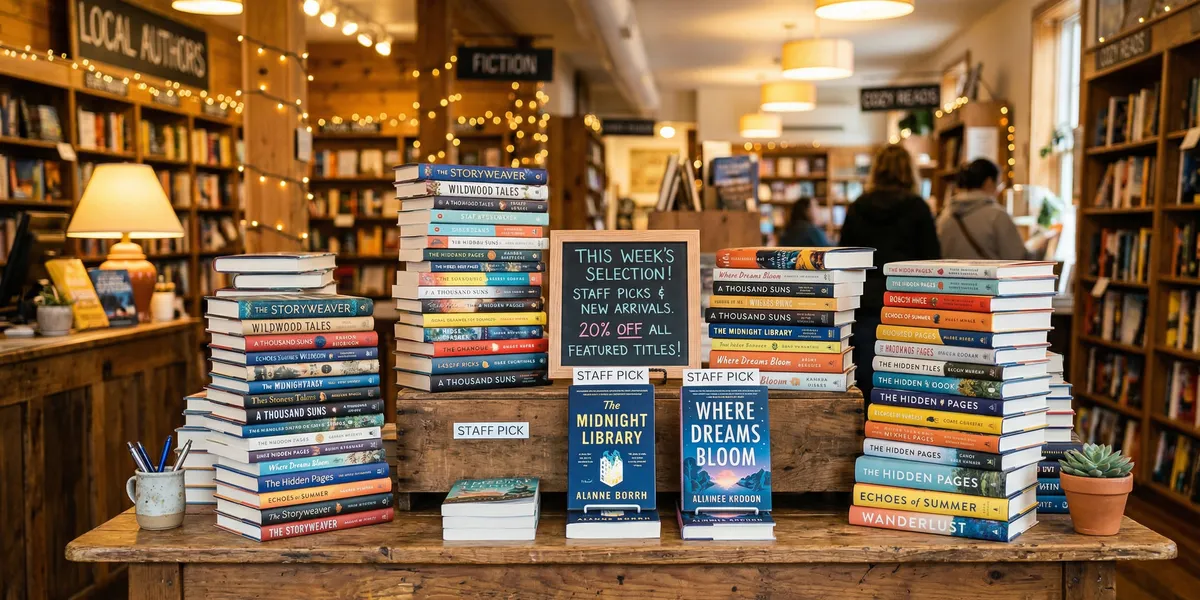
You wrote the book. Now you need to sell books — and that is an entirely different skill. Most authors spend months or years on their manuscript and almost no time learning how to move copies once it exists.
The good news: book marketing is not mysterious. It is a set of repeatable strategies that compound over time. The authors who sell consistently are not luckier or more talented — they just work more channels.
Here are 15 strategies that work right now, whether you are self-published, traditionally published, or somewhere in between.
1. Optimize your Amazon listing
Amazon accounts for more than 50% of all book sales in the United States. Your listing is your storefront, and most authors underinvest in it.
What to optimize:
- Title and subtitle. Include your primary keyword naturally. A nonfiction book called Morning Habits will get found less than Morning Habits: A 30-Day System for Energy, Focus, and Productivity.
- Book description. Write it like a sales page, not a summary. Lead with the reader’s problem, show what they will gain, and use HTML formatting (bold, line breaks) to improve readability.
- Categories. Choose two specific categories where you can realistically rank in the top 20. Broad categories like “Self-Help” are nearly impossible to crack.
- Keywords. Amazon gives you seven keyword slots. Use all of them with specific phrases readers actually search for.
The KDP help documentation walks through each field. Treat this as the highest-ROI hour you spend on marketing.
2. Build an email list from day one
An email list is the only marketing channel you fully own. Social media algorithms change. Ad costs rise. But an email sent to a subscriber who opted in reaches them directly.
Start collecting emails before your book launches. Offer a free resource — a worksheet, checklist, bonus chapter, or short companion guide — in exchange for an email address. Mention the freebie inside your book, on your website, and on social media.
According to Mailchimp’s benchmark data, publishing industry emails average a 22% open rate. That means for every 1,000 subscribers, roughly 220 people see your message. No social media platform gives you that kind of reach consistently.
Tools like ConvertKit and MailerLite are built for authors and offer free tiers to get started.
3. Launch with a pre-order campaign
Pre-orders count toward your first-week sales on Amazon, which directly impacts your ranking. A strong launch week pushes you into bestseller lists and recommendation algorithms.
How to structure a pre-order campaign:
| Timeline | Action |
|---|---|
| 3 months before launch | Set up pre-order on Amazon/retailers |
| 8 weeks before | Announce to your email list with cover reveal |
| 4 weeks before | Share early reviews and endorsements |
| 2 weeks before | Offer a pre-order bonus (exclusive content) |
| Launch week | Email daily, post on all social channels |
Stack your pre-orders so they all count on release day. The Alliance of Independent Authors has a detailed guide on setting this up across platforms.
4. Get reviews early and often
Reviews are social proof. Books with fewer than 10 reviews struggle to convert browsers into buyers. Books with 50+ reviews benefit from Amazon’s recommendation engine showing them more often.
How to get reviews:
- Send advance copies to your email list 4–6 weeks before launch
- Use services like BookSirens or NetGalley for advance reader copies
- Ask readers directly at the back of your book — a simple “If you enjoyed this, a quick review helps more than you know” works
- Reach out to book bloggers and BookTubers in your genre
Do not buy reviews. Amazon’s algorithm detects patterns, and accounts get banned. Organic reviews from real readers are slower but sustainable.
5. Run Amazon Ads
Amazon Ads (formerly AMS) put your book in front of readers who are actively searching for books like yours. This is not interruption marketing — these are people already on Amazon looking to buy.
Start with Sponsored Products campaigns targeting specific competitor books and relevant keywords. Set a daily budget of $5–10 and monitor your ACoS (Advertising Cost of Sales) weekly.
The breakeven point varies by book price and royalty rate. For a $9.99 ebook earning $6.99 per sale, you can afford to spend up to $6.99 per conversion and still break even. Most successful campaigns run at $2–4 per sale.
Dave Chesson’s Publisher Rocket is a popular tool for finding profitable keywords. The Amazon Ads learning console provides free training.
6. Leverage social media without burning out
Social media sells books — but not the way most authors use it. Posting “buy my book” links five times a week does not work. Providing genuine value does.
What works on each platform:
- Instagram / BookTok (TikTok): Behind-the-scenes content, reading recommendations, and aesthetic book photos. BookTok has driven massive sales for both new and backlist titles.
- Twitter / X: Threads sharing insights from your book, engaging in genre conversations, and connecting with other authors.
- YouTube: Long-form content about your topic or writing process. Evergreen and searchable.
- Facebook Groups: Participate in genre-specific reader groups. Offer value first, mention your book only when relevant.
Pick one or two platforms and go deep. Spreading yourself across five platforms guarantees you will be mediocre on all of them.
7. Create a professional author website
Your website is your home base. It is the one place where you control the narrative, collect emails, and send visitors wherever you want.
Every author website needs:
- A homepage that clearly states who you are and what you write
- Individual book pages with cover images, descriptions, and buy links
- An email signup form (see Strategy 2)
- An about the author page with a professional bio
- A contact page for media, speaking, and collaboration inquiries
You do not need a complex site. A simple WordPress or Squarespace site with five pages is enough to start. The Reedsy author website guide covers setup in detail.
8. Pitch podcasts in your niche
Podcast guesting puts you in front of engaged audiences for 30–60 minutes — far more attention than any social media post. Listeners are often in a buying mindset, especially if the host recommends your book.
Search for podcasts in your genre or topic area on Listen Notes or Apple Podcasts. Pitch hosts with a clear value proposition: what will their audience learn from your interview?
Prepare three to five talking points and always mention your book naturally during the conversation — not as a hard sell, but as a resource for listeners who want to go deeper.
9. Partner with other authors
Cross-promotion is one of the most underused strategies in book marketing. Find three to five authors in your genre who have a similar audience size. Then promote each other’s books to your respective email lists and social followings.
Ways to cross-promote:
- Newsletter swaps (you feature their book, they feature yours)
- Joint giveaways on platforms like BookFunnel
- Anthology projects where multiple authors contribute
- Co-hosted webinars or Instagram Lives
This works because you are borrowing trust. Readers who love Author A are more likely to try Author B when Author A recommends them.
10. Sell direct from your website
Selling direct means keeping 90–95% of each sale instead of Amazon’s 35–70%. Platforms like Shopify, Payhip, and Gumroad make it easy to sell ebooks, audiobooks, and print-on-demand books directly.
The tradeoff is that you lose Amazon’s built-in traffic. Direct sales work best when you have an existing audience — an email list, social following, or website traffic — that you can drive to your own store.
Start by offering an exclusive bundle or bonus that is only available on your site. This gives people a reason to buy from you directly instead of defaulting to Amazon.
11. Pursue speaking engagements
Speaking puts you in a room full of potential readers and positions you as an expert. For nonfiction authors, this is one of the most effective sales channels.
Start local. Libraries, bookstores, Rotary clubs, and industry conferences are always looking for speakers. Bring books to sell at the back of the room — many authors report selling 20–50 copies per event.
As you build a speaking resume, you can charge fees that make the economics even better. Some Chapter.pub authors have reported landing speaking gigs for audiences of thousands after publishing their book.
12. Sell in bulk to organizations
Bulk sales are the hidden goldmine of book marketing. Instead of selling one copy at a time, you sell 50, 500, or 5,000 to a single buyer.
Who buys books in bulk?
- Companies that give them to employees or clients
- Conference organizers who include them in attendee bags
- Nonprofits aligned with your book’s topic
- Schools and universities for course adoption
- Bookstores for events and displays
Contact these organizations directly with a pitch: explain why your book is relevant to their audience and offer a discount for volume orders. Even a 50% discount on a bulk order of 500 copies is more profitable than selling 500 individual copies at full price through Amazon after their commission.
13. Get your book into libraries
Libraries are a steady, long-term sales channel. Library systems purchase multiple copies of in-demand books, and library readers are among the most active book buyers in the country.
To get into libraries:
- Make sure your book is available through Ingram, which is how most libraries order
- Set your book as returnable (libraries require this)
- Register with OverDrive for digital library lending
- Contact your local library directly and offer to do an author event
The American Library Association reports that library users borrow 2.4 billion items per year. Even a small slice of that exposure translates to meaningful discovery.
14. Repurpose your book content
Your book is a content engine. Every chapter can become blog posts, social media threads, podcast episodes, YouTube videos, courses, or workshops.
Repurposing multiplies your reach without requiring you to create new material from scratch. A 50,000-word nonfiction book contains enough material for a year of weekly blog posts or 200+ social media posts.
This strategy also drives book sales in reverse — people discover your free content, realize they want the full picture, and buy the book.
15. Create a professional-quality book that sells itself
The best marketing strategy is a book that looks, reads, and feels professional. Readers judge books by their covers, their formatting, and their first few pages. A poorly formatted book with a DIY cover signals amateur work, regardless of how good the content is.
Invest in:
- A professional cover design (or use a proven template)
- Clean, consistent interior formatting
- Thorough editing and proofreading
- A compelling book description
Tools like Chapter.pub help authors produce publication-ready books with professional formatting and structure — without needing to hire a designer or learn InDesign. When your book looks like it belongs on a bookstore shelf, readers take it seriously. Over 2,100 authors have used Chapter.pub to create more than 5,000 books, and the polished output makes a measurable difference in how readers perceive your work.
What to focus on first
If you are overwhelmed by 15 strategies, start with these three:
- Optimize your Amazon listing (free, highest immediate impact)
- Build an email list (free, highest long-term impact)
- Get 25+ reviews (free, unlocks social proof and algorithmic benefits)
These three moves alone will put you ahead of 80% of authors who do nothing beyond clicking “publish.” Add one new strategy per month after that, and you will build a compounding marketing machine.
Selling books is a long game. The authors who succeed are the ones who treat marketing as part of the job — not an afterthought. Start where you are, be consistent, and measure what works.
For more guidance on the marketing side of publishing, check out our guides on book marketing strategies and how to market a self-published book.