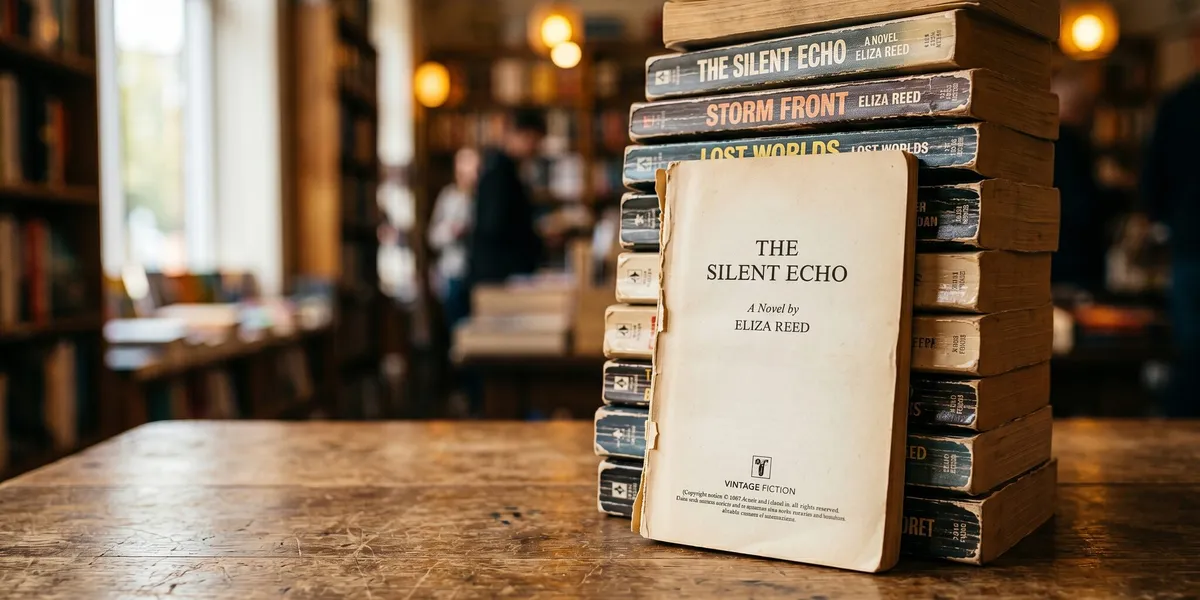
A stripped book is a mass market paperback that has had its front cover removed and returned to the publisher as proof of destruction. The stripped book warning printed inside paperbacks tells you that a coverless copy is stolen property — and that neither the author nor publisher received payment for it.
Here is everything you need to know about stripped books, why the warning exists, and what it means for you as a reader or author.
What Does the Stripped Book Warning Say?
You have probably seen this notice printed on the copyright page of a paperback. The standard stripped book warning reads something like this:
“If you purchased this book without a cover you should be aware that this book is stolen property. It was reported as ‘unsold and destroyed’ to the publisher and neither the author nor the publisher has received any payment for this ‘stripped book.’”
The exact wording varies by publisher, but the message is always the same. A book sold without its cover was never meant to reach you.
Why Do Publishers Strip Book Covers?
The practice exists because of how mass market paperback distribution works.
Mass market paperbacks — those small, rack-sized books you find in airports, grocery stores, and drugstores — operate on extremely thin profit margins. They cost very little to produce and sell at low price points.
When copies do not sell, shipping the full unsold books back to the publisher would cost more than the books are worth. The return shipping eats into whatever slim margin exists.
So the industry developed a workaround. Retailers strip the front cover off unsold copies and send only the covers back to the publisher. The publisher issues a credit for the return. The coverless book is supposed to be recycled — pulped into paper again.
This system has been in place since mass market paperbacks adopted the magazine distribution model in the mid-20th century. Books were treated like periodicals, with on-sale and off-sale dates, and covers returned for credit just like unsold magazine copies.
How the Stripped Book Return Process Works
Here is the step-by-step flow:
- Publisher ships books to a distributor or retailer
- Books sit on shelves for a set sales period
- Unsold copies get pulled when the off-sale date arrives
- Retailer strips the front cover from each unsold copy
- Covers go back to the publisher as proof of destruction
- Publisher issues a credit to the retailer for unsold inventory
- Coverless books get pulped (recycled into paper)
The problem arises at step 7. Not every coverless book makes it to the recycler. Some end up diverted and resold — at flea markets, used bookstores, or online — which is exactly what the warning is about.
Stripped Books vs. Remaindered Books
These two terms describe different fates for unsold books.
| Feature | Stripped Book | Remaindered Book |
|---|---|---|
| Book type | Mass market paperback | Hardcover or trade paperback |
| What happens | Cover removed, book pulped | Sold at deep discount |
| Author payment | None (reported as destroyed) | Minimal or none (varies by contract) |
| Legal to sell | No (if coverless) | Yes (marked with remainder mark) |
| How to identify | Missing front cover | Ink mark on page edges |
Remaindered books are unsold hardcovers and trade paperbacks that publishers liquidate at steep discounts to bargain retailers. They are legal to sell. You can spot them by the felt-tip marker stroke across the top or bottom page edges.
Stripped books are mass market paperbacks reported as destroyed. Selling them without their cover is not legitimate because the publisher already credited the retailer for those copies. The author receives nothing from the resale.
What Stripped Books Mean for Authors
This is where the warning carries real weight. When your book gets stripped, you lose twice.
You do not earn royalties. The publisher credited the retailer for the return. Your royalty statement shows those copies as “returned” — reducing your net sales and your earnings.
High return rates hurt your career. Publishers track sell-through rates closely. If your books have a 40% or higher return rate, your print runs get smaller. Your advances get lower. In extreme cases, your publisher may not offer you another contract.
Return rates in mass market publishing historically range from 25% to 40%, though some categories see rates as high as 70% — particularly books distributed through rack jobbers to supermarkets and drugstores.
Can You Legally Buy a Stripped Book?
Technically, selling a stripped book violates the terms between the publisher and retailer. The book was reported as destroyed.
However, the legal reality is nuanced. If you buy a coverless paperback at a flea market, you are not going to face legal consequences as a buyer. The liability falls on whoever diverted the books from the recycling stream.
That said, buying stripped books means the author earns nothing from your purchase. If you want to support writers, buy copies with covers — new, used with covers intact, or digital.
Is Book Stripping Still Common in 2026?
The practice has declined significantly for several reasons:
- Print-on-demand technology means publishers print fewer speculative copies. Books get printed as orders come in, reducing overstock.
- Ebook and audiobook growth has shifted a large portion of book sales to digital formats where returns work differently.
- Mass market paperback decline. The format itself has contracted. Many publishers have reduced their mass market lines in favor of trade paperbacks, which follow a full-return model rather than stripping.
- Self-publishing eliminates the problem entirely. When you publish through platforms like Amazon KDP or distribute through IngramSpark, you use print-on-demand. No overprinting means no stripping.
The stripped book warning still appears in traditionally published mass market paperbacks, but far fewer books go through this process than in decades past.
How Self-Publishing Avoids the Stripped Book Problem
If you are self-publishing a book, the stripped book system does not apply to you. Modern self-publishing uses print-on-demand, where each copy is printed only after a customer orders it.
This means:
- Zero overstock. No unsold copies sitting in warehouses
- No returns to strip. Every printed copy has a buyer
- You keep your royalties. No copies reported as destroyed
- Lower financial risk. You never pay upfront for a large print run that might not sell
Tools like Chapter help you go from manuscript to published book without ever worrying about print overruns or stripped copies. You write your book, format it, and publish on demand.
Related Publishing Terms
- Book royalties — How authors earn money from each copy sold
- Parts of a book — The physical components of a printed book, including the copyright page where the stripped book warning appears
- Self-publishing costs — What it actually costs to publish a book yourself
- How much do authors make — Author earnings breakdown, including how returns affect income
FAQ
What Is a Stripped Book?
A stripped book is a mass market paperback that has had its front cover removed and returned to the publisher as proof of destruction. The coverless book is supposed to be recycled, but some copies get diverted and resold illegally. Neither the author nor publisher receives payment for stripped books.
Is It Illegal to Sell a Stripped Book?
Selling a stripped book violates the agreement between the publisher and retailer, since the book was already credited as destroyed. The legal consequences typically fall on the seller who diverted the books from recycling — not on individual buyers who purchase a coverless copy unknowingly.
Why Do Books Have a Stripped Book Warning?
Books include the stripped book warning to inform buyers that a coverless copy is essentially stolen property. The warning exists because some stripped books get diverted from the recycling process and resold at flea markets or online, costing authors and publishers lost income on copies already counted as destroyed.