Wuthering Heights is Emily Bronte’s only novel — a raw, violent story of obsessive love, revenge, and class conflict set on the Yorkshire moors. Published in 1847 under the pen name Ellis Bell, it was panned by critics at first but is now considered one of the greatest novels in the English language.
Here’s what this review covers:
- A spoiler-free plot overview and what to expect
- The major themes that make this novel timeless
- Character analysis of Heathcliff, Catherine, and the full cast
- Why the narrative structure was revolutionary for its time
Let’s break it down.
What Is Wuthering Heights About?
Wuthering Heights tells the story of Heathcliff, an orphan brought to live at Wuthering Heights farmhouse, and his all-consuming love for Catherine Earnshaw. When Catherine chooses to marry the wealthy Edgar Linton instead, Heathcliff’s heartbreak transforms into a decades-long campaign of revenge that destroys nearly everyone around him.
The novel spans two generations. You follow the doomed love of Heathcliff and Catherine in the first half, then witness how their choices ripple through their children’s lives in the second.
Unlike the gentle romance many expect, this is a dark, brutal story. There are no real heroes. Characters abuse each other physically and emotionally. The moors themselves feel alive with menace.
It’s not a love story in any traditional sense — it’s a story about what love becomes when it curdles into possession.
Major Themes in Wuthering Heights
Love and Obsession
The central relationship between Heathcliff and Catherine isn’t romantic in any healthy sense. Their bond is more like a force of nature — destructive, consuming, and impossible to contain.
Catherine’s famous declaration that she is Heathcliff captures a love so extreme it erases individual identity. This isn’t the tenderness of Jane Austen. It’s closer to a haunting.
What makes it powerful is that Bronte never asks you to approve of it. You simply witness it.
Revenge and Its Consequences
Heathcliff’s revenge plot drives the second half of the novel. After Catherine’s death, he systematically destroys the families of everyone who wronged him — including their innocent children.
Bronte shows how revenge hollows out the person seeking it. By the end, Heathcliff has everything he wanted and finds it meaningless.
This theme connects to some of the most compelling antagonist writing in literary history. Heathcliff is simultaneously the villain and the character you understand most deeply.
Social Class and Power
Class is the barrier that separates Heathcliff and Catherine. She chooses Edgar Linton because marrying Heathcliff would “degrade” her — despite loving him more.
Heathcliff’s return as a wealthy gentleman is his first act of revenge. He uses money and property law to systematically strip power from those above him.
Bronte was writing about rigid class structures in Victorian England, but the dynamics feel surprisingly modern.
Nature vs. Civilization
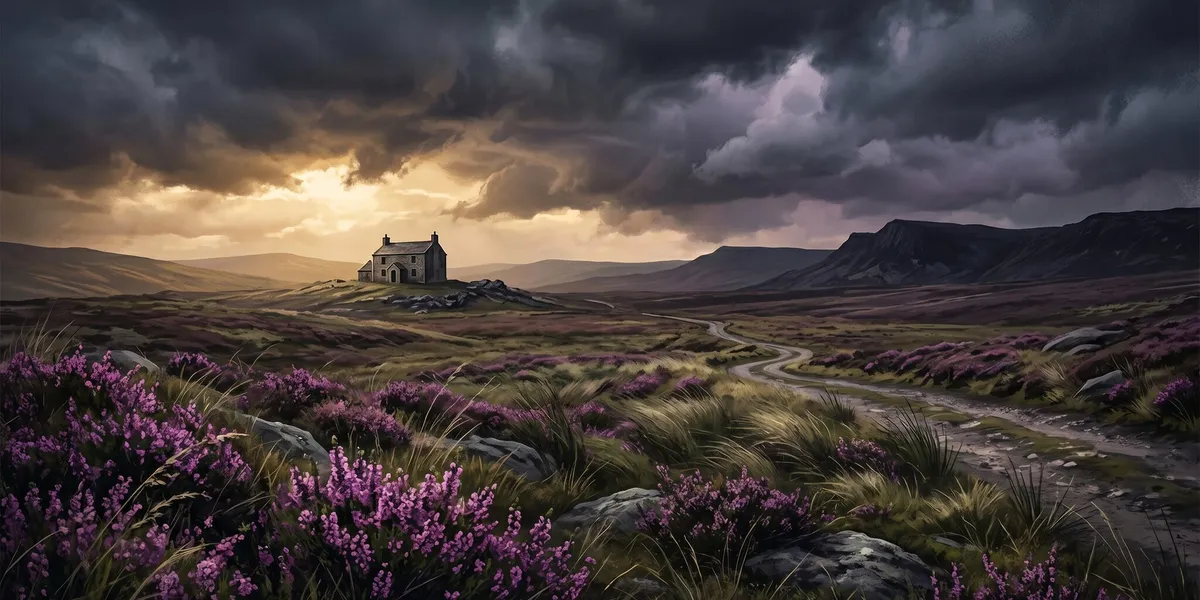
The two houses in the novel — Wuthering Heights and Thrushcross Grange — represent opposing forces. Wuthering Heights sits exposed on the moors: wild, harsh, and uncontrolled. Thrushcross Grange is sheltered in a valley: refined, comfortable, and orderly.
Characters who belong to one world struggle when transplanted to the other. Catherine’s illness begins when she tries to live at Thrushcross Grange while her soul belongs on the moors.
This tension between wildness and civilization runs through every relationship in the book.
The Supernatural
Ghosts appear throughout the novel — or do they? Bronte keeps you uncertain about whether the supernatural elements are real or products of disturbed minds.
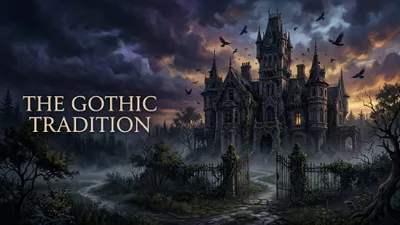
The opening scene, where Lockwood encounters a ghost at the window, sets the tone for the entire book. It’s a masterclass in gothic atmosphere.
This ambiguity between the natural and supernatural influenced generations of gothic fiction writers who came after Bronte.
Character Analysis
Heathcliff
Heathcliff is one of literature’s most complex figures — part antihero, part villain, part tragic victim. He arrives at Wuthering Heights as a homeless child and is adopted by Mr. Earnshaw.
After Earnshaw’s death, Hindley degrades Heathcliff to servant status. This humiliation, combined with losing Catherine, transforms him into a calculating force of destruction.
What makes Heathcliff fascinating is that Bronte lets you see the abused child inside the cruel man. You understand his rage without excusing it. He’s one of the most effective character foils in English literature — everything Edgar Linton is not.
Catherine Earnshaw
Catherine is wild, selfish, and magnetic. Her choice to marry Edgar for status while loving Heathcliff drives the entire tragedy.
She’s not a passive victim. Catherine manipulates everyone around her and makes choices she knows will cause devastation. Her character arc is one of self-destruction — she literally wills herself to death when she can’t reconcile her two identities.
Modern readers sometimes struggle with Catherine. She’s not likable. But she’s unforgettable.
Nelly Dean
Nelly Dean narrates most of the story, and she’s a brilliantly constructed unreliable narrator. She presents herself as a sensible observer, but her actions throughout the story frequently make things worse.
She withholds information, plays favorites, and makes judgments that shape how you perceive every other character. Once you notice her bias, the whole novel shifts.
The Second Generation
The children — Hareton Earnshaw, young Cathy Linton, and Linton Heathcliff — mirror the first generation’s conflicts but resolve them differently.
Young Cathy and Hareton’s relationship offers the novel’s only real hope. Where their parents destroyed each other, these two manage to break the cycle.
This generational structure gives the novel a scope that most single-volume works can’t match.
Narrative Structure: Why It Still Feels Modern
Bronte’s narrative technique was radical for 1847. The story is told through multiple framing devices — Lockwood writes in his diary what Nelly Dean tells him, and Nelly sometimes quotes other characters’ accounts.
This layered storytelling creates deliberate uncertainty. You never get an objective view of events. Every piece of information passes through at least one biased filter.
This technique anticipated modernist fiction by decades. It’s the same approach that makes novels like The Great Gatsby and Gone Girl work — the narrator’s limitations become part of the story.
For writers studying point of view and narrative structure, Wuthering Heights remains one of the best examples of how an unreliable frame can amplify a story’s power.
Writing Style and Atmosphere
Bronte’s prose is dense and sometimes challenging for modern readers. She doesn’t write the clean, witty sentences of Jane Austen or the measured rhythms of George Eliot.
Instead, her language mirrors the landscape — harsh, beautiful, and occasionally overwhelming. Dialogue captures Yorkshire dialect without sanitizing it. Descriptions of the moors carry genuine physical force.
The imagery is consistently tied to weather and landscape. Storms mark emotional turning points. Calm weather signals false peace. The moors themselves function as a character.
If you’re used to contemporary fiction, the style takes adjustment. But once you settle into its rhythms, the intensity is unmatched.
Is Wuthering Heights Worth Reading?
Yes — but go in with the right expectations. This is not a cozy romance. It’s not a comfortable read. Characters do terrible things, and Bronte doesn’t soften the impact.
What you get is a novel that operates at emotional extremes most fiction won’t attempt. The love is more consuming, the revenge more ruthless, the landscape more alive than almost anything written before or since.
It rewards rereading. The first time through, you follow the plot. The second time, you notice Nelly’s unreliability, the symbolism embedded in every description, and the careful parallels between the two generations.
If you love dark romance in modern fiction, Wuthering Heights is where it all started.
Who Should Read It
Read it if you enjoy: Gothic fiction, morally complex characters, unreliable narrators, literary fiction with emotional intensity, or dark romance.
Skip it if you want: A straightforward love story, likable protagonists, a fast-paced plot, or light reading.
Best editions: The Penguin Classics edition includes helpful notes on Yorkshire dialect and historical context. The Oxford World’s Classics edition offers a strong critical introduction.
How Wuthering Heights Influenced Modern Fiction
Bronte’s impact extends far beyond her single novel. Her exploration of obsessive love, antiheroes, and unreliable narration influenced writers from Daphne du Maurier to Sylvia Plath to modern dark romance authors.
You can trace a direct line from Heathcliff to every brooding, morally gray love interest in contemporary fiction. The Byronic hero archetype owes as much to Heathcliff as to Byron himself.
For writers, studying Wuthering Heights teaches you how to write villains you can’t look away from, how landscape can carry theme and motif, and how narrative distance creates mystery.
Quick Reference: Wuthering Heights at a Glance
| Detail | Information |
|---|---|
| Author | Emily Bronte |
| Published | December 1847 |
| Genre | Gothic fiction, literary fiction, romance |
| Setting | Yorkshire moors, England, late 18th–early 19th century |
| Narrator | Lockwood (frame) and Nelly Dean (primary) |
| Word Count | Approximately 107,000 words |
| Pages | 300–400 depending on edition |
| Reading Level | Advanced — challenging vocabulary and dialect |
| Content Warnings | Physical abuse, emotional abuse, animal cruelty, death, self-harm |
FAQ
Is Wuthering Heights a love story or a revenge story?
Wuthering Heights is both a love story and a revenge story, though neither in the traditional sense. The first half centers on the impossible love between Heathcliff and Catherine. The second half follows Heathcliff’s systematic revenge against everyone who separated them. Bronte weaves these threads together so tightly they become inseparable.
What age is Wuthering Heights appropriate for?
Wuthering Heights is generally appropriate for readers aged 14 and up. The novel contains physical and emotional abuse, violent behavior, death, and psychologically intense scenes. There is no explicit sexual content. Most high school curricula introduce it to students around age 15–16.
Why was Wuthering Heights controversial when it was published?
Wuthering Heights shocked Victorian critics because of its brutal honesty about human nature. Reviewers called it “wild,” “confused,” and morally troubling. The violence, the lack of clear moral lessons, and the dialect-heavy prose were all considered inappropriate. It took decades for critics to recognize it as a masterpiece.
How long does it take to read Wuthering Heights?
Most readers finish Wuthering Heights in 8 to 12 hours, or about one to two weeks of regular reading. The dense prose and Yorkshire dialect slow you down compared to modern novels. Audiobook versions typically run 11–13 hours.