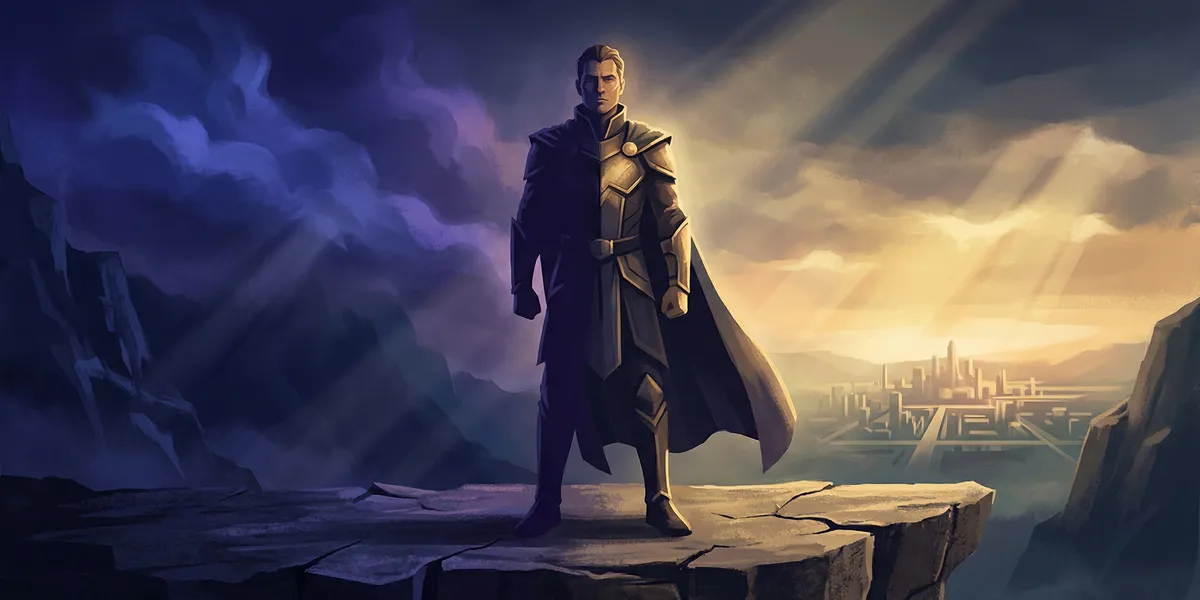
An anti-villain is a character who opposes the hero but does so for reasons the reader can understand, sympathize with, or even agree with. They have noble goals, genuine virtues, or a moral code that sets them apart from a straightforward villain. The catch is that their methods — or the consequences of their actions — put them squarely on the wrong side of the story.
Think of it this way: a villain wants something selfish or destructive. An anti-villain wants something the reader might actually want too. The conflict comes from how they pursue it.
This guide breaks down what makes an anti-villain work, the main types you can write, examples from fiction that get it right, and practical steps for building one into your own story.
What Makes a Character an Anti-Villain?
An anti-villain sits in the moral gray zone between a traditional villain and a hero. Three qualities define the archetype.
Noble or understandable motivation. The anti-villain’s goals are not purely selfish. They may want to protect their people, correct an injustice, save the world, or prevent suffering. The reader can look at what the anti-villain wants and think: “I get it.” That understanding is what separates them from a conventional antagonist.
Questionable or harmful methods. Where the anti-villain breaks from the hero is in the means they use. They may resort to violence, manipulation, authoritarianism, or sacrifice of innocents to achieve their ends. The hero objects not to the goal but to the cost.
Genuine humanity. Anti-villains are not one-dimensional threats. They show kindness, loyalty, regret, or vulnerability. They have relationships they care about and principles they hold. These human qualities are what make readers feel torn about wanting them to lose.
When all three elements are present, the anti-villain forces a harder question than any standard villain does: What if the bad guy has a point?
Anti-Villain vs. Anti-Hero
These two character types get confused constantly, so here is the clean distinction.
| Anti-Hero | Anti-Villain | |
|---|---|---|
| Role in the story | Protagonist | Antagonist |
| Goals | Often selfish or personal | Often noble or idealistic |
| Methods | Morally questionable | Morally questionable |
| Reader alignment | Root for them despite flaws | Sympathize but root against them |
| Core tension | Does the right thing for the wrong reasons | Does the wrong thing for the right reasons |
An anti-hero is on the protagonist’s side of the story. Readers follow them, invest in them, and forgive their rough edges because the narrative asks them to. An anti-villain occupies the antagonist’s role — they stand in the hero’s way — but the reader understands why.
The simplest test: if the character is the one the hero must overcome, they are the anti-villain. If they are the one the reader follows through the story, they are the anti-hero.
The Four Types of Anti-Villain
Not all anti-villains are built the same. Each type creates a different emotional experience for the reader and a different kind of conflict for the hero.
1. The Well-Intentioned Extremist
This anti-villain genuinely wants to make the world better. The problem is the price they are willing to pay to do it.
They believe the ends justify the means. They have calculated that some amount of harm now will prevent greater harm later, and they have the conviction to follow through. The hero’s objection is not to the goal but to the body count.
What makes them compelling: The reader can follow their logic, step by step, and see how a reasonable person could arrive at the same conclusion. The horror comes from recognizing how close to right they are.
Thanos in the Marvel films is the textbook example. He sees a universe running out of resources and decides the solution is eliminating half of all life. His reasoning is internally consistent. His grief is real. He sacrifices what he loves most to carry out his plan. He is wrong — but he is not crazy.
Ozymandias in Watchmen engineers the deaths of millions to prevent nuclear war. He succeeds. The reader is left asking whether he was right, and the story refuses to give a clean answer.
2. The Noble Antagonist
This anti-villain has a personal code of honor that they follow even when it works against their own interests. They are dangerous, but principled. They oppose the hero not out of malice but out of duty, loyalty, or a different understanding of what is right.
What makes them compelling: They earn the reader’s respect. They fight fair, keep their word, and show mercy when they could easily be ruthless. The reader wants the hero to win but does not want this character to suffer.
Javert in Les Miserables is the definitive noble antagonist. He enforces the law because he believes the law is the foundation of civilization. He is not cruel for cruelty’s sake. He is relentless because he is principled — and when his principles collide with mercy, the contradiction destroys him.
3. The Tragic Anti-Villain
This character was driven to villainy by suffering, loss, or circumstance. They did not choose to be the antagonist — life pushed them there. Their backstory explains (though does not excuse) their actions, and the reader grieves for the person they could have been.
What makes them compelling: Empathy. The reader sees that under different circumstances, this character would have been the hero. Their fall feels inevitable and unfair, which makes the conflict emotionally charged in a way that a mustache-twirling villain never achieves.
Magneto in the X-Men stories is shaped by surviving the Holocaust. His fear of mutant persecution is not paranoia — it is lived experience. He and Professor X want the same thing (mutant safety) but arrive at opposite conclusions about how to get it. The reader cannot dismiss his fear, even when his methods become monstrous.
Mr. Freeze in Batman lore commits crimes to fund research that will save his dying wife. Strip away the supervillain trappings and he is a desperate husband willing to break every law to save the person he loves.
4. The Misguided Idealist
This anti-villain truly believes they are the hero of their own story — and in a different narrative, they might be. They are not extremists willing to accept collateral damage. They genuinely cannot see that they are causing harm, or they believe the harm is temporary and the good they are building will outlast it.
What makes them compelling: They are the most relatable type, because their mistake is one anyone could make. They are not calculating or ruthless. They are wrong, and their certainty makes them dangerous.
Characters like this often appear in political fiction, dystopian stories, and workplace dramas. The well-meaning revolutionary whose new order becomes tyranny. The parent who controls their child out of love. The leader who silences dissent because they are convinced they know best.
Examples of Anti-Villains in Fiction
Understanding the anti-villain in practice helps more than any definition. Here are characters that show the range of what the archetype can do.
Severus Snape (Harry Potter) spends the entire series appearing to be a straightforward villain before his true motivation is revealed. His cruelty toward Harry is real, his methods are ugly, but his underlying loyalty and self-sacrifice reframe every interaction in the story. Snape works because the reader’s understanding of him shifts entirely in the final act.
Captain Nemo (20,000 Leagues Under the Sea) captures the protagonists and holds them prisoner aboard the Nautilus. He is a kidnapper and, at times, a killer. He is also a liberator of the oppressed, a scientific genius, and a man destroyed by colonialism. Verne makes the reader admire Nemo even as they recognize the danger he poses.
Erik Killmonger (Black Panther) wants to arm oppressed people worldwide so they can fight back against their oppressors. His cause resonates. His methods — seizing power through violence, planning global war — make him the villain. The film takes his critique seriously enough that the hero changes his own behavior in response.
Walter White (Breaking Bad) begins as a sympathetic figure and gradually becomes an anti-villain as his character arc inverts. He starts cooking meth to provide for his family. By the end, the noble motivation has been consumed by ego, but the original impulse remains visible enough that some viewers never stop rooting for him.
How to Write an Anti-Villain
Building an anti-villain that works requires more precision than writing a standard antagonist. Here is the process.
Start With What They Want
Define the anti-villain’s goal before anything else, and make it something the reader can respect. “I want power” is a villain. “I want to prevent the extinction of my species” is an anti-villain. The goal should be specific, emotionally resonant, and — in a vacuum — genuinely good.
Write the goal down in a single sentence. If the reader would not nod along with it, the character is not an anti-villain yet.
Define the Line They Cross
Now answer: why can the hero not simply agree with this character? What do they do that makes them the antagonist?
The line they cross should feel necessary from the anti-villain’s perspective. They do not choose harmful methods because they enjoy harm. They choose them because they see no other option, or because they have calculated the cost and decided it is worth paying.
The greater the gap between noble goal and terrible method, the more tension the character creates.
Give Them a Reason the Reader Accepts
Backstory matters here more than with any other character type. The reader needs to understand how this person arrived at their current position. What experiences taught them that extreme measures are the only way? What did they try first that failed?
A well-intentioned extremist without context is just a villain with a speech. A well-intentioned extremist with a history of failed peaceful attempts, personal loss, and genuine evidence that their fear is justified — that character changes how the reader experiences the entire story.
Make Them Right About Something
The anti-villain should identify a real problem in the story’s world. The hero should not be able to dismiss their critique entirely. When the anti-villain points at an injustice, the reader should recognize it as genuine.
This is what elevates the conflict beyond good versus evil. If the anti-villain’s diagnosis is correct but their prescription is wrong, the hero has to offer a better solution — not just defeat the bad guy. That raises the stakes for everyone.
Let Them Show Virtue
Give the anti-villain moments of genuine goodness. Let them spare someone they could easily kill. Let them show loyalty to their followers. Let them grieve, or hesitate, or sacrifice something personal for their cause.
These moments are not weakness. They are what make the reader feel the full weight of the character. A villain who is kind to children and ruthless to everyone else is more disturbing than a villain who is ruthless to everyone. The contrast is what creates the complexity.
Make the Hero Earn the Victory
An anti-villain should not be defeated by punching harder. The hero needs to prove that a better path exists — or at least grapple with the moral cost of stopping someone who was trying to do good.
The best anti-villain stories end with the hero inheriting some of the anti-villain’s cause. The antagonist is stopped, but their critique survives. Black Panther does this perfectly: T’Challa defeats Killmonger but opens Wakanda to the world, acknowledging that isolation was wrong.
Common Mistakes to Avoid
-
Making them too sympathetic. If the reader fully agrees with the anti-villain and thinks the hero is wrong to stop them, you have accidentally written the anti-villain as the hero. The reader should feel torn, not converted.
-
Revealing noble motives too late. If the character acts like a pure villain for 80% of the story and then gets a last-minute sympathetic backstory, it feels like a twist rather than a character. Seed the complexity early.
-
Forgetting the harm. In the rush to make the anti-villain sympathetic, writers sometimes minimize the damage their actions cause. Do not. The reader needs to see real consequences. A character who hurts people but “means well” is not automatically compelling — the hurt has to register.
-
Confusing anti-villain with anti-hero. If your character is the protagonist, they are not an anti-villain no matter how morally gray they are. Story role determines the label. The anti-villain opposes the hero.
-
Writing a villain who monologues about noble goals. Actions define an anti-villain, not speeches. Magneto does not just talk about protecting mutants — he builds infrastructure, forms alliances, and takes personal risks. Show the nobility through behavior, not exposition.
FAQ
Can an anti-villain become the hero?
Yes. If the character shifts from antagonist to protagonist role — usually because a greater threat emerges or they recognize their methods were wrong — they transition from anti-villain to anti-hero. Vegeta in Dragon Ball Z and Zuko in Avatar: The Last Airbender both follow this arc.
Is every morally gray villain an anti-villain?
No. A morally gray villain might have some sympathetic qualities but still pursue selfish or destructive goals. The anti-villain specifically needs noble or understandable motivation. A crime lord who loves his family but poisons communities is morally gray. He is not an anti-villain unless his larger goal genuinely aims at something good.
What genres work best for anti-villains?
Anti-villains thrive in any genre that rewards moral complexity — literary fiction, fantasy, science fiction, thriller, and political drama especially. They are harder to pull off in genres where clear good-versus-evil dynamics are part of the appeal, like middle-grade adventure or classic romance. But even there, a well-drawn anti-villain can elevate the story.
How is an anti-villain different from a sympathetic villain?
A sympathetic villain evokes pity — you feel bad for them. An anti-villain evokes moral conflict — you understand their position and might even agree with parts of it. Sympathy is emotional. The anti-villain’s effect is intellectual and ethical. You do not just feel sorry for them. You question whether they might be right.