BookTok has turned reading tropes into a shared language — and if you want your book to land on someone’s “just finished crying” shelf, you need to know which tropes are driving the conversation right now.
In this guide, you’ll find:
- Every major BookTok trope ranked by popularity in 2026
- What makes each trope work (and why readers can’t stop recommending them)
- How to write these tropes into your own fiction
- Which trope combinations are trending right now
Here’s the complete list.
What Is a BookTok Trope?
A BookTok trope is a recurring story pattern or character dynamic that TikTok’s reading community uses to categorize, recommend, and obsess over books. Tropes like “enemies to lovers” or “only one bed” act as shorthand — a way for readers to find exactly the kind of emotional experience they’re craving.
If you’re new to the concept, check out our full breakdown of trope meaning in writing. But the short version: tropes aren’t cliches. They’re promises. When a reader says “I need an enemies-to-lovers rec,” they’re telling you the exact emotional arc they want to live inside.
BookTok has supercharged trope culture. According to The New York Times, a single viral video recommending a book can sell tens of thousands of copies overnight. That makes understanding these tropes essential whether you’re a reader building your TBR or a writer trying to reach your audience.
The Romance Tropes That Own BookTok
Romance tropes dominate BookTok more than any other category. These are the dynamics that generate the most videos, the most emotional reactions, and the most sales. For a deeper dive into all of them, see our complete romance tropes guide.
Enemies to Lovers
Enemies to lovers is the single most talked-about trope on BookTok — and it has been since the platform’s early days. Two characters who genuinely despise each other slowly develop an attraction they can’t deny.
The key word is genuinely. BookTok readers can spot a fake conflict from a mile away. The best enemies-to-lovers stories — think Pride and Prejudice or The Cruel Prince — give both characters real, valid reasons to hate each other. The tension builds because you understand both sides — and the moment those walls crack, it hits harder.
This trope works because it delivers the highest possible emotional contrast. The distance between hatred and love is enormous, which means the payoff is enormous too. Learn the full mechanics in our guide to writing enemies to lovers.
Slow Burn Romance
Slow burn means the romantic tension builds gradually across the entire story — sometimes across an entire series — before the characters finally get together. BookTok readers live for the agony of waiting.
The “slow burn scream” is its own BookTok genre: videos of readers filming themselves during that scene where the characters finally kiss after 400 pages of tension. If your book can generate that reaction, you’ve won BookTok.
What separates good slow burn from boring pacing? Every scene between the leads needs to push the tension forward, even if they don’t acknowledge it. Lingering eye contact. An almost-touch. A moment of vulnerability that gets shut down. Read our full guide on how to pace a slow burn.
Grumpy/Sunshine
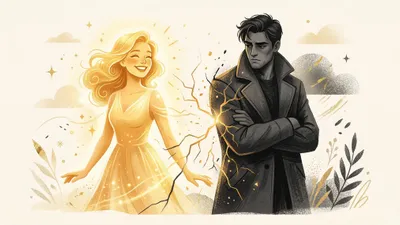
Grumpy/sunshine pairs a closed-off, brooding character with an aggressively optimistic one. The sunshine character refuses to give up on the grump, and the grump’s walls slowly crack under all that warmth.
BookTok loves this trope because the contrast creates natural comedy and tenderness. The viral moments usually come from scenes where the grumpy character does something unexpectedly soft — buying flowers, remembering a small detail, or defending the sunshine character with terrifying intensity.
This trope works in every genre, from contemporary romance to dark fantasy. See our full analysis of why grumpy/sunshine works and how to write it without making the grumpy character unlikable.
Fake Dating
Fake dating puts two characters in a situation where they need to pretend they’re in a relationship — for a family event, to make an ex jealous, to secure a business deal. The dramatic irony is baked in: you know the feelings are real before the characters do.
BookTok gravitates toward fake dating because every scene is loaded with subtext. Every “fake” kiss has real emotion underneath. Every time they hold hands “for show,” the reader knows they don’t want to let go.
The trope thrives on the moment the pretense drops and one character realizes they’ve fallen for real. We cover the full structure in our fake dating trope guide.
Friends to Lovers
Friends to lovers is the trope of quiet devastation. Two people who’ve known each other for years — sometimes their entire lives — finally cross the line from friendship to romance. The risk is everything: if it doesn’t work, they lose each other.
BookTok readers love the “oh no, I’m in love with my best friend” realization scene. The trope works because the emotional foundation is already built. You’re not watching strangers fall in love — you’re watching two people realize what was there all along.
The tension in friends-to-lovers is different from enemies-to-lovers. It’s not anger — it’s fear. Fear of ruining the most important relationship in their life. Dive deeper with our friends to lovers writing guide.
Forced Proximity
Forced proximity traps two characters in the same space — a cabin during a snowstorm, a shared apartment, a road trip, a work assignment in a remote location. They can’t escape each other, and the close quarters force emotional walls down.
This trope is a BookTok staple because it creates a pressure cooker. Every interaction is amplified when you can’t walk away. The “there’s only one bed” variant (below) is forced proximity’s most famous sub-trope.
Forced proximity works best when combined with another trope — enemies forced into proximity, exes stuck together, strangers who share a wall. Read the full breakdown in our forced proximity trope guide.
Only One Bed
Only one bed is technically a sub-trope of forced proximity, but BookTok has elevated it to its own category. The setup is simple: two characters who aren’t together end up sharing a bed. Awkwardness, accidental touching, and emotional vulnerability follow.
This trope generates some of the most-shared BookTok content because the scenario is so universally relatable and the tension is so immediate. There’s no slow build — the intimacy is instant and involuntary.
The best “only one bed” scenes use the physical closeness to force emotional honesty. When you’re lying next to someone in the dark, pretenses drop. See how to write this trope well in our only one bed guide.
Found Family
Found family is a trope where characters who are alone, abandoned, or estranged from their biological families build deep bonds with chosen people — a crew, a group of misfits, a team of unlikely allies. TV Tropes calls this the “True Companions” dynamic, and BookTok has made it a must-have in fantasy and romance alike.
BookTok’s love for found family transcends genre. You’ll find it in fantasy (the ragtag rebellion), romance (the friend group that becomes your lifeline), and even thrillers. The trope resonates because it says your people are out there — you just have to find them.
Found family often supports other tropes rather than driving the main romance, but BookTok readers specifically seek it out. Learn how to build these dynamics in our found family trope guide.
Second Chance Romance
Second chance romance reunites two people who had a relationship in the past — and lost it. Maybe they broke up, maybe life separated them, maybe one of them made a terrible mistake. Now they’re back in each other’s orbits.
The trope’s power on BookTok comes from the backstory. You’re not starting from scratch. There’s already history, already pain, already memories of what they had. The question isn’t “will they fall in love?” — it’s “can they survive loving each other again?”
BookTok particularly loves second-chance stories with a time gap (high school sweethearts reuniting a decade later) and dual timelines showing the original relationship alongside the present. Explore this trope in our second chance romance guide.
Marriage of Convenience
Marriage of convenience forces two characters into a legal union for practical reasons — an inheritance clause, a political alliance, immigration, a dying relative’s wish. The marriage is real on paper but fake in feeling. At first.
BookTok eats this trope alive because of the built-in domesticity. Sharing a home, navigating daily life together, the accidental intimacy of cohabitation — all while pretending the arrangement is purely transactional. The moment one character starts wanting it to be real is devastating.
This trope combines elements of fake dating and forced proximity, but the stakes are higher because the legal bond makes walking away complicated. See our full guide to the marriage of convenience trope.
The Fantasy and Genre Tropes BookTok Loves
BookTok isn’t only romance — fantasy, thriller, and genre-bending tropes are massive too. These are the story patterns that cross genre lines and dominate the For You Page.
Morally Gray Characters
Morally gray characters occupy the space between hero and villain. They do terrible things for understandable reasons — or good things for selfish ones. BookTok doesn’t just tolerate these characters. BookTok is obsessed with them.
The “morally gray character appreciation” video is its own BookTok sub-genre. Readers compile their favorite moments where a character does something objectively horrible but the reader still roots for them. The more complex the moral calculus, the more BookTok engagement the character generates.
Writing morally gray characters requires making their choices feel inevitable rather than arbitrary. Every terrible decision should stem from a value the reader understands. Learn the craft in our guide to writing morally gray characters.
The Chosen One
The chosen one trope puts a single character at the center of a prophecy, a destiny, or a responsibility that only they can fulfill. BookTok has a complicated relationship with this trope — they love it in execution but demand fresh takes on the formula.
The most viral Chosen One content on BookTok involves subversions: the reluctant chosen one, the chosen one who’s deeply unqualified, or the chosen one who actively resists their destiny. Straight-played prophecy narratives get less traction unless the character work is exceptional.
If you’re writing a chosen one story, see our guide on how to write the chosen one trope for strategies that feel fresh rather than formulaic.
Romantasy
Romantasy blends epic fantasy worldbuilding with a central romance plot — and it’s arguably the single biggest genre movement on BookTok right now. Think sweeping magical worlds, fated mates, political intrigue, and a love story that drives the entire narrative.
Authors like Sarah J. Maas, Rebecca Yarros, and Jennifer L. Armentrout have built massive BookTok audiences by perfecting this blend. The trope works because it delivers both escapism and emotional intimacy in the same package.
Romantasy is where several BookTok tropes collide — enemies to lovers, morally gray heroes, forced proximity, and chosen ones all show up regularly. If you want to write in this space, our guide on how to write romantasy covers the genre’s specific structural demands.
Villain Romance / Dark Romance
Villain romance pairs the protagonist with a character who is genuinely villainous — not misunderstood, not secretly good, but actively dangerous. Dark romance takes this further with power imbalances, moral ambiguity, and intense content.
This corner of BookTok is massive and polarizing. Readers who love dark romance are vocal advocates; readers who don’t actively avoid it. The Romance Writers of America recognizes dark romance as a legitimate subgenre, and the trope works when the story acknowledges the darkness rather than romanticizing harmful behavior without awareness.
BookTok’s dark romance community has its own language, its own content warnings, and its own recommendation networks. If you’re writing in this space, our dark romance guide covers the genre conventions and how to handle sensitive content responsibly.
Redemption Arc
A redemption arc takes a character who has done genuinely bad things and gives them a path toward growth — without erasing the consequences of their actions. BookTok loves a well-earned redemption because it combines moral complexity with emotional payoff.
The worst redemption arcs on BookTok are the ones that feel unearned — a villain says “I’m sorry” once and everyone forgives them. The best ones make the character work for it, lose things along the way, and arrive at redemption changed. See our full guide to writing a redemption arc.
The Spicy Tropes: Steam Levels on BookTok
BookTok has its own system for categorizing how much romantic and sexual content a book contains. Understanding steam levels is essential if you’re trying to write for this audience — or find the right books for your comfort level.
Spice Ratings
BookTok uses a pepper or chili emoji scale (🌶️) to rate books from “closed door” to “explicit.” One pepper means the romance is there but physical intimacy happens off-page. Five peppers means nothing is left to the imagination.
Most BookTok viral content skews toward 3-5 pepper territory, but clean romance and fade-to-black books have dedicated communities too. The key is being honest about your book’s heat level so readers know what they’re getting.
For writers, understanding steam levels means knowing your audience. Our guide on steam levels in romance writing breaks down what each level looks like on the page, and our guide to writing spicy scenes covers the craft of intimate content.
BookTok Trope Combinations That Go Viral
The tropes above rarely appear in isolation. BookTok’s most recommended books stack multiple tropes together — and certain combinations generate more engagement than others.
| Trope Combination | Why It Works | Example Setup |
|---|---|---|
| Enemies to Lovers + Forced Proximity | Tension has nowhere to escape | Rival scholars assigned the same research cabin |
| Grumpy/Sunshine + Only One Bed | Contrast amplified by closeness | Brooding bodyguard shares a hotel room with the person they’re protecting |
| Fake Dating + Friends to Lovers | Double layer of emotional denial | Best friends pretend to date and realize it was never pretend |
| Second Chance + Small Town | Can’t avoid your past in a small town | Ex moves back to their hometown and runs into the one who got away |
| Morally Gray + Enemies to Lovers | Maximum tension and moral stakes | Falling for someone whose values oppose everything you stand for |
| Found Family + Chosen One | Emotional anchor in epic stakes | Reluctant hero builds a crew of misfits who become their reason to fight |
The most viral BookTok books typically combine 2-3 tropes from this list. When you’re planning your novel, think about which trope is the engine (the main romantic or narrative arc) and which tropes support it.
How to Write BookTok Tropes That Actually Land
Knowing the tropes isn’t enough — you need to execute them well. BookTok readers are sophisticated. They’ve read dozens of books with the same trope and they can tell when an author is checking boxes versus building something that breathes.
Make the Trope Inevitable, Not Formulaic
Your enemies-to-lovers story needs a specific, character-driven reason these two people hate each other. Your fake-dating story needs a believable premise for the arrangement. Generic setups get DNF’d (Did Not Finish — another BookTok term you should know).
Nail the Key Scene
Every trope has a “moment” that BookTok readers live for. Enemies to lovers has the first-kiss-after-fighting scene. Slow burn has the moment they finally give in. Only one bed has the accidental middle-of-the-night contact. Identify your trope’s signature moment and pour your best writing into it.
Subvert When You Can
BookTok rewards fresh takes. The grumpy character who turns out to be soft? Expected. The sunshine character who turns out to have hidden darkness? That’s a viral recommendation waiting to happen. Play with expectations within the trope’s framework.
Use AI to Explore Trope Variations
Our Pick — Chapter
Chapter’s AI writing tools help you draft trope-driven scenes faster — from generating enemies-to-lovers banter to plotting fake-dating complications. You can explore multiple variations of a key scene without starting from scratch each time.
Best for: Fiction writers who want to experiment with trope execution Pricing: $97 one time, 2 books included (fiction or nonfiction), 30-day money-back guarantee Why we built it: Over 10,000 authors have used Chapter to write books, including romance and fantasy novels built on exactly these tropes.
If you’re writing a romance novel or fantasy novel, having an AI collaborator lets you test different trope approaches quickly. Generate five versions of your enemies’ first meeting, pick the one with the most tension, and build from there.
How to Use This List as a Writer
If you’re writing fiction and want BookTok to notice your work, here’s the practical playbook:
- Pick 2-3 tropes from this list — one as your primary engine, the others as supporting dynamics
- Study the trope’s “key scene” — the moment that makes readers film themselves reacting
- Give the trope a specific context — “enemies to lovers” is a trope, “rival pastry chefs competing on a reality show who fall in love” is a book people will recommend
- Write the emotional beats honestly — BookTok readers reward vulnerability and emotional depth over plot mechanics
- Know your steam level — decide early and be consistent throughout the book
For genre-specific guidance, check our guides on writing contemporary romance, historical romance, or paranormal romance.
How to Use This List as a Reader
If you’re here to find your next read, use these trope names as search terms on BookTok itself. The most effective way to find books:
- Search TikTok for “[trope name] book recommendation”
- Filter by most recent to find fresh picks, or most liked for proven favorites
- Stack tropes in your search: “enemies to lovers slow burn fantasy” narrows results to exactly your taste
- Follow creators who share your trope preferences — their recommendations will show up in your feed automatically
Check our guide to BookTok trends in 2026 for what’s generating the most buzz right now, and our guide on how to go viral on BookTok if you’re an author looking to reach this audience.
What BookTok Tropes Are Trending Right Now?
BookTok tropes trending in 2026 lean heavily toward romantasy, morally gray characters, and dark romance — with cozy fantasy emerging as a counterbalance. The “spicy fantasy” niche (romantasy with high steam levels) has exploded, and subgenres like mafia romance and sports romance are having viral moments.
Trope mashups are also trending harder than single-trope stories. BookTok creators now recommend books by listing 3-4 tropes as shorthand: “enemies to lovers, forced proximity, one bed, morally gray MMC.” Kindlepreneur’s trope research confirms that stacking tropes in metadata and descriptions boosts discoverability. The more trope overlap your book has with what readers are searching for, the more discoverable it becomes.
For authors, this means your book’s trope stack is part of your marketing language. Use trope terminology in your book description, your social media posts, and your Amazon keywords. It’s how BookTok readers find and filter books.
Can You Write a Book Using BookTok Tropes?
You can absolutely write a book built around BookTok tropes — and thousands of authors are doing exactly that. The tropes on this list aren’t restrictions. They’re frameworks that tell you what emotional experiences readers are actively searching for.
The difference between a trope-driven book that sells and one that doesn’t comes down to execution. Readers don’t want the trope itself — they want the feelings the trope delivers. Enemies to lovers isn’t about two people fighting. It’s about the electric moment when hatred flips to desire. Slow burn isn’t about waiting. It’s about the exquisite agony of almost.
If you’re ready to start writing, Chapter’s AI fiction tools can help you outline a trope-driven plot, draft key scenes, and explore character dynamics. Over 10,000 authors have written books on the platform — many of them romance and fantasy novels built on exactly the tropes in this list.
FAQ
What Are the Most Popular BookTok Tropes?
The most popular BookTok tropes are enemies to lovers, slow burn, grumpy/sunshine, fake dating, and friends to lovers. These five tropes generate the most recommendation videos and reader engagement on TikTok, with enemies to lovers consistently ranking as the #1 most-discussed trope across the platform.
What Does “Trope” Mean on BookTok?
On BookTok, a trope means a recurring story pattern or character dynamic that readers use to categorize and recommend books. Tropes like “only one bed” or “found family” act as shorthand for the emotional experience a book delivers, helping readers find exactly the type of story they want.
What Is the Difference Between a Trope and a Cliche?
A trope becomes a cliche when it’s executed without originality or emotional depth. Tropes are neutral storytelling tools — recurring patterns that readers actively seek out. A cliche is a trope used lazily, without specific character motivation or a fresh perspective. BookTok readers love tropes but will DNF a book that feels like a copy-paste of every other version.
What BookTok Tropes Are Best for New Writers?
Friends to lovers and forced proximity are the most accessible tropes for new writers because they provide natural story structure. Friends to lovers gives you built-in character history, and forced proximity gives you a clear setting constraint. Both reduce the amount of worldbuilding and setup you need to make the story work.
How Many Tropes Should a Book Have?
Most successful BookTok books feature 2-3 tropes working together — one primary trope that drives the main arc and 1-2 supporting tropes that add texture. Stacking too many tropes (5+) risks making your story feel scattered. The goal is depth within your chosen tropes, not a checklist of every popular pattern.