You can get dozens of genuine book reviews from social media — without begging friends or paying for fake ones — if you know which platforms to target and how to approach reviewers the right way.
In this guide, you’ll learn:
- Which social media platforms actually generate book reviews in 2026
- How to find and pitch BookTok, Bookstagram, and Goodreads reviewers in your genre
- The exact outreach templates that get responses
- How to build a review pipeline that keeps working long after launch
Here’s the step-by-step process.
Why Do Book Reviews on Social Media Matter?
Book reviews on social media drive both discovery and buying decisions in ways that traditional editorial reviews never could. Over 78% of authors now use at least one social media platform weekly to connect with readers, according to BookBub’s 2025 survey of 850+ authors.
A single BookTok video can move thousands of copies overnight. UK sci-fi and fantasy sales surged 41.3% year-over-year thanks to TikTok-driven reviews and recommendations.
Social proof compounds. Every review on Instagram, TikTok, or Goodreads makes the next reader more likely to buy. And unlike paid ads, a great review keeps working for months — or years.
If you’re still relying only on Amazon reviews, you’re leaving your most powerful marketing channel untouched. Here’s how to fix that.
How to Choose the Right Social Media Platforms for Book Reviews
Not every platform works for every genre. Your first step is matching your book to the right audience.
BookTok (TikTok) is the fastest-growing book discovery platform. It skews toward romance, fantasy, romantasy, thriller, and YA. If your book fits those genres, BookTok reviewers should be your top priority. Authors who published after 2020 are more than twice as likely to use TikTok than those who debuted earlier.
Bookstagram (Instagram) has a more established review culture with structured review posts, story features, and aesthetic flat-lay photography. It works across nearly every genre, including literary fiction, memoir, and nonfiction.
Goodreads remains the largest dedicated book review platform. Readers actively search for reviews here before buying. A strong Goodreads presence validates your book to cautious buyers.
Facebook Groups still matter for nonfiction, memoir, and genre-specific communities. Closed reader groups often have thousands of active members who post reviews regularly.
YouTube (BookTube) works best for in-depth reviews of literary fiction, nonfiction, and genre deep-dives. BookTubers tend to have smaller but highly engaged audiences.
| Platform | Best Genres | Review Format | Audience Size |
|---|---|---|---|
| BookTok | Romance, Fantasy, Thriller, YA | Short video (15-60s) | Massive, viral potential |
| Bookstagram | All genres | Photo + caption review | Large, steady engagement |
| Goodreads | All genres | Written review + rating | Largest book-specific platform |
| Facebook Groups | Nonfiction, Memoir, Genre | Discussion + recommendation | Medium, highly targeted |
| BookTube | Literary, Nonfiction | Long-form video review | Smaller, deeply engaged |
Pick 2-3 platforms where your genre readers are most active. Spreading yourself across all five dilutes your effort. For most fiction authors, BookTok + Bookstagram + Goodreads is the winning combination.
How to Find Book Reviewers in Your Genre
Finding the right reviewers matters more than finding lots of reviewers. One reviewer with 5,000 engaged followers in your genre will generate more sales than ten reviewers with 50,000 followers in the wrong niche.
Use Comp Title Tracking
Start with books similar to yours — your comp titles. Search each comp title on Instagram, TikTok, and Goodreads. Note which reviewers covered them. These reviewers already like your type of book.
Build a spreadsheet with columns for reviewer name, platform, follower count, genre focus, and contact info. Aim for 30-50 potential reviewers before you start reaching out.
Search Platform-Specific Hashtags
On BookTok, search hashtags like #BookReview, #[YourGenre]BookTok, #ARCReview, and #BookRecommendation. Watch a few videos from each creator to confirm they review your genre.
On Bookstagram, search #BookReview, #[YourGenre]Reads, #Bookstagram, and #ARCReader. Look at reviewers’ highlight reels — many have a “Review Policy” highlight that tells you exactly how to pitch them.
On Goodreads, browse the “Top Reviewers” lists and search for reviews of your comp titles. Reviewers who consistently rate and review in your genre are your best targets.
Check ARC Distribution Platforms
Platforms like BookSirens, NetGalley, and Booksprout connect you directly with reviewers who actively want advance reader copies. Many of these reviewers cross-post their reviews to social media, giving you coverage on multiple platforms from a single outreach effort.
How to Pitch Social Media Reviewers (With Templates)
Your pitch makes or breaks your review campaign. Generic mass messages get deleted. Personalized, respectful outreach gets responses.
The Golden Rules of Reviewer Outreach
Read their review policy first. Most Bookstagram and BookTok reviewers have explicit guidelines. Some only accept certain genres. Some don’t accept self-published books. Some have a queue months long. Ignoring their policy is the fastest way to get blocked.
Personalize every message. Reference a specific review they posted. Mention why your book fits their taste. Show you’ve actually engaged with their content — not just their follower count.
Keep it short. Three to four sentences maximum for your initial message. Reviewers receive dozens of pitches weekly. Respect their time.
Offer, don’t demand. You’re asking for a favor. Frame it as an invitation, not a transaction.
BookTok / Bookstagram DM Template
Hi [Name]! I loved your review of [Comp Title] — your point about [specific detail] really resonated with me. I have a [genre] novel coming out [date] that I think would be right up your alley. It’s about [one-sentence hook]. Would you be open to receiving a free copy? No pressure to review if it’s not your thing. Thanks for all the amazing content you put out!
Goodreads / Email Template
Subject: ARC Invitation — [Book Title] ([Genre])
Hi [Name], I’m reaching out because I’ve followed your Goodreads reviews of [comp titles] and love how thoughtfully you engage with [genre] books. I’d love to send you an advance copy of my upcoming [genre] novel, [Book Title]. [One-sentence description.] The book releases on [date]. If you’re interested, I can send a digital or print copy — whichever you prefer. No obligation to review, and honest opinions only. Thank you for considering it!
Follow-Up Protocol
Wait 7-10 days before following up. Send one polite follow-up, maximum. If you don’t hear back after two messages, move on. Never follow up more than twice — it crosses the line from professional to pushy.
How to Build a Goodreads Review Strategy
Goodreads deserves its own strategy because it influences buying decisions differently than visual platforms. Readers go to Goodreads specifically to decide whether to buy.
Set Up Your Goodreads Author Page
Claim your Goodreads Author Profile before your book launches. Add your bio, photo, and links to your other platforms. A complete profile signals professionalism.
Are Goodreads Giveaways Worth It?
Goodreads giveaways can generate reviews, but the ROI varies. You can distribute up to 100 copies and should run campaigns for 2-4 weeks, offering at least 50-100 copies for maximum visibility.
The pros: giveaways get your book on hundreds of “Want to Read” shelves, which boosts visibility in Goodreads’ recommendation algorithm. Winners sometimes leave reviews.
The cons: the paid giveaway program costs money, and not every winner actually reads or reviews the book. Many authors report a review conversion rate of 10-20% from giveaway winners.
The verdict: Goodreads giveaways work best as one piece of a larger strategy, not your only play. Combine them with direct reviewer outreach for better results.
Engage in Goodreads Groups
Join genre-specific Goodreads groups where readers discuss books like yours. Participate genuinely — comment on discussions, recommend other authors’ books, and share your reading life. When your book launches, group members who know you are far more likely to read and review it.
Don’t join groups just to spam your book link. Readers spot self-promotion instantly, and moderators will ban you.
How to Get Book Reviews on BookTok
BookTok marketing has transformed how readers discover books. A single viral video can generate hundreds of reviews across platforms.
Find BookTok Reviewers Who Match Your Genre
Search your genre hashtags and spend time watching review videos. Look for creators who:
- Consistently review your genre
- Have engaged comment sections (not just high follower counts)
- Post reviews regularly (not once every three months)
- Match your book’s tone and audience
Micro-influencers with 1,000-10,000 followers often have higher engagement rates than mega-accounts. Don’t overlook them.
Send Physical Copies When Possible
BookTok thrives on visual content. A beautifully packaged physical copy — with a handwritten note, bookmark, or themed goody — gives the reviewer content to film. Unboxing videos are some of the highest-performing BookTok content.
Include a small card with your book’s tropes, comp titles, and content warnings. This makes it easy for the reviewer to create their video without having to research your book.
Don’t Ask for Positive Reviews
Ask for honest reviews. Always. BookTok audiences are savvy — they can spot inauthentic praise immediately, and it destroys credibility for both you and the reviewer. A thoughtful 3-star review from a trusted BookToker can sell more books than a gushing 5-star review that feels fake.
How to Get Reviews on Bookstagram
Bookstagram has a more structured review culture than BookTok. Reviews tend to be longer, more detailed, and longer-lasting in the feed.
Plan a Bookstagram Tour
A book blog tour adapted for Instagram involves coordinating 5-15 Bookstagram reviewers to post about your book over a 1-2 week window. Each reviewer posts on a scheduled day, creating sustained buzz.
IngramSpark recommends planning virtual tours for one to two weeks with scheduled posts across multiple reviewer accounts. This creates the impression that “everyone is reading this book” — a powerful social proof trigger.
Optimize Your Book’s Visual Appeal
Bookstagram is a visual platform. Your book cover needs to photograph well. Send reviewers copies that look great in flat-lay photos alongside candles, coffee cups, and reading accessories.
If your cover doesn’t pop on camera, consider creating a special edition dust jacket or including branded merchandise that enhances the aesthetic.
Engage With Every Review Post
When a Bookstagrammer reviews your book, engage immediately. Like the post, leave a thoughtful comment, share it to your stories, and save it. This signals to Instagram’s algorithm that the content is valuable, boosting its reach. It also builds your relationship with the reviewer for future books.
How to Use Facebook Groups for Book Reviews
Facebook groups remain underrated for book reviews, especially for nonfiction and memoir authors.
Find Active Reader Groups
Search Facebook for groups like “[Your Genre] Readers,” “Book Reviews,” or “[Your Genre] Book Club.” Join 3-5 groups with active daily discussions. Look for groups with clear rules about self-promotion — the best groups have designated promotion days.
Build Relationships Before Asking
Spend 2-3 weeks engaging in group discussions before mentioning your book. Answer questions, recommend other authors’ books, and participate in reading challenges. When you eventually share your book, do it on designated promotion days and frame it as an invitation, not a sales pitch.
Create a Review Request Post
When the time comes, post something like:
I just published my [genre] book, [Title], about [one-sentence hook]. I’m looking for honest readers willing to leave a review on Amazon or Goodreads. I’ll send a free digital copy to anyone interested — just drop a comment or DM me. No strings attached, honest opinions only!
This approach works because it’s transparent, low-pressure, and respects the group’s culture.
How to Build an ARC Team for Ongoing Reviews
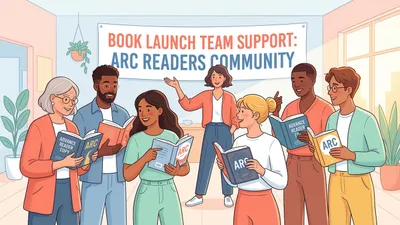
An ARC team — sometimes called a street team or launch team — is your secret weapon for consistent reviews across every book you publish.
Recruit From Your Existing Readers
Your email list is the best source of ARC team members. Send a signup form asking about their preferred genres, reading speed, and which platforms they review on. Start with 20-30 committed readers rather than 200 who never follow through.
Your reader magnet strategy feeds directly into ARC team building. Readers who signed up for a free novella are already invested in your work.
Set Clear Expectations
Tell your ARC team exactly what you need:
- Timeline: When the ARC goes out and when you’d like reviews posted
- Platforms: Where to post reviews (Amazon, Goodreads, Bookstagram, BookTok — let them choose)
- Honesty: You want honest reviews, period
- Format: Digital (EPUB/PDF) or print, based on their preference
Reward Your Team
ARC readers give you their time and attention. Show appreciation with:
- Early access to every new book
- Exclusive bonus content (deleted scenes, character art, author commentary)
- Name recognition in your acknowledgments
- Occasional swag (bookmarks, signed bookplates, stickers)
A well-maintained ARC team of 25-50 dedicated readers can guarantee 15-30 launch-day reviews for every book you release.
How to Use Chapter to Write Books That Get Reviewed
Great reviews start with a great book. Chapter helps you write a polished, publishable book that reviewers actually want to talk about.
Our Pick — Chapter
Chapter’s AI writing assistant helps you draft, outline, and refine your book faster — so you can spend more time on the marketing and reviewer outreach that gets your book noticed.
Best for: Authors who want to write quality books efficiently and launch with confidence Pricing: $97 one time, 2 books included (fiction or nonfiction), 30-day money-back guarantee Why we built it: Over 10,000 authors have used Chapter to create books. The faster you finish your book, the sooner you can start building review momentum.
The most common reason reviewers decline a book? The writing quality isn’t there yet. Chapter’s AI-powered editing tools help you polish your manuscript before it reaches reviewer hands, increasing your acceptance rate dramatically.
Common Mistakes to Avoid When Seeking Book Reviews
- Buying fake reviews. Amazon’s algorithms detect purchased reviews and can suppress your book or ban your account entirely. It’s not worth the risk.
- Review swapping. Exchanging reviews with other authors violates Amazon’s Terms of Service. Keep your reviews organic and independent.
- Mass-messaging reviewers with generic pitches. Copy-paste outreach gets ignored or reported as spam. Personalize every single message.
- Only asking friends and family. Amazon flags reviews from people connected to you. And your aunt’s 5-star review saying “great book, so proud!” doesn’t convince strangers to buy.
- Giving up after launch week. Review acquisition is an ongoing process. Keep pitching reviewers for months after publication. Books gain momentum over time.
How Many Reviews Do You Need to Make an Impact?
You need at least 20-30 reviews on Amazon to trigger the platform’s recommendation algorithm and appear in “Customers Also Bought” sections. On Goodreads, 50+ ratings help your book surface in genre recommendation lists.
But here’s what most authors miss: the platform of the review matters less than the reach of the reviewer. Five reviews from Bookstagrammers with engaged audiences of 5,000 each can drive more sales than 50 anonymous Amazon reviews.
Focus on quality and reach, not just quantity.
What’s the Best Time to Start Seeking Reviews?
Start your review campaign 8-12 weeks before your launch date. This gives you time to:
- Build your ARC team and send out advance copies (8 weeks before)
- Follow up with ARC readers and confirm they’ve received copies (6 weeks before)
- Start pitching BookTok and Bookstagram reviewers (6-4 weeks before)
- Launch your Goodreads giveaway (4 weeks before)
- Send gentle review reminders to your ARC team (1 week before)
- Coordinate your book launch with your review timeline
Your book launch plan should integrate review outreach as a core component, not an afterthought.
How to Handle Negative Reviews on Social Media
Negative reviews happen to every author. How you respond defines your professional reputation.
Never respond defensively to a negative review. Never argue with a reviewer, never leave a passive-aggressive comment, and never ask your fans to pile on. Every author who has tried this has regretted it publicly.
Do thank reviewers for their time when appropriate. A simple “Thanks for giving it a read!” on a 2-star Bookstagram review shows maturity and professionalism.
Do learn from consistent criticism. If multiple reviewers mention pacing issues or a weak ending, that’s actionable feedback for your next book.
Don’t take it personally. A review reflects one person’s taste, not your worth as a writer.
FAQ
How do you ask for book reviews on social media without being pushy?
How do you ask for book reviews on social media without being pushy? Offer free copies with no obligation to review, personalize your outreach by referencing the reviewer’s past content, and frame it as an invitation rather than a demand. The key is respecting the reviewer’s time and never following up more than twice.
Is it against Amazon’s rules to ask for reviews on social media?
Asking for honest reviews on social media is perfectly fine under Amazon’s guidelines. What’s prohibited is offering incentives for positive reviews, conducting review swaps, or asking friends and family to leave reviews. Always request honest opinions and never offer payment or gifts in exchange for a specific star rating.
How many BookTok followers do you need to get book reviews?
You don’t need any followers to get book reviews on BookTok. You’re reaching out to other creators who review books, not asking your own followers. Even authors with zero social media presence can pitch BookTok reviewers directly through DMs. Having a small following does help with credibility, but it’s not a prerequisite.
What is the best platform for getting book reviews in 2026?
The best platform for getting book reviews in 2026 is BookTok (TikTok) for fiction and Goodreads for both fiction and nonfiction. BookTok has the highest viral potential and fastest audience growth, while Goodreads reviews directly influence purchase decisions because readers actively search there before buying.
How long does it take to get book reviews from social media outreach?
Getting book reviews from social media outreach typically takes 4-8 weeks from your first pitch to published reviews. ARC team members usually review within 2-3 weeks of receiving your book. BookTok and Bookstagram reviewers may take 4-8 weeks depending on their reading queue. Start outreach at least 8 weeks before your launch date.