The denouement is the final section of a story where remaining plot threads are resolved and the narrative reaches its true conclusion. It comes after the climax and falling action, giving the reader a sense of closure.
What Is Denouement?
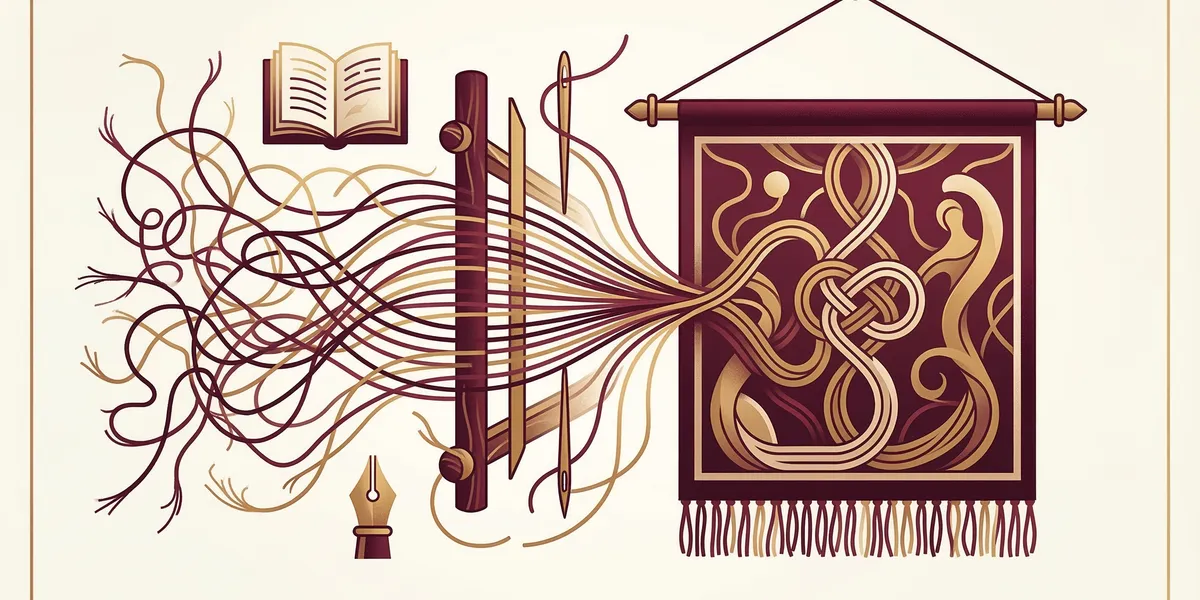
Denouement comes from the French word denouer, meaning “to untie.” The term is fitting. If the rising action of a story ties knots — creating tension, raising questions, complicating relationships — the denouement unties them.
It sits at the very end of a story’s plot structure. The climax delivers the decisive turning point. The falling action shows the immediate aftermath. The denouement handles everything else: what happened to the secondary characters, how the world changed, what the protagonist’s life looks like now.
Think of it as the story exhaling. The tension has broken. Now the reader needs to see what the new normal looks like.
A denouement can be a single paragraph or an entire chapter. Length depends on how many threads the story created. A tightly focused short story might need two sentences. An epic fantasy with a dozen subplots might need thirty pages.
Denouement vs Resolution
These terms get confused constantly, and for good reason — they overlap. But they are not identical.
Resolution refers to the moment the central conflict is decided. The villain is defeated. The lovers reunite. The mystery is solved. Resolution answers the story’s main dramatic question.
Denouement is what happens after the resolution. It addresses the consequences, the side characters, the lingering questions that the main conflict’s resolution did not cover. A story can have a resolution without a denouement (many thrillers end the moment the conflict resolves), but a denouement without a resolution would feel aimless.
The simplest way to remember: the resolution closes the main door. The denouement closes all the windows.
Examples of Denouement
Seeing the denouement in action makes the concept concrete. Here are five famous examples.
Harry Potter and the Deathly Hallows — J.K. Rowling
The climax is Voldemort’s defeat. The resolution is Harry surviving. The denouement is the epilogue set nineteen years later, showing Harry and his friends as parents sending their own children to Hogwarts. It answers the reader’s lingering question: what kind of life did they build after all that suffering?
Romeo and Juliet — William Shakespeare
The climax is the double suicide. The resolution is the deaths themselves. The denouement is the final scene where the Prince, the Montagues, and the Capulets stand over the bodies. The families agree to end their feud. The Prince delivers the closing moral. Shakespeare uses the denouement to show the cost of the central conflict — peace, but purchased with children’s lives.
Pride and Prejudice — Jane Austen
Darcy’s second proposal and Elizabeth’s acceptance form the resolution. The denouement covers the final chapters: how their families react, what happens to Lydia and Wickham, how Bingley and Jane settle into married life, and how Lady Catherine eventually accepts the match. Austen ties up every romance trope she introduced, giving each relationship its final note.
The Great Gatsby — F. Scott Fitzgerald
Gatsby’s death is the climax. The resolution is the confirmation that his dream died with him. The denouement is Nick’s experience afterward — the poorly attended funeral, the phone call from Gatsby’s father, Nick’s decision to leave the East. Fitzgerald uses the denouement to deliver the novel’s real thesis: the hollowness of the American Dream.
To Kill a Mockingbird — Harper Lee
The climax is Bob Ewell’s attack on the children and Boo Radley’s intervention. The resolution is the decision to protect Boo’s privacy. The denouement is Scout standing on the Radley porch, seeing the neighborhood through Boo’s eyes, and Atticus reading her to sleep. Lee closes with quiet domesticity, letting the story’s moral lessons settle without fanfare.
How to Write a Strong Denouement
A weak denouement can undermine an otherwise powerful story. Here is how to write one that satisfies.
Tie Up Subplots
Make a list of every subplot and secondary character arc you introduced. The reader remembers them even if you forgot. Each one needs at least a sentence of closure. You do not need to resolve every thread happily — but you need to resolve it.
Show Consequences
The climax changed things. The denouement is where you prove it. Show how the world is different now. If your character fought a war, show the rebuilding. If your character ended a relationship, show what their mornings look like alone.
Consequences make the climax feel real. Without them, the story’s central conflict starts to feel like it happened in a vacuum.
Match the Emotional Tone
The denouement should echo the story’s overall tone, not contradict it. A dark literary novel should not end with forced cheerfulness. A lighthearted romance should not close on an existential meditation. The reader has been trained to expect a certain emotional register. Honor it.
Keep It Brief
The denouement is not the place to introduce new conflicts, new characters, or new themes. The story is over. You are simply showing the reader what “over” looks like. Say what needs to be said and stop.
The most common mistake writers make is letting the denouement drag. Once the main tension breaks, the reader’s patience shortens. Every sentence in the denouement needs to earn its place.
End on Resonance
The final image or line of your denouement is the last thing the reader carries away. Choose it carefully. The best denouements leave the reader with a feeling, not just information. Scout on the Radley porch. Nick watching the green light. Harry touching his scar.
Find the image that captures what your story was really about, and close on that.