The difference between climax and resolution is simple: the climax is the turning point where your story’s central conflict reaches its highest tension, and the resolution is what comes after — the section that settles the outcome and ties up loose ends. The climax is the peak; the resolution is the landing.
In this guide, you’ll learn:
- The exact difference between climax and resolution, side by side
- Where each one sits in the plot structure
- Clear examples from books you already know
- How to write both so your ending actually satisfies readers
Here’s the breakdown.
What Is the Difference Between Climax and Resolution?
The difference between climax and resolution is timing and function. The climax is the moment of peak conflict and decision — the confrontation, revelation, or choice that determines how the story ends. The resolution is everything after that decides how life looks once the dust settles.
Think of it as cause and effect. The climax is the cause: the highest-stakes event in the story. The resolution is the effect: the consequences playing out and the emotional wind-down that lets readers exit the story feeling complete.
| Climax | Resolution | |
|---|---|---|
| Position | Peak of the story arc | End of the story arc |
| Function | Central conflict reaches breaking point | Conflict’s aftermath is settled |
| Tension | Highest in the whole story | Falling and releasing |
| Question it answers | ”Who wins? What happens?" | "What does it all mean now?” |
| Length | Usually a single scene or moment | One scene to a few chapters |
| Emotion | Suspense, shock, catharsis | Relief, closure, reflection |
If you only remember one thing: the climax is where the story is decided, and the resolution is where the story is finished.
What Is the Climax of a Story?
The climax is the point of maximum tension where the protagonist confronts the central conflict head-on and the outcome is determined. It’s the scene the entire story has been building toward — the final battle, the confession, the reveal, the impossible choice.
Everything before the climax raises the stakes. Everything after it releases them. That’s why the climax sits at the top of the classic story arc, right after the rising action and just before the fall.
A strong climax does three things:
- Resolves the central dramatic question — the one you planted at the inciting incident
- Forces the protagonist to act — passivity kills a climax
- Delivers on the story’s promise — the payoff readers were promised in the setup
Example: In The Lord of the Rings, the climax is the moment at Mount Doom when the Ring is destroyed. The central question — “Will the Ring be unmade?” — is answered. Tension peaks and breaks.
What Is the Resolution of a Story?
The resolution is the final section of a narrative where the conflict’s consequences are shown, loose ends are tied up, and the story reaches a stable ending. It’s sometimes called the denouement, a French word meaning “the untying.”
The resolution answers the questions the climax leaves behind. Did the hero get the reward? What happened to the relationships, the world, the characters who survived? It gives readers a sense of a new normal.
The resolution in a story does the emotional accounting. After the adrenaline of the climax, readers need a moment to absorb what changed. Skip it, and even a brilliant climax can feel abrupt or unearned.
Example: In The Lord of the Rings, the resolution spans the return to the Shire, the scouring, and Frodo sailing to the Undying Lands. The Ring is already destroyed — this is the story showing you what that victory cost and meant.
Where Do Climax and Resolution Fit in Plot Structure?
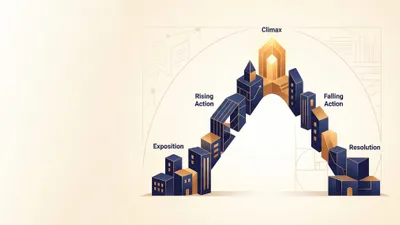
The climax and resolution sit near the end of the classic five-part plot structure, first mapped by Gustav Freytag in his 1863 study of drama. The full arc runs: exposition, rising action, climax, falling action, and resolution.
Here’s the order, top to bottom:
- Exposition — introduces characters, setting, and the status quo
- Rising action — complications and rising stakes build tension
- Climax — the turning point of peak tension
- Falling action — immediate consequences unravel
- Resolution — loose ends tie up and the story lands
Notice what sits between the climax and resolution: the falling action. This is where a lot of writers blur the terms. The climax is the peak, the falling action is the descent, and the resolution is the final rest at the bottom of the arc.
You can see this visualized clearly in a plot diagram, where the line rises to a sharp point (climax) then slopes down to a flat close (resolution).
Climax vs Resolution: A Side-by-Side Example
The cleanest way to feel the difference between climax and resolution is to watch them back to back in one story.
Take Harry Potter and the Sorcerer’s Stone:
- Rising action: Harry and friends fight through the trapdoor challenges beneath the school.
- Climax: Harry confronts Professor Quirrell and Voldemort over the Stone. The central question — “Who is after the Stone, and will they get it?” — is answered when Harry survives and the Stone is protected. This is the peak.
- Falling action: Harry wakes in the hospital wing; Dumbledore explains what happened.
- Resolution: The end-of-year feast, Gryffindor winning the House Cup, and everyone heading home. Order is restored and the emotional threads close.
Same story, two distinct jobs. The climax decides the outcome. The resolution lets you breathe and shows you the new normal.
Common Mistakes Writers Make With Climax and Resolution
Even experienced writers trip over these two. Watch for these pitfalls:
- Ending at the climax. Cutting off the instant the conflict resolves leaves readers with emotional whiplash. Give them a resolution.
- A bloated resolution. Dragging out ten chapters of wrap-up after the climax kills momentum. Tie up what matters, then stop.
- A climax with no real stakes. If the outcome was never in doubt, the peak feels flat — and the resolution has nothing to resolve.
- Introducing new conflict in the resolution. The resolution settles the story. New problems belong in a sequel, not here.
- Confusing the falling action with the resolution. The falling action shows consequences unfolding; the resolution is the final stable state.
How Do You Write a Strong Climax?
To write a strong climax, force your protagonist to make the hardest choice or take the biggest risk in service of the central conflict. Raise the stakes to their maximum, remove easy escapes, and make the outcome genuinely uncertain until it happens.
A few practical moves:
- Pay off your setup. The climax should use skills, objects, or truths you planted earlier — not a lucky coincidence.
- Keep it active. Your protagonist drives the climax; they don’t get rescued by chance.
- Slow down the prose. Shorter sentences and tight beats stretch the tension at the peak moment.
If you outline before drafting, mark your climax first and build backward. Tools like Chapter can help you structure a full manuscript around a strong central turning point, so your rising action actually earns its payoff.
How Do You Write a Satisfying Resolution?
To write a satisfying resolution, answer the questions your climax raised, show the consequences of the outcome, and give each major thread a sense of closure — without introducing new conflict. Keep it proportional: a big story earns a longer wind-down, a tight thriller wants a quick one.
Focus on:
- Emotional payoff. Show how your protagonist has changed, not just that the plot ended.
- Loose ends. Address the subplots and relationships readers invested in.
- A final image. End on a concrete, resonant moment that lingers.
For a deeper walkthrough, see our full guide on writing a satisfying resolution with examples from famous novels.
How Long Should the Resolution Be After the Climax?
The resolution should be as short as it can be while still delivering closure — often a single scene or chapter for tightly plotted genre fiction, and a few chapters for sprawling epics with many threads. The rule of thumb: resolve the central conflict quickly, then wrap subplots in descending order of importance.
Readers feel the drop in tension immediately after the climax, so a long resolution risks losing them. When in doubt, cut. A crisp resolution almost always beats a drawn-out one.
Can a Story Have a Climax Without a Resolution?
A story can technically end at the climax, but it rarely satisfies readers. A climax without a resolution leaves the emotional and narrative consequences unaddressed, which feels abrupt or unfinished to most audiences.
Some literary and experimental works end on the climax deliberately — cutting to black at the peak for shock or ambiguity. But for most fiction, especially genre fiction, the resolution is what turns a dramatic event into a complete story.
FAQ
What is the difference between climax and resolution in simple terms?
The difference between climax and resolution is that the climax is the peak moment of conflict where the outcome is decided, while the resolution is the closing section that shows the aftermath and ties up loose ends. The climax creates the turning point; the resolution provides the closure.
Does the resolution come before or after the climax?
The resolution comes after the climax. The standard order is climax, then falling action, then resolution. The climax is the highest point of tension, and the resolution is the final stage where that tension fully releases and the story reaches a stable ending.
Is the resolution the same as the denouement?
Yes, the resolution and denouement refer to the same stage of a story — the final section after the climax where conflicts are settled. “Denouement” is the French literary term meaning “untying,” while “resolution” is the more common everyday word. Both describe the story’s closing wrap-up.
What comes between the climax and the resolution?
The falling action comes between the climax and the resolution. It’s the stage where the immediate consequences of the climax unfold and remaining tension begins to ease, bridging the peak of the story and its final closing moments in the plot structure.
Can the climax and resolution be in the same scene?
The climax and resolution can overlap in a single scene in short or fast-paced stories, where the conflict resolves and closure arrives almost simultaneously. In longer works, they’re usually separated by falling action so readers have time to absorb the outcome before the story ends.