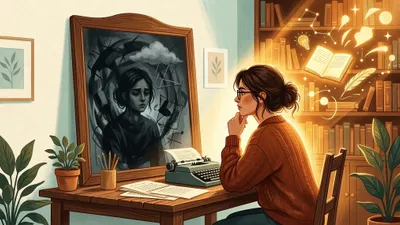
You finished your book — or you’re close — and now a wall of dread is standing between you and the publish button. That fear is completely normal, and it doesn’t have to stop you.
In this guide, you’ll learn:
- Why fear of publishing is universal (even bestselling authors feel it)
- The 7 specific fears that block writers and where they actually come from
- Actionable strategies to move past each one and get your book into the world
Here’s how to face the fear and publish anyway.
Why Are You Afraid to Publish Your Book?
Fear of publishing a book is the anxiety, dread, or resistance you feel when you’re about to release your writing into the world. It’s rooted in vulnerability — you’ve poured yourself into something personal, and now strangers will judge it.
You’re not alone. Research suggests that 97% of people who start writing a book never finish it. Many of those who do finish still never publish — not because the book isn’t good enough, but because fear stops them.
The fear is real. But it’s also a sign that what you’ve created matters to you. That’s worth protecting — and worth pushing through.
The 7 Most Common Fears of Publishing a Book
Every publishing fear falls into one of these categories. Name yours, and it loses most of its power.
1. Fear of Judgment and Criticism
This is the big one. You’re terrified that people will read your book and think it’s bad. Or worse — they’ll think you’re bad.
Why it happens: Publishing makes you visible. A manuscript on your laptop is safe. A published book is exposed. Your brain reads that exposure as social threat.
The truth: Negative reviews happen to every single published author. The first one stings. The tenth one barely registers. And here’s the paradox — if you write something no one dislikes, you’ve also written something no one truly loves.
2. Fear of Not Being Good Enough
You read authors you admire and think, “Who am I to put my work next to theirs?” This is classic imposter syndrome — and it affects writers at every level.
Why it happens: You’ve spent months or years seeing every flaw in your own writing. You only see the polished final version of other authors’ work. The comparison is inherently unfair.
The truth: Your first book doesn’t need to be your masterpiece. It needs to be done. Over 5,000 books have been written using Chapter’s platform, and the authors who succeed aren’t the most talented — they’re the ones who publish.
3. Fear of Vulnerability
Especially common for memoir writers and anyone drawing from personal experience. You’ve put real emotions on the page, and now the world can see inside you.
Why it happens: Writing is intimate. Whether you’re publishing a book about your life or a novel with autobiographical threads, the line between author and work feels dangerously thin.
The truth: Vulnerability is what makes books resonate. Readers connect with honesty. The books that change lives are almost always the ones that scared their authors the most.
4. Fear of Failure (Nobody Will Buy It)
You imagine publishing your book and hearing… silence. No sales. No readers. Just your book sitting on Amazon collecting digital dust.
Why it happens: You’ve invested enormous time and emotional energy. The stakes feel impossibly high. If the book doesn’t sell, it feels like proof that the effort was wasted.
The truth: Most self-published authors don’t become millionaires with their first book. But “failure” in publishing is rarely catastrophic. You learn. You build an audience. You write the next one. Some Chapter users have made $13,200 from a single book — and it started with pressing publish.
5. Fear of Success
This one surprises people. You’re afraid of what happens if the book does well. More visibility. More expectations. More pressure for the next one.
Why it happens: Success changes your identity. If you publish and people respond, you’re now “an author” — with all the expectations that come with it.
The truth: You can handle success incrementally. One reader at a time. One review at a time. You don’t need to prepare for a bestseller before you publish — just prepare for the next step.
6. Fear of Permanence
Once it’s out there, you can’t take it back. What if your opinions change? What if you spot a typo on page 47 three months later?
Why it happens: Digital publishing feels permanent (even though it’s actually quite flexible). Your brain catastrophizes — imagining the worst version of every possible mistake.
The truth: Self-publishing gives you full control. You can update your manuscript anytime. You can revise, correct, and improve. Nothing is truly permanent. And perfection is the enemy of published — knowing when you’ve done enough drafts is a skill you develop with practice.
7. Fear of Letting People Down
You worry that friends, family, or your audience expect something brilliant — and your book won’t live up to their expectations.
Why it happens: External pressure (real or imagined) raises the stakes beyond what the work can bear. You’re no longer writing for yourself — you’re writing to meet other people’s standards.
The truth: The people who care about you will celebrate that you finished a book. Period. They’re not reading with a red pen. And strangers? They picked up your book because the topic interested them — not because they expect perfection.
How to Overcome Your Fear of Publishing
Knowing what you’re afraid of is half the battle. Here’s how to actually move through it.
Name the Fear Specifically
Vague dread is paralyzing. Specific fears are manageable. Write down exactly what you’re afraid will happen. “People will judge me” becomes “My aunt will read the chapter about my childhood and be upset.”
Once you name it, you can plan for it. Most named fears either (a) aren’t actually likely, or (b) are survivable even if they happen.
Set a Non-Negotiable Publish Date
Fear thrives in open-ended timelines. When there’s no deadline, there’s always a reason to wait. Pick a date. Tell someone. Put it in your calendar.
This isn’t about rushing — it’s about removing the escape hatch that keeps you editing forever instead of finishing your book.
Start with a Smaller Audience
You don’t have to launch to the entire world on day one. Send your manuscript to 3-5 beta readers first. Publish under a pen name if that removes pressure. Release a single chapter as a blog post.
Each small act of sharing builds tolerance for visibility. By the time you publish the full book, you’ve already survived being read — and the world didn’t end.
Separate Your Identity from Your Book
Your book is something you made. It is not you. A negative review of your book is not a rejection of you as a person.
This sounds obvious, but it’s the core psychological trap that makes publishing fear so intense. Practice saying “my book” instead of “my baby.” It’s a product you crafted — not an extension of your soul.
Reframe Anxiety as Excitement
Your body can’t tell the difference between fear and excitement. Racing heart, sweaty palms, restless energy — those symptoms are identical whether you’re terrified or thrilled.
The difference is interpretation. Try saying “I’m excited to publish” instead of “I’m scared to publish.” Same feeling, completely different relationship to the action.
Use the Regret Minimization Framework
Ask yourself: “In ten years, will I regret publishing this book — or will I regret not publishing it?”
Almost no one regrets publishing. Even authors whose first book didn’t sell well are glad they did it. But plenty of people carry the weight of the book they never released.
Focus on Who You’re Serving
If you can’t be brave for yourself, be brave for your reader. Someone out there needs what’s in your book. A memoir that helps one person feel less alone. A guide that saves someone months of struggle. A novel that gives someone joy on a hard day.
Your fear is about you. Your book is about them.
Lower the Stakes with Self-Publishing
Traditional publishing raises the fear factor because gatekeepers are judging your work before readers ever see it. Self-publishing removes that barrier entirely.
You control the timeline. You control the format. You can start small, test the waters, and build confidence with each step. Tools like Chapter make the process even simpler — you focus on writing while the platform handles structure, formatting, and export. Over 2,147 authors have used it to go from idea to published book.
What If Your Book Actually Isn’t Ready?
Sometimes fear is trying to tell you something useful. Here’s how to tell the difference between productive fear and genuine unreadiness:
It’s fear (push through) if:
- You’ve had beta readers and incorporated feedback
- You’ve edited the manuscript at least 2-3 times
- You keep finding tiny things to fix that don’t change the book’s quality
- You’ve been “almost ready” for more than a month
It might not be ready (keep working) if:
- You haven’t had anyone else read it yet
- You know there are structural problems you’re avoiding
- You skipped editing because you’re afraid of what you’ll find
- Major plot holes or factual errors remain
If you’re unsure, get feedback from beta readers. Their reaction will tell you whether your fear is based on reality or just anxiety.
Does the Fear Ever Go Away?
No — but it gets easier. Published authors still feel nervous before every release. The difference is they’ve learned that the fear doesn’t predict the outcome.
Your first book is the hardest because you have no evidence that publishing is survivable. After your first book is out, you have proof. You published. People read it. You’re still standing.
Author after author reports the same thing: the moment they hit publish, the fear transformed into relief. The weight lifted. The thing they’d been dreading for months was… fine.
How Long Should You Wait Before Publishing?
You should publish when you’ve completed your editing process and received at least one round of external feedback — not when the fear goes away, because it won’t.
Most authors need 3-5 drafts before publishing. If you’ve done that work, the remaining resistance is almost certainly fear — not a quality problem.
Set a timeline:
- Finish your final edit
- Send to 2-3 beta readers
- Incorporate their feedback
- Choose your publishing path (self-pub vs. traditional)
- Publish within 30 days of completing step 4
That structure removes the infinite delay loop that fear creates.
Can You Publish a Book Anonymously?
Yes — publishing under a pen name is completely legitimate and many successful authors do it. If fear of personal exposure is your biggest blocker, a pen name removes it entirely.
Pen names are especially common in memoir, romance, and personal essay writing — genres where vulnerability is highest. You get the satisfaction of being published without the anxiety of being personally exposed.
You can always reveal your identity later. You can never un-publish. Choose the path that gets your book into the world.
How to Handle Negative Reviews (Before They Happen)
One of the biggest sources of publishing fear is imagining that first negative review. Here’s how to prepare yourself before you publish:
Accept that negative reviews are inevitable. Every published book receives them. A 4.2-star average on Amazon is excellent. You don’t need — or want — universal approval.
Decide your review policy in advance. Will you read reviews? Some authors read everything. Others never check. Decide before you publish so you’re not making that choice emotionally in the moment.
Remember what negative reviews actually mean. They mean someone bought your book. They mean your writing provoked a reaction. They mean you’re a published author whose work is being discussed.
Create a “praise file.” Before you publish, collect every positive thing anyone has said about your writing — beta reader comments, workshop feedback, messages from early readers. When the first negative review lands, open that file. It’s your evidence that your writing connects with people.
The fear of criticism is always worse than the reality. Most negative reviews are brief, forgettable, and say more about the reviewer’s preferences than your ability.
Common Mistakes Writers Make When They’re Afraid
- Endless editing — Perfectionism is fear wearing a productivity costume. At some point, revisions stop improving the book and start being avoidance.
- Waiting for permission — No one is going to tell you you’re ready. You give yourself permission. You don’t need to wonder if you’re good enough — you need to publish and find out.
- Comparing to established authors — You’re comparing your first draft to their tenth book. It’s not a fair measurement. Everyone starts somewhere.
- Telling no one — Keeping your book secret feels safe but removes accountability. Tell people. Let them ask how it’s going. Social pressure works both ways.
- Choosing the hardest path first — If querying agents terrifies you, self-publish first. Build confidence. You can always pursue traditional publishing later.
FAQ
Is It Normal to Be Scared to Publish a Book?
Yes, being scared to publish a book is completely normal and nearly universal among writers. Even bestselling authors experience fear before every release. The fear typically stems from vulnerability, fear of judgment, and imposter syndrome. It’s a sign that your work matters to you — not a sign that you shouldn’t publish.
How Do I Get Over My Fear of Publishing?
To get over your fear of publishing, name your specific fear, set a firm publish date, and start by sharing with a small audience. Reframe anxiety as excitement, focus on serving your reader rather than protecting yourself, and use the regret minimization framework — asking whether you’ll regret publishing or regret staying silent.
What Is the Fear of Being a Published Author Called?
The fear of being a published author doesn’t have a single clinical name, but it combines elements of atychiphobia (fear of failure), scopophobia (fear of being seen), and imposter syndrome. Writers often experience it as a blend of perfectionism, vulnerability anxiety, and fear of judgment that intensifies as publication approaches.
Should I Self-Publish If I’m Afraid of Traditional Publishing?
Self-publishing is an excellent choice if traditional publishing feels too intimidating to start with. It gives you full control over timeline, content, and visibility. You can publish quietly, build confidence with reader feedback, and scale your visibility at your own pace. Many authors start with self-publishing and pursue traditional deals later.
How Do I Know If My Book Is Ready to Publish?
Your book is ready to publish when you’ve completed 3-5 drafts, received feedback from beta readers, and addressed structural issues. If you’ve done that work and still feel afraid, the remaining resistance is fear — not a quality signal. Perfectionism disguised as “one more edit” is the most common form of publishing avoidance.