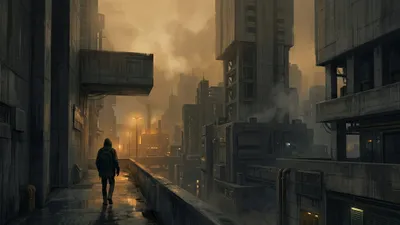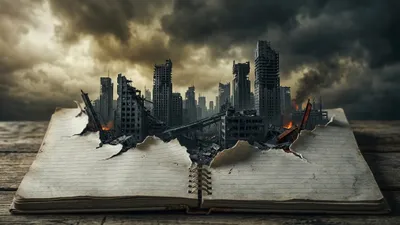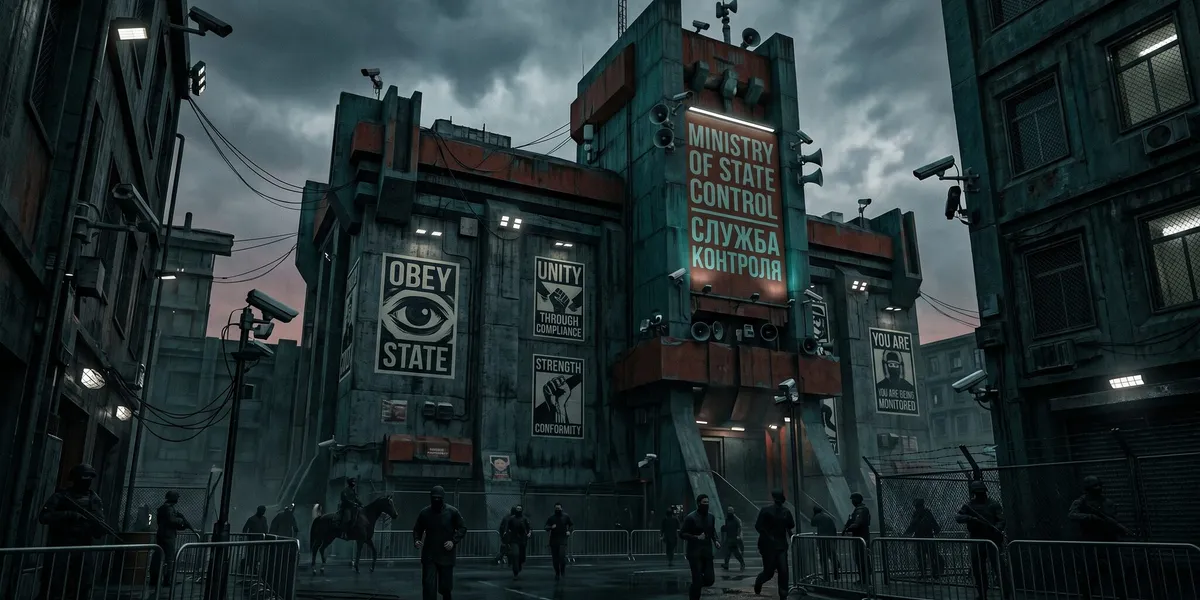
A dystopian government in fiction is an authoritarian regime that maintains power through some combination of surveillance, propaganda, resource control, and the suppression of individual freedom — all while claiming to serve the greater good. The best fictional dystopias feel disturbingly plausible because they’re built from mechanisms that already exist.
Types of Dystopian Governments
Totalitarian Surveillance State
Control through watching. Every citizen is monitored, privacy is abolished, and the threat of being observed controls behavior even when no one is actually watching.
Key mechanisms: Cameras everywhere, informant networks, thought monitoring, social credit scoring, digital tracking Historical inspiration: Stasi-era East Germany, modern mass surveillance systems Fiction examples: 1984, The Circle
Theocratic Regime
Control through religious authority. The government derives its power from divine mandate, and disobedience is treated as both crime and sin.
Key mechanisms: Religious law as state law, morality police, ritual compliance, suppression of competing beliefs Historical inspiration: Various theocratic states throughout history Fiction examples: The Handmaid’s Tale, The Sparrow
Corporate Oligarchy
Control through commerce. Corporations have replaced governments, and citizenship is employment. Your rights depend on your economic value.
Key mechanisms: Privatized services (water, air, justice), debt bondage, brand loyalty as patriotism, obsolescence of government Fiction examples: Snow Crash, Jennifer Government, Blade Runner
Technocratic Meritocracy
Control through competence testing. Society is organized by ability, with an elite class of “experts” making all decisions. Those who don’t meet standards are relegated to lower castes.
Key mechanisms: Mandatory testing, genetic sorting, intelligence-based caste systems, eugenic programs Fiction examples: Brave New World, Gattaca
Post-Catastrophe Authoritarianism
Control through necessity. After a disaster (climate, war, pandemic), the government seized emergency powers and never returned them. Citizens accept oppression because the alternative is chaos.
Key mechanisms: Rationing, curfews, restricted zones, martial law, “temporary” measures that become permanent Fiction examples: The Hunger Games, Station Eleven
How to Build Your Dystopian Government
Start With the Core Fear
Every dystopian government is built around a fear — something the society is trying to prevent at any cost:
| Core Fear | Government Response | Example |
|---|---|---|
| Chaos/disorder | Total control of behavior | 1984 |
| Suffering/pain | Elimination of emotion/choice | The Giver |
| Inequality | Forced equality (handicapping) | Harrison Bergeron |
| Overpopulation | Reproduction control | The Handmaid’s Tale |
| Environmental collapse | Extreme rationing/isolation | The Hunger Games |
| Ignorance/stupidity | Technocratic caste system | Brave New World |
The fear your government responds to should be legitimate — something your reader can understand wanting to prevent. The dystopia emerges from the cure being worse than the disease.
Design the Control Mechanisms
Your government needs specific tools to maintain power. Choose 3-5 from this list and develop them in detail:
Information control: Censorship, propaganda, rewritten history, controlled media, forbidden knowledge Social control: Mandatory grouping (factions, districts), arranged relationships, public shaming, loyalty testing Physical control: Restricted movement, curfews, forced labor, resource rationing, geographic isolation Psychological control: Surveillance (real or perceived), informant culture, mandatory medication, emotional suppression Technological control: Tracking implants, AI monitoring, automated enforcement, digital currency that can be revoked
Build in the Cracks
No dystopian government is perfectly efficient — and the cracks in the system are where your story happens. Every control mechanism should have:
- A weakness your protagonist can exploit
- A cost that creates resentment in the population
- A contradiction between what the government claims and what it does
- An unintended consequence that undermines the government’s goals
Create the Propaganda
What does your government tell its citizens? Dystopian propaganda includes:
- A founding myth — The story of why the current system was necessary
- A vocabulary — New words or redefined terms that shape how people think
- A visual identity — Symbols, colors, architecture that reinforce the regime
- An enemy — Internal or external, real or manufactured, to justify continued control
Design the Resistance
Your dystopian world needs opposition — even if it’s small, hidden, or hopeless:
- Where does resistance exist? Underground networks, border territories, within the government itself
- What form does it take? Armed rebellion, information smuggling, cultural preservation, escape attempts
- Why hasn’t it succeeded yet? The government’s response to resistance reveals its true nature
Making Your Dystopia Feel Real
Ground It in Today
The most effective dystopias extrapolate from current trends. Pick a real-world issue and ask “what if this went as far as it could go?”
- Social media surveillance → a social credit system that determines access to jobs, housing, and travel
- Income inequality → a formal caste system based on net worth
- Climate legislation → forced relocation and resource allocation by algorithm
Include Believers
Not everyone in your dystopia should see it as dystopian. Include characters who genuinely believe the system works — who’ve internalized the propaganda, benefited from the hierarchy, or are too afraid to imagine alternatives. These characters create moral complexity and make the world feel lived-in.
Show Daily Life
The most powerful dystopian worldbuilding happens in mundane moments: what people eat for breakfast, how they greet each other, what they’re afraid to say, what they do for entertainment. The horror of dystopia isn’t the dramatic oppression — it’s the normalized oppression that feels like routine.
Common Mistakes in Dystopian Government Writing
- Cartoonishly evil leaders. The scariest dystopian leaders believe they’re doing the right thing. Give your rulers genuine motivations and show how they justify their actions.
- No explanation for why people comply. Real authoritarianism works through a mix of fear, benefit, habit, and genuine belief. Show all four.
- A government that’s evil at everything. Real oppressive regimes often provide genuine benefits (security, stability, basic needs) alongside their oppression. This is what makes them hard to overthrow.
- Ignoring the economy. Who produces food? Who builds infrastructure? How does trade work? A dystopian government needs an economic system that sustains it.
- Revolution is too easy. If one brave teenager can topple a regime that controls millions, the regime wasn’t plausible. Make the challenge proportional to the power structure.
For help with building complex worlds and managing multiple story threads, check our guides on parallel plotlines and writing slow-build tension.
For AI-assisted worldbuilding and story development, explore our guides on AI story generators and AI plot generators.
FAQ
How do you write a dystopian government?
Write a dystopian government by starting with a core fear the society is trying to prevent, then designing 3-5 specific control mechanisms (surveillance, propaganda, resource control) that address that fear. Build in cracks and contradictions that create story opportunities. Ground the government in real-world trends extrapolated to extremes for plausibility.
What are the types of dystopian governments in fiction?
Common dystopian government types include totalitarian surveillance states (1984), theocratic regimes (The Handmaid’s Tale), corporate oligarchies (Snow Crash), technocratic meritocracies (Brave New World), and post-catastrophe authoritarian states (The Hunger Games). Each controls its population through different mechanisms and responds to different societal fears.
What makes a dystopian government believable?
A dystopian government feels believable when it provides genuine benefits alongside its oppression (security, order, basic needs), includes citizens who genuinely support the system, extrapolates from real-world trends, has a plausible economy, and has cracks and contradictions in its control mechanisms. The best dystopias feel like they could actually happen.
How do you create a dystopian society for a novel?
Create a dystopian society by choosing a core societal fear, designing a government that addresses it through extreme measures, building the daily life details that show how people live under the regime, creating propaganda and cultural elements that reinforce the system, and designing a resistance movement that drives the plot. Focus on making the ordinary moments feel oppressive.