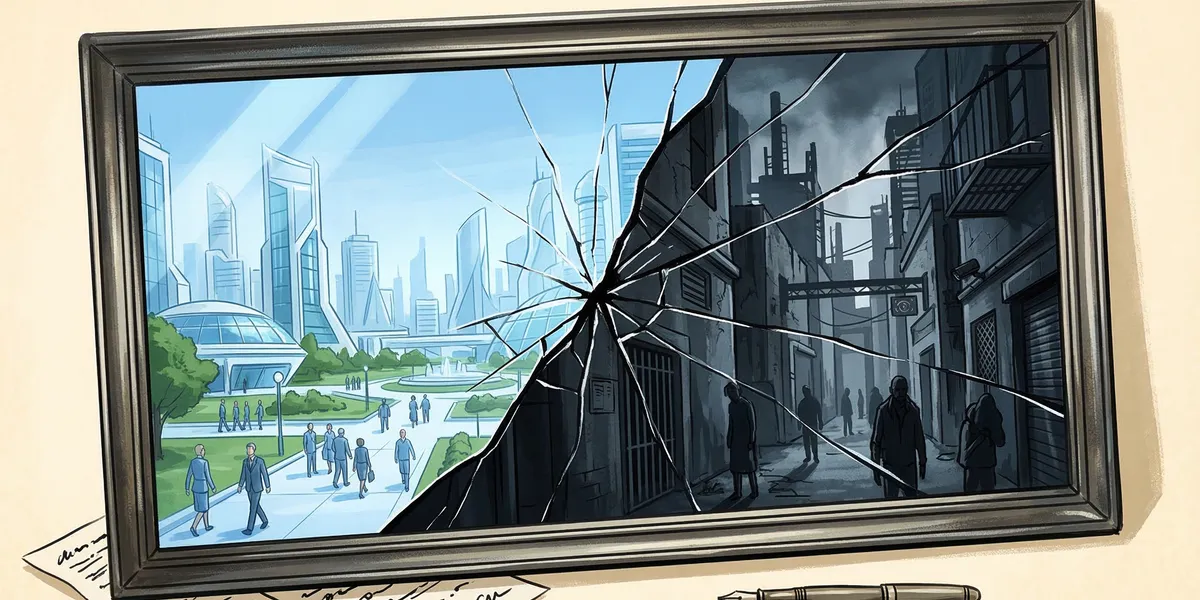
Dystopian fiction takes one real thing about the world — a trend, a fear, a technology, a power structure — and pushes it to its logical extreme. The result is a society that looks controlled, stable, or even utopian on the surface but is built on oppression, surveillance, dehumanization, or lies underneath. The best dystopias do not feel like fantasy. They feel like a warning.
The genre has never been more relevant. Every year brings new technologies, new political shifts, and new reasons to ask: what happens if this keeps going?
The “One Thing Taken Too Far” Principle
Every great dystopia starts with a single idea amplified to its breaking point.
In 1984, it is state surveillance. In The Handmaid’s Tale, it is reproductive control. In Brave New World, it is pleasure as pacification. In The Hunger Games, it is entertainment as subjugation. In Fahrenheit 451, it is anti-intellectualism. Each of these novels takes something recognizable from the real world and asks: what if this were absolute?
This is your starting point. Pick one real trend and follow it to its worst-case scenario. Not five trends. Not a grab bag of dystopian elements. One core idea, explored deeply, creates a more terrifying and more coherent world than a dozen half-developed ones.
Examples of trends worth amplifying:
- Social media reputation scores becoming literal currency or legal status
- AI-generated content replacing all human creative output
- Climate collapse creating resource-hoarding city-states
- Genetic editing creating a biological caste system
- Algorithmic prediction becoming pre-crime enforcement
- Corporate ownership expanding to governance
- Longevity technology dividing humanity into mortals and immortals
The trend you choose should be something you find genuinely concerning. Dystopian fiction written from real anxiety lands harder than dystopian fiction built from a checklist.
Worldbuilding the System
A dystopia is a system. To make it believable, you need to understand how that system works — not just what it looks like, but how it sustains itself.
Who Has Power?
Every dystopia has a ruling class and a controlled class. The structure can be a totalitarian government, a corporate oligarchy, a theocratic council, an AI system, or something stranger. What matters is that the power is concentrated and self-perpetuating.
Define your power structure clearly. Who makes decisions? How are they chosen? What keeps them in power? A dictator held in place by military force operates differently from a committee sustained by public consent. The mechanics of power shape everything else in your world.
How Is Control Maintained?
This is where dystopias get specific. The methods of control differentiate one dystopia from another and reveal the novel’s thematic concerns.
Surveillance. The government sees everything. Privacy does not exist. Citizens police each other because anyone could be watching. This method creates paranoia as the primary emotional texture.
Propaganda. The truth is controlled. History is rewritten. Language is restricted. Citizens believe the system is good because they have never been exposed to alternatives. This method creates a world where the protagonist’s awakening is fundamentally about information.
Pleasure. The population is pacified through entertainment, drugs, virtual reality, or comfort. They do not rebel because they are satisfied. This is the subtlest and most chilling method because the cage is invisible.
Fear. Punishment is public and severe. Examples are made. Citizens comply because the cost of resistance is too high. This is the most visceral method and the easiest to write — but also the most familiar.
Scarcity. Resources are controlled. The population depends on the system for food, water, shelter, or oxygen. Compliance is not ideological — it is survival. This method creates a world where rebellion requires solving a logistics problem, not just finding courage.
Most effective dystopias use a combination, with one method dominant.
What Is Forbidden?
The most revealing detail of any dystopia is what it prohibits. In 1984, independent thought. In The Giver, emotion. In Fahrenheit 451, books. What your society bans tells the reader — and the protagonist — what the system fears.
Choose something that matters to you as a writer. If you care deeply about artistic expression, build a dystopia that bans it. If you care about human connection, build one that controls it. Your passion for the forbidden thing will fuel the emotional core of the story.
What Is the Propaganda?
Every dystopia has a story it tells about itself. “We keep you safe.” “We eliminated inequality.” “Before us, there was chaos.” “This is freedom.” The propaganda should sound almost reasonable — that is what makes it insidious.
Write the slogans. Write the textbook version of history. Write the speeches the leaders give. Even if most of this never appears on the page, knowing how the system justifies itself will make your world feel layered and real.
Your Protagonist’s Awakening
The protagonist of a dystopian novel starts inside the system and moves outside it. This journey — from compliance to resistance — is the spine of the story.
Stage 1: Compliance
Your protagonist begins as a functioning member of the society. They accept it, follow the rules, participate in the rituals. This stage establishes the world through ordinary life. Make compliance understandable — the system is designed to be obeyed.
Stage 2: The Crack
Something does not fit the narrative. A disproportionate punishment. Forbidden information. A personal loss the system caused. This crack is not the full awakening — it is a splinter of doubt the protagonist tries to ignore. But it widens.
Stage 3: The Forbidden Knowledge
The protagonist learns what the system hides. The true history. The real cost of stability. What happens to the disappeared. They can no longer unknow what they know.
Stage 4: The Choice
Compliance is still an option. Resistance means risking everything. The best dystopian protagonists choose resistance not from natural bravery but because compliance has become impossible. They have seen too much.
Stage 5: The Cost
Resistance has a price. The protagonist loses safety, relationships, or people they love. If resistance is cost-free, the stakes are hollow.
The Rebellion Arc
Not every dystopian novel includes a full rebellion. Some are intimate stories about individual resistance. But if your novel involves organized opposition to the system, the rebellion needs its own logic.
The rebellion should be imperfect. Rebels disagree about methods. Leaders have flaws. The rebellion mirrors the system it opposes in uncomfortable ways.
Victory should be complicated. The system falls, but the aftermath is messy. Some elements survive. The protagonist has been changed by the fight in ways they cannot undo. Clean victory belongs in action movies.
Making It Relevant
The best dystopias comment on today by projecting into tomorrow. They do not describe the present literally — they exaggerate one element of it until the reader recognizes the distortion and feels the chill of familiarity.
Write from genuine concern. If you are not worried about the trend your dystopia amplifies, the reader will feel the detachment. Pick something that keeps you up at night.
Avoid didacticism. The fastest way to kill a dystopia is to lecture the reader. Your world should demonstrate the horror through lived experience. Show the protagonist losing something personal to the system — that is more powerful than any polemic.
Ground the big ideas in small moments. A dystopia about surveillance is abstract. A mother whispering a lullaby because the microphones might flag certain songs — that is concrete.
Subgenres
Totalitarian dystopia. A single government or party controls everything. The classic form. 1984, We, The Handmaid’s Tale. Focuses on political power, propaganda, and the crushing of individual identity.
Post-apocalyptic dystopia. The old world collapsed and what rose from the ashes is worse. The Road, Station Eleven, The Hunger Games. Focuses on survival, resource scarcity, and the question of what civilization means.
Corporate dystopia. Corporations have replaced governments. Profit drives all decisions. Citizens are consumers first and people second. Blade Runner, Snow Crash, Jennifer Government. Increasingly relevant and underexplored.
Technological dystopia. Technology that was supposed to help has become a cage. Black Mirror territory. AI control, social scoring, virtual reality addiction, genetic engineering gone wrong. The subgenre with the most room for new ideas because the technology keeps changing.
Common Mistakes
A world without logic. Dystopias need internal consistency. If the oppressive system has no plausible mechanism for maintaining power, the reader stops believing in the world. Even an absurd dystopia needs rules that hold within its own fiction.
A boring protagonist. The reader spends the entire novel inside this character’s head. If the protagonist is bland, passive, or defined only by their opposition to the system, the strongest worldbuilding cannot compensate. Give your protagonist specific desires, fears, contradictions, and a character arc that would matter even outside the dystopian context.
Preachiness. The dystopia itself is your argument. You do not need to also have characters deliver speeches about why the system is wrong. Trust the reader to draw their own conclusions from the world you have built. The most persuasive dystopias are the ones that never tell the reader what to think.
Carbon copying existing dystopias. If your novel has districts, a televised death competition, and a girl with a bow, you have written Hunger Games fan fiction. The genre needs new ideas, new anxieties, and new visions of how things could go wrong.
Building Your Dystopia
The strongest dystopian novels come from writers who understand the world they are building well enough to live in it. Before you write a word of story, answer these questions:
- What is the one thing taken too far?
- Who benefits from this system?
- Why do ordinary people comply?
- What is the system’s origin story?
- What would the system’s defenders say in its favor?
- What does rebellion cost?
- What does the world look like to someone who supports the system?
Those answers will not all appear in your novel. But knowing them will make every scene feel grounded in a world that extends beyond the page.
If you are building a dystopian world and want structural support for layering the plot, tracking character arcs through the rebellion, and maintaining consistency across a complex science fiction narrative, Chapter’s fiction software includes world-building tools and beat sheets designed for speculative fiction. The chapter-by-chapter planning system helps you pace the protagonist’s awakening and weave foreshadowing through the early compliance stages so the cracks feel inevitable in hindsight.