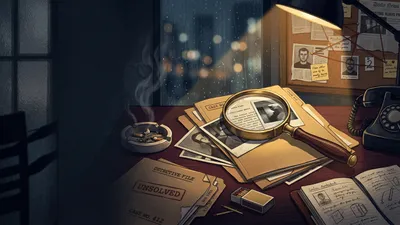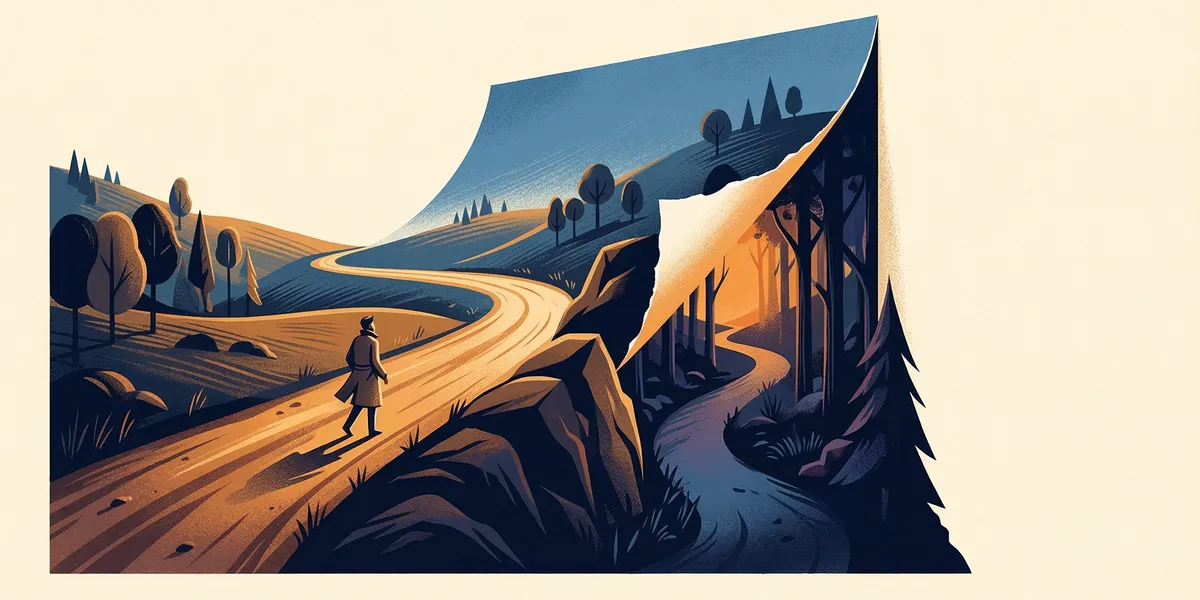
A plot twist is a narrative event that fundamentally changes the reader’s understanding of the story. The best twists feel both shocking and inevitable — the reader did not see it coming, but the moment it arrives, every preceding page snaps into new focus. Here is how to write a plot twist that earns that reaction.
What Makes a Twist Work
A twist succeeds when it satisfies two conditions simultaneously: surprise and inevitability.
Surprise means the reader did not predict it. If the reader sees the twist coming from chapter three, it is not a twist — it is confirmation. The revelation should land like a detonation, reshaping everything the reader thought they knew about the characters, the conflict, or the world.
Inevitability means the twist was always there, hiding in plain sight. When the reader looks back — and they will — the clues should be scattered throughout the earlier pages like footprints they walked right past. The twist is not a cheat. It is a reinterpretation.
The combination of these two qualities is what creates that specific, electric feeling: I should have seen this coming. That feeling is the hallmark of a great twist, and it is what separates genuine narrative surprise from cheap shock.
Types of Plot Twists
Identity Reveal
A character is not who they appeared to be. The ally is the villain. The stranger is the protagonist’s parent. The detective is the murderer. Identity reveals work because readers build emotional relationships with characters based on assumed identities. Shattering that assumption shatters everything built on it.
Example: In The Murder of Roger Ackroyd, Agatha Christie reveals that the narrator — the person the reader has trusted throughout — is the killer. The twist is devastating because it violates the reader’s most fundamental assumption: that the narrator is honest.
Betrayal
A trusted character turns against the protagonist. Betrayal twists are powerful because they weaponize the reader’s emotional investment. The deeper the relationship between characters, the sharper the betrayal cuts.
Example: In A Storm of Swords, the Red Wedding kills multiple major characters through the betrayal of a host who had offered them guest right. The twist works because Martin spent books establishing the Freys’ resentment and the unwritten laws of hospitality — then showed what happens when those laws break.
Reality Shift
The world itself is not what it seemed. The story takes place inside a simulation. The protagonist is dead. The timeline is wrong. Reality shifts recontextualize everything — not just a character or a relationship, but the entire framework of the narrative.
Example: In The Sixth Sense, the revelation that Malcolm has been dead the entire film transforms every scene before it. Suddenly, the wife’s silence is not coldness — it is grief. The locked doors are not metaphors — they are literal barriers. The twist works because every “clue” had a plausible surface-level explanation on first viewing.
Unreliable Narrator
The person telling the story has been lying, omitting, or distorting the truth. The reader discovers that the narrative they trusted was shaped by a consciousness with its own agenda. For a full exploration, see unreliable narrator.
Example: In Gone Girl, the shift from Amy’s diary to her real perspective reveals that the sympathetic victim the reader pitied is actually a calculating manipulator. The twist reframes the entire first half of the novel.
False Protagonist
The character the reader assumes is the main character is killed, sidelined, or revealed to be secondary. This twist violates the implicit contract between author and reader — “this is the person we are following” — and the violation creates shock.
Example: A Game of Thrones establishes Ned Stark as the apparent protagonist for the entire first book. His execution is one of the most famous twists in modern fiction because it breaks the rule that protagonists survive.
How to Plant Clues
The difference between a great twist and a bad one is foreshadowing. Clues must be present, but they must be invisible on first read and obvious on re-read.
Hide Clues in Plain Sight
The best hiding place for a clue is inside a scene that appears to be about something else entirely. Bury the hint in a conversation about a different topic. Mention it as a background detail the point-of-view character barely notices. Let the reader’s attention slide past it because the scene’s apparent purpose is elsewhere.
In The Sixth Sense, the clue that Malcolm is dead is present in every scene — he never directly interacts with anyone except Cole, and doors are always locked or closed when he arrives. But the viewer does not notice because each scene provides a plausible alternative explanation.
Use Double Meanings
Dialogue or narration that means one thing before the twist and something different after it is the gold standard of foreshadowing. A character’s statement should read as innocent conversation on the first pass and as a confession or warning on the second.
In Gone Girl, Amy’s diary entries read as an abused wife’s record of fear. After the twist, they read as a sociopath’s carefully constructed fiction. Every line has two meanings, and both are supported by the text.
Make the Clue Serve a Surface Purpose
A clue that exists only to foreshadow the twist draws attention to itself. A clue that also serves an immediate narrative purpose — advancing the plot, developing a character, building atmosphere — blends in. The reader remembers the scene for its surface function, not for the hint embedded within it.
Misdirection Techniques
Planting clues is half the work. The other half is making sure the reader looks somewhere else.
Red Herrings
Introduce false suspects, false explanations, or false patterns that the reader follows instead of the real trail. The key is making the red herring genuinely plausible. A red herring that is obviously false does not misdirect — it insults.
Agatha Christie filled her novels with characters who all had motive, opportunity, and suspicious behavior. The reader cannot follow the real trail because there are too many plausible alternatives demanding attention.
Control Reader Assumptions
Readers bring expectations to every story. They assume the narrator is trustworthy. They assume the protagonist will survive. They assume the love interest is sincere. Use these assumptions as camouflage.
If you want to hide the fact that a character is the villain, give them traits readers associate with heroes — loyalty, warmth, vulnerability. The reader’s own pattern recognition becomes the misdirection.
Distract with Emotion
Emotional scenes are poor environments for analytical reading. If you need the reader to overlook a crucial detail, embed it in a scene with high emotional intensity — a death, a reunion, a confession. The reader is feeling, not thinking, and the clue slips past.
The Fair Play Rule
A great twist plays fair. The reader should be able to go back, re-read, and find the clues. If the twist relies on information that was withheld from the reader entirely — a fact the narrator knew but never mentioned, an event that happened off-page with no hint — it does not feel surprising. It feels dishonest.
This does not mean giving away the twist. It means giving the reader enough to figure it out if they are paying very close attention. Most readers will not catch it. But the possibility of catching it is what makes the twist feel earned rather than arbitrary.
Famous Twists Analyzed
The Sixth Sense. Malcolm is dead. The clues: he wears the same clothes, his wife does not speak to him, he never opens doors, only Cole acknowledges him. Each clue has an alternative explanation (he is distracted, the marriage is strained, the doors were already open). The twist works because the misdirection is character-driven, not mechanical.
Gone Girl. Amy is alive and orchestrated her disappearance. The clues: the diary’s tone shifts subtly, details are almost too perfectly damning, Amy’s intelligence is established early. The twist works because Flynn uses the reader’s sympathy as misdirection — we are too busy feeling sorry for Amy to question her narrative.
And Then There Were None. Justice Wargrave is the killer and has faked his own death. The clues: his judicial authority, his early “death” that conveniently removes him from suspicion, his philosophical conversations about justice. Christie hides the twist behind the reader’s assumption that a dead character is no longer a suspect.
Murder on the Orient Express. Everyone did it. The clues: every passenger has a connection to the victim, Poirot notices inconsistencies in every alibi, no single person had both motive and opportunity alone. The twist works because the reader assumes “whodunit” means one person. Christie violates the assumption itself.
Common Mistakes
Twist for twist’s sake. A twist without purpose is a gimmick. The twist should change the meaning of the story, not just the facts of the plot. Ask: what does this twist reveal about the characters, the themes, the human condition? If the answer is nothing — it just surprises — cut it or rebuild it.
No clues planted. A twist with no foreshadowing feels random. The reader’s reaction is not “I should have seen it” but “how could I have seen it?” There is no satisfaction in a twist that was impossible to predict because no evidence existed.
Twist contradicts established facts. If you established that a character was in Paris on Tuesday, the twist cannot depend on them being in London on Tuesday. Readers will catch the inconsistency, and it will destroy their trust. Every twist must be retroactively consistent with everything that came before it.
Telegraphing. The opposite problem — making the twist too obvious. If the “trusted ally” acts suspiciously in every scene, the betrayal is not a twist. It is a confirmation. The clues should be subtle enough that most readers miss them on the first pass.
Cheating the resolution. The twist itself might be brilliant, but if the aftermath is handled poorly — rushed, unexplained, or ignored — the twist loses its power. Commit to the twist’s consequences. Let it reshape everything, including the rising action that follows.
A plot twist is a promise rewritten. The author makes one promise, the reader believes it, and then the twist reveals the real promise underneath. The shock is momentary. The inevitability is permanent. Write the twist that makes your reader close the book, sit in silence for thirty seconds, and then turn back to chapter one to read the whole thing again.