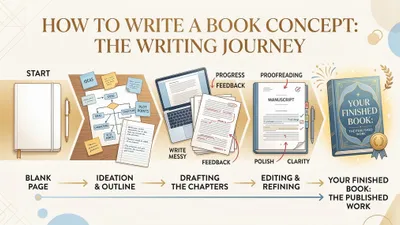
You can absolutely write a wedding planning book — and the market is hungry for fresh ones. The global wedding services industry is worth over $300 billion, couples are planning longer engagements than ever, and most existing wedding books feel either outdated or generic. A focused, well-structured wedding planning book fills a real gap.
In this guide, you will learn:
- How to choose the right format for your wedding planning book
- What chapters and sections to include (with a complete outline)
- How to write content that brides and couples actually use
- The fastest way to publish and start selling
Here is the step-by-step process.
What Type of Wedding Planning Book Should You Write?
A wedding planning book is a nonfiction guide that walks couples through the process of organizing their wedding, from engagement to honeymoon. But not all wedding planning books are the same, and picking the right format is your first decision.
There are three main types, and each serves a different reader:
| Type | What it is | Best for | Examples |
|---|---|---|---|
| Planning guide | Step-by-step instructional content with expert advice | Authors with wedding industry experience | A Practical Wedding Planner by Meg Keene |
| Workbook/organizer | Checklists, worksheets, timelines, and fill-in pages | Authors who want a product-style book with reprint potential | The Knot Ultimate Wedding Planner |
| Niche wedding book | Focused guide for a specific audience or wedding style | Authors with a unique angle (budget, cultural, destination, DIY) | Bridechilla Survival Guide |
Most successful wedding planning books combine elements of the first two — expert guidance with interactive worksheets. The third type is where first-time authors often find the least competition and the clearest path to sales.
Pick one format before you outline a single chapter. Trying to write all three at once produces a book that does nothing well.
How to Choose Your Niche and Angle
The wedding planning category on Amazon has thousands of titles. You will not outsell The Knot or A Practical Wedding by writing a generic wedding guide. You will outsell them in a specific corner of the market they do not serve well.
Your niche is where your expertise meets an underserved audience. Here are angles that work:
Budget-focused. A book specifically for couples planning a wedding under $5,000, $10,000, or $15,000. Budget is the number-one stress point for engaged couples, and most planning books treat it as one chapter rather than the entire framework.
Cultural or religious. Hindu wedding planning, Jewish wedding traditions, interfaith ceremonies, Southern wedding etiquette. These readers need guidance that mainstream books skip entirely.
Destination weddings. Planning a wedding in another country involves legal requirements, vendor coordination across time zones, and guest logistics that domestic planning books never address.
Nontraditional weddings. LGBTQ+ couples, elopements, micro-weddings, courthouse ceremonies, second marriages. The market has shifted dramatically, and most planning books still assume a first-time, 200-guest, traditional ceremony.
Season or timeline-specific. A 90-day wedding planning guide. A winter wedding handbook. A “we got engaged last month and the wedding is in six months” crash course.
Write down your angle in one sentence: “This book helps [specific reader] plan [specific type of wedding] by [your unique approach].” If you cannot fill in those blanks clearly, your angle needs more focus.
How to Outline a Wedding Planning Book
Your book outline is the skeleton that holds everything together. Wedding planning books follow a chronological structure — you walk the reader through the planning process in the order things actually need to happen.
Here is a proven chapter structure you can adapt:
Part 1: Foundation (Chapters 1-3)
Chapter 1: Setting the Vision. What kind of wedding do you actually want? Help the reader define their priorities, style, and non-negotiables before they spend a dollar or book a vendor.
Chapter 2: Budget and Financial Planning. How to set a realistic budget, who pays for what, tracking expenses, hidden costs nobody warns you about, and where to splurge vs. save.
Chapter 3: Timeline and Master Checklist. The 12-month, 9-month, 6-month, or 3-month planning timeline depending on your book’s scope. This is the chapter readers will return to most.
Part 2: The Big Decisions (Chapters 4-7)
Chapter 4: Venue Selection. How to evaluate venues, questions to ask, contract red flags, and how the venue choice affects every other decision.
Chapter 5: Building Your Vendor Team. Photographer, caterer, florist, DJ or band, officiant, planner. How to find, evaluate, negotiate with, and manage vendors.
Chapter 6: Guest List and Invitations. The politics of the guest list, how to handle plus-ones, invitation wording and etiquette, RSVP management, and digital vs. paper.
Chapter 7: Attire and Wedding Party. Choosing the dress or suit, bridesmaid and groomsman coordination, alterations timeline, and accessories.
Part 3: The Details (Chapters 8-11)
Chapter 8: Ceremony Planning. Writing vows, choosing readings, ceremony structure for religious and secular weddings, processional order, and rehearsal logistics.
Chapter 9: Reception Planning. Layout, seating charts, menu selection, bar options, music, speeches and toasts, and the timeline of events from cocktail hour to last dance.
Chapter 10: Decor and Design. Color palettes, centerpieces, lighting, signage, and how to create a cohesive visual theme without overspending.
Chapter 11: Pre-Wedding Events. Engagement parties, bridal showers, bachelor and bachelorette parties, the rehearsal dinner, and welcome events.
Part 4: The Finish Line (Chapters 12-14)
Chapter 12: Final Week Checklist. Everything that needs to happen in the last seven days — confirmations, payments, packing, delegation, and emergency plans.
Chapter 13: Wedding Day Logistics. The day-of timeline, who needs to be where and when, the emergency kit, and how to actually enjoy the day you planned.
Chapter 14: After the Wedding. Thank-you notes, name changes, vendor reviews, preserving the dress, and transitioning from “planning mode” to married life.
Supplementary Material
- Worksheets and checklists (budget tracker, vendor comparison sheet, guest list template)
- Sample timelines for different engagement lengths
- Script templates for ceremony vows and toasts
- Resource directory with recommended tools and vendors
This outline works for a 40,000-50,000 word comprehensive guide. If you are writing a shorter, niche-focused book, select the chapters most relevant to your angle and go deeper on those.
How to Write Engaging Wedding Planning Content
Wedding planning content has a unique challenge: it needs to be both practical and emotionally resonant. Brides and couples are stressed, overwhelmed, and making decisions about something deeply personal. Your writing should reduce anxiety, not increase it.
Lead With Action, Not Theory
Every chapter should open with what the reader needs to do, not a history lesson. Nobody buying a wedding planning book wants three pages about the origins of the bouquet toss before you tell them how to choose flowers.
Bad opening: “Flowers have been part of wedding ceremonies since ancient Rome, where brides carried herbs and garlic to ward off evil spirits…”
Good opening: “Book your florist 6-8 months before the wedding. Here is how to find the right one for your budget and style.”
Include Real Examples and Numbers
Vague advice is useless in wedding planning. “Set a budget” means nothing. “The average American wedding costs $35,000, but you can plan a beautiful celebration for $10,000-$15,000 by prioritizing these five categories” — that is useful.
Use specific dollar ranges, real timelines, and concrete examples wherever possible. If you have planned weddings professionally, use anonymized client stories. If you are writing from personal experience, share your own numbers honestly.
Make It Scannable
Wedding planning readers do not sit down and read your book cover to cover. They flip to the chapter they need right now. Design your content for scanning:
- Use headers and subheaders liberally
- Include bullet-point checklists at the end of each chapter
- Put key deadlines in bold
- Add “pro tip” callout boxes for expert insights
- Create summary boxes with the three most important takeaways per chapter
Write Checklists That Actually Work
Checklists are the most valuable part of any wedding planning book. A good checklist is specific, time-bound, and actionable. Compare these:
Weak checklist item: “Choose a photographer”
Strong checklist item: “Research 5-7 photographers in your area and price range. Review full wedding galleries (not just highlight reels). Schedule consultations with your top 3. Book your choice and sign the contract 8-10 months before the wedding.”
The strong version tells the reader exactly what to do, how many options to consider, and when to complete it. That level of detail is what makes a wedding planning book worth buying.
How to Use AI to Write Your Wedding Planning Book Faster
Writing a full-length wedding planning book takes most authors 6-12 months. AI tools can compress that timeline significantly without sacrificing quality — if you use them correctly.
Our Pick — Chapter
Chapter helps you write a complete nonfiction book with AI assistance — from outline to polished manuscript. It is built specifically for book-length projects, not blog posts or short content.
Best for: Nonfiction authors who want to write a structured, chapter-by-chapter book with AI support Pricing: $97 one-time (nonfiction) Why we built it: Writing a book should not take years. Over 10,000 authors have used Chapter to create books — including practical guides, how-to books, and planners.
Here is how AI fits into the wedding planning book workflow:
Outlining. Feed your niche angle and target audience into an AI tool and generate a detailed chapter-by-chapter outline. You will refine it, but starting from a structured draft saves days of staring at a blank page.
First drafts. Use AI to write first drafts of each chapter based on your outline and notes. The key is providing your specific expertise, examples, and opinions — then letting AI handle the structure and prose.
Checklists and worksheets. AI excels at creating comprehensive, organized checklists. Generate a base checklist for each chapter, then edit for accuracy and add your expert insights.
Editing and refining. After your AI-assisted first draft, the real work is editing. Add your voice, fix anything generic, insert personal anecdotes, and verify every fact. The combination of AI speed and human expertise produces a better book than either alone.
The authors who struggle with AI are the ones who expect it to replace their knowledge. AI gives you structure and speed. Your wedding industry expertise, personal stories, and specific advice are what make the book worth reading.
How to Add Value With Worksheets and Interactive Elements
The difference between a $9.99 wedding planning ebook and a $24.99 wedding planning book is often the supplementary material. Worksheets, templates, and interactive elements transform a book from something you read once into something you use for months.
Essential Worksheets to Include
- Budget tracker with line items for every major category and space for actual vs. estimated costs
- Vendor comparison chart with columns for name, price, availability, notes, and gut feeling rating
- Guest list master sheet with RSVP tracking, meal preferences, and table assignments
- Day-of timeline template with 15-minute increments from morning prep through the last dance
- Emergency contact sheet for all vendors, wedding party members, and key family
How to Format Worksheets for Print vs. Digital
If you are self-publishing a print book, worksheets need enough white space for handwriting. Use a larger trim size (8” x 10” or 8.5” x 11”) for a workbook-style book.
For ebooks, include downloadable PDF worksheets as a bonus. Readers cannot write in a Kindle book, so give them printable versions. Host the PDFs on your website and include the link in the book — this also builds your email list.
How to Research and Validate Your Content
Wedding planning advice carries real consequences. If you tell someone to book their venue 12 months out and they actually need 18 months in their market, they could lose their dream venue. Accuracy matters more in this genre than almost any other nonfiction category.
Primary Research Methods
Interview wedding professionals. Talk to five to ten wedding planners, venue coordinators, photographers, and florists. Ask them what advice they wish couples followed and what mistakes they see most often. These interviews become your most valuable content.
Survey recently married couples. Post in wedding Facebook groups, Reddit communities like r/weddingplanning, or your own social media. Ask what they wish they had known, what went wrong, and what they would do differently.
Attend bridal expos. These events let you observe what vendors are promoting, what trends are current, and what questions couples are actually asking.
Fact-Check Everything
Verify costs, timelines, and legal requirements for the audience you are writing for. Wedding costs vary dramatically by region — the average wedding in Manhattan is not the average wedding in rural Tennessee. If your book targets a specific market, use data from that market.
Check legal requirements for marriage licenses, blood tests (some states still require them), waiting periods, and officiant qualifications. These vary by state and country, and getting them wrong destroys your credibility.
Common Mistakes to Avoid
Writing for everyone. A wedding planning book that tries to cover every culture, every budget, every style, and every timeline serves no one well. Pick your audience and serve them deeply.
Skipping the emotional side. Wedding planning is emotional. Couples fight about budgets, families create drama about guest lists, and brides have breakdowns about details that do not matter. Acknowledge the emotional reality alongside the practical advice.
Ignoring the partner. Most wedding planning books speak exclusively to brides. Modern couples plan together. Write for both people, or at minimum acknowledge that the partner exists and has opinions.
Outdated etiquette. Wedding etiquette changes faster than most authors realize. Rules about who pays for what, who hosts the rehearsal dinner, and whether you can have a cash bar are all different now than they were ten years ago. Research current norms.
No visual examples. Wedding planning is visual. If you are publishing a print book, include photos, diagrams, or illustrations. If digital, describe visual concepts clearly and link to resources.
How to Publish Your Wedding Planning Book
You have three main paths to get your wedding planning book into readers’ hands.
Self-Publishing on Amazon KDP
Amazon KDP is the fastest route. You can publish both a Kindle ebook and a print paperback. For wedding planning books with worksheets, the print version often outsells the ebook because readers want something physical they can write in.
Pros: Full control, higher royalties (up to 70% on ebooks), fast time to market Cons: You handle everything — editing, formatting, cover design, marketing
Hybrid Publishing
A hybrid publisher handles production (editing, design, printing) while you retain rights and pay upfront. This works well for wedding planning books because professional book formatting and design matter more in this category than in a standard nonfiction book.
Traditional Publishing
If you have a platform — a wedding planning blog, Instagram following, or professional reputation — you can pursue a traditional publishing deal. Write a book proposal that highlights your expertise and market opportunity.
The honest reality: most first-time wedding planning book authors will self-publish, and that is perfectly fine. The category sells well on Amazon, and a well-executed self-published book can generate significant passive income.
How Long Does It Take to Write a Wedding Planning Book?
A wedding planning book typically takes 3-6 months to write if you work on it consistently. The timeline breaks down roughly like this:
- Research and outlining: 2-4 weeks
- Writing the first draft: 6-10 weeks
- Creating worksheets and checklists: 2-3 weeks
- Editing and revisions: 3-4 weeks
- Formatting and cover design: 1-2 weeks
Using AI writing tools like Chapter can cut the drafting phase in half. Several authors on the platform have completed full nonfiction books in 30 days — including structured guides with worksheets and checklists.
The research phase is the one you should not rush. Your book’s value comes from accurate, specific, expert-level advice. Spend the time talking to professionals, verifying facts, and gathering real examples.
How Much Money Can a Wedding Planning Book Make?
Wedding planning books have strong earning potential because the audience is large, motivated, and willing to spend money. Engaged couples are already in buying mode — they are spending thousands on their wedding and $15-$25 on a planning book is an easy purchase.
A well-positioned wedding planning book on Amazon can earn $500-$3,000 per month in passive income. Top sellers in the niche earn significantly more. The key factors are:
- Niche specificity — a book for budget weddings under $10,000 outsells a generic “plan your wedding” book
- Reviews — the first 25-50 reviews make or break discoverability
- Keyword optimization — your Amazon keywords and book description determine who finds you
- Seasonal timing — engagement season (November through February) drives the highest sales
You can also create multiple income streams from the same content: the book itself, a companion workbook sold separately, a digital download bundle, and an online course based on the book content.
Can You Write a Wedding Planning Book Without Being a Wedding Planner?
Yes — you do not need to be a professional wedding planner to write a wedding planning book. You do need a credible angle. That might be:
- Personal experience. You planned your own wedding and learned lessons worth sharing. Pair this with research and professional interviews to fill expertise gaps.
- Adjacent expertise. You are a financial planner who specializes in wedding budgets. You are an event designer. You are a photographer who has observed hundreds of weddings. Your professional lens gives you a unique perspective.
- Research and curation. You are an excellent researcher and writer who can synthesize expert advice, survey data, and real-world examples into a comprehensive resource.
The most important thing is honesty. If you are writing from personal experience, say so. If you interviewed thirty wedding planners to write the book, lead with that. Readers respect transparency about where your advice comes from.
FAQ
How Many Pages Should a Wedding Planning Book Be?
A wedding planning book should be 150-300 pages depending on format. A comprehensive planning guide with worksheets typically runs 200-250 pages. A niche-focused book (budget weddings, destination weddings) can be shorter at 120-180 pages. Workbook-style books with fill-in sections often hit 250-300 pages because worksheets take more physical space.
What Is the Best Format for a Wedding Planning Book?
The best format for a wedding planning book is a print paperback in a larger trim size (8” x 10”) combined with a Kindle ebook version. Print outsells digital in this category because readers want a physical book they can write in, tab, and carry to vendor meetings. Include downloadable PDF worksheets for ebook buyers.
How Do You Make a Wedding Planning Book Stand Out on Amazon?
You make a wedding planning book stand out on Amazon by targeting a specific niche rather than competing with generic guides. Choose a focused audience — budget brides, destination wedding couples, or second-marriage planners — and write the definitive book for them. A professional cover design, strong book description, and 25+ early reviews drive discoverability.
Can You Use AI to Write a Wedding Planning Book?
You can use AI to write a wedding planning book by pairing AI drafting tools with your personal expertise. Tools like Chapter help you generate outlines, first drafts, and checklists faster. Over. The key is adding your unique knowledge, real examples, and verified facts during editing — AI handles structure while you provide the substance.
Is There a Market for Wedding Planning Books?
There is a strong market for wedding planning books. The global wedding industry exceeds $300 billion, and engaged couples actively buy planning resources. Amazon’s wedding planning category consistently ranks among the top-selling lifestyle subcategories. Niche books targeting specific audiences — budget, cultural, destination, or nontraditional weddings — have the best opportunity because they face less competition than broad guides.