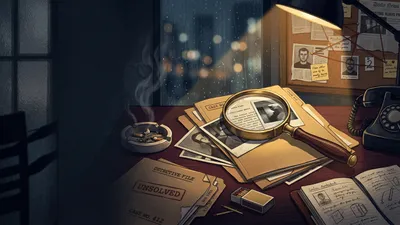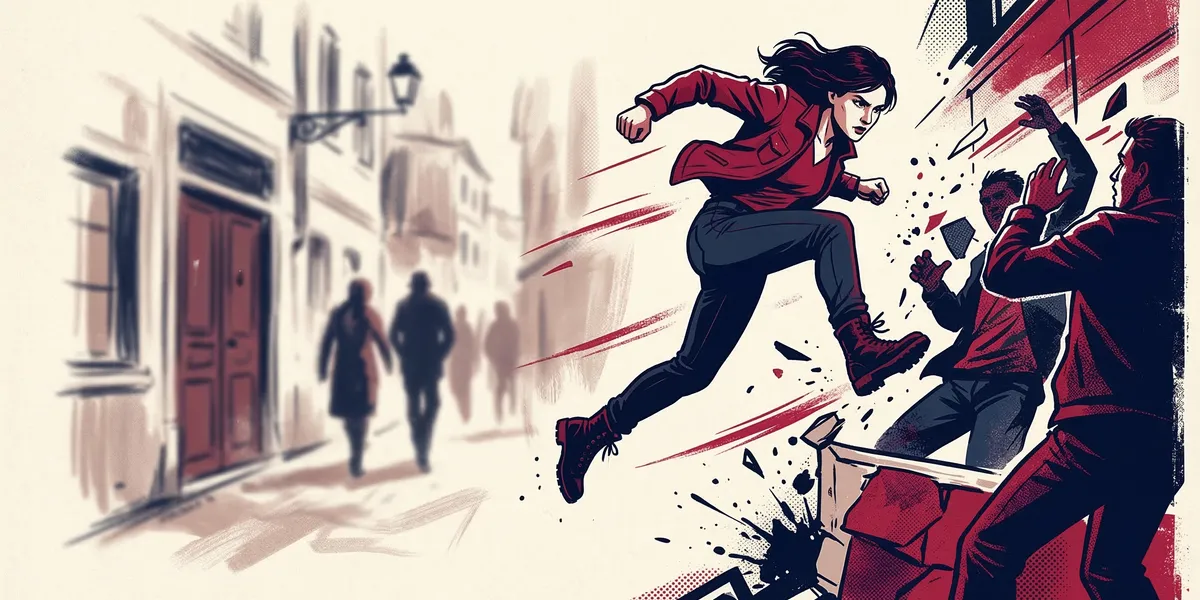
In medias res is a Latin phrase meaning “in the middle of things,” and it describes a storytelling technique where the narrative begins mid-action rather than at the chronological beginning. Instead of easing the reader in with background and setup, you drop them into a scene already charged with tension, conflict, or consequence — and let them piece together the context as the story unfolds.
It is one of the oldest narrative strategies in Western literature. It is also one of the most effective ways to start a story.
Why In Medias Res Works
Every story has a cold-start problem. You need readers to care before they have any reason to. In medias res solves this by reversing the usual contract. Instead of asking the reader to be patient while you set the stage, you hand them a lit fuse and let curiosity do the rest.
Three things happen when you open mid-action:
You create an instant hook. The reader lands in the middle of something happening. There is motion, stakes, consequence. The brain can’t help but pay attention to unresolved action — it’s wired that way.
You generate questions. Who is this person? Why are they running? What happened before this moment? Those questions become the engine that pulls the reader forward. They aren’t reading because you told them the story matters. They’re reading because they need answers.
You skip the slow parts. Most stories don’t actually start where the plot starts. There are introductions, routines, backstories — all the well-meaning scaffolding that readers have to endure before things get interesting. In medias res lets you cut straight to the moment that matters.
Famous Examples
This technique has been working for roughly three thousand years. Here’s how some of the best have used it.
The Iliad — Homer’s epic doesn’t begin with the start of the Trojan War. It opens in the ninth year, with Achilles already furious, already refusing to fight. Nine years of war are simply assumed. The reader enters at the point of maximum dramatic pressure.
Star Wars: A New Hope — The opening crawl tells you a war is already underway. The first scene is a ship being boarded, a princess hiding stolen plans, a villain striding through smoke. There’s no scene showing how the Empire rose to power. You’re in it, and you catch up.
The Hunger Games — Suzanne Collins doesn’t start with Katniss’s childhood, or the history of Panem, or even how the Games were established. She starts on the morning of the reaping. The dread is already there. The stakes are already understood through Katniss’s body language and silence, long before anyone explains the rules.
Breaking Bad (Pilot) — The very first image is a pair of pants floating through the desert sky. Then a man in his underwear, driving an RV at full speed, recording a desperate confession into a camcorder. You have no idea who he is or how he got here. You will spend the next hour finding out.
Each of these examples shares a pattern: they trust the audience. They withhold explanation and offer experience instead.
How to Write an In Medias Res Opening
Starting in the middle isn’t the same as starting at random. The technique works because the writer has chosen a specific moment — one loaded with tension, stakes, and unanswered questions. Here’s how to find yours.
Pick a Moment of Tension
Look at your plot structure and find a scene where something is happening — not about to happen, not just finished, but actively unfolding. A confrontation. A decision. A chase. A discovery. The more immediate the tension, the stronger the opening.
You don’t need to pick the climax. You need to pick a moment where the reader can feel that things are in motion and the outcome is uncertain.
Withhold Context Strategically
The power of in medias res comes from what you don’t explain. When the reader doesn’t know why a character is bleeding, or who the person on the phone is, or what happened last night — those gaps create rising action in the reader’s mind before you’ve even built it on the page.
But strategic withholding means you’re still giving the reader enough to orient themselves. They need to know, at minimum: who is here, what is happening right now, and why it feels urgent. Everything else — the history, the relationships, the reasons — can come later.
Layer in Backstory Gradually
Once the opening has its hooks in the reader, you can begin filling in the gaps. The best approach is to weave backstory into the forward motion of the plot. A memory triggered by a detail in the scene. A line of dialogue that reveals history. A brief flashback placed at a natural pause in the action.
The key word is sparingly. Each piece of context should feel earned — the reader wanted that information, and now they’re getting it as a reward for staying with the story.
Return to Chronological Order
Most in medias res openings eventually settle into a chronological flow. The opening scene creates the question. The subsequent chapters answer it, often catching up to the opening moment and then pushing past it. The reader gets the satisfaction of understanding how the story arrived at that charged first scene.
In Medias Res vs Chronological Openings
Not every story benefits from starting in the middle. The choice depends on where your story’s energy lives.
Use in medias res when:
- Your story has a slow buildup before the action starts
- The most compelling part of your premise is a situation, not a character introduction
- You want the reader asking “how did we get here?”
- Your opening chapters would otherwise be setup and backstory
Use a chronological opening when:
- The early scenes are inherently compelling (a strong voice, an unusual world, an immediate conflict)
- The reader needs to bond with the character before the stakes make sense
- The story’s power comes from watching events unfold in order, with the reader knowing exactly as much as the protagonist
- Starting in the middle would spoil a reveal that’s better experienced in sequence
Neither approach is inherently better. The right question isn’t “which technique is stronger?” — it’s “where does my story’s energy start?”
Common Mistakes
In medias res fails when the writer mistakes confusion for intrigue. Here are the traps to avoid.
Starting too far in. If the reader has no anchor at all — no character to track, no situation to parse, no emotion to feel — they aren’t intrigued. They’re lost. The opening should be disorienting in a productive way, not in an alienating one. Give the reader something to hold onto before you start pulling the rug.
Confusing the reader with too many unknowns. One or two big questions drive a reader forward. Five or six unanswered questions at once make them feel like they picked up the wrong book. Control the information gap. Let the reader feel like they’re solving a puzzle, not drowning in one.
Over-relying on flashbacks. If your in medias res opening requires three chapters of flashback to make sense, the technique isn’t serving you — it’s creating a structural problem. The backstory should integrate into the forward-moving plot, not interrupt it. Every flashback is a pause in momentum. Use them like seasoning, not scaffolding.
Choosing spectacle over story. An explosion is exciting. But if the opening scene is pure action with no character grounding, the reader has nothing to invest in. In medias res works because the reader cares about a person in a situation, not because things are happening loudly. Anchor the action in a perspective. Give us someone to worry about.
Try It
Take a story you’re working on. Find the scene where the tension is highest in the first act. Now write your opening paragraph as if the reader has just walked into that room, mid-conversation, mid-crisis, mid-decision. Don’t explain anything. Just put them there.
Then read it back. If you feel the pull — the need to know what happens next, and what happened before — you’ve found your opening.