You don’t have to use ACX to publish an audiobook in 2026 — and for most indie authors, you probably shouldn’t. Between the 7-year exclusivity lock-in, royalty rates that cap at 40%, and zero control over your audiobook’s price, ACX comes with strings that newer platforms have cut entirely.
In this guide, you’ll learn:
- The 7 best ACX alternatives ranked by royalty rate, reach, and flexibility
- Which platforms let you keep your rights and set your own price
- How to go wide with your audiobook without managing a dozen accounts
- Where AI-narrated audiobooks are accepted and where they’re not
Here are the platforms worth considering right now.
Why Authors Are Looking for ACX Alternatives
ACX (Audiobook Creation Exchange) is Amazon’s audiobook publishing platform that connects authors with narrators and distributes finished audiobooks on Audible, Amazon, and iTunes. It dominated indie audiobook publishing for years — but the landscape has shifted.
Three problems push authors toward alternatives:
The exclusivity trap. ACX’s exclusive distribution option locks your audiobook to Audible, Amazon, and iTunes for 7 years. You earn a 40% royalty, but you can’t sell on Google Play, Kobo, Spotify, Libro.fm, or your own website. The non-exclusive option drops your royalty to 25% — and you still can’t control pricing. For a deeper look at this trade-off, see our wide vs. exclusive publishing breakdown.
Royalty compression. That 40% exclusive rate sounds reasonable until you compare it to platforms offering 70-80% of net receipts. And with Audible’s credit system, the actual per-sale payout is often lower than the percentage suggests.
No pricing control. Amazon sets your audiobook’s price on ACX. You can’t run sales, test price points, or match competitor pricing. On platforms like INaudio or Authors Republic, you set the list price yourself.
If you’re weighing whether to stick with ACX or explore other options, these seven platforms give you more flexibility, better terms, or both.
1. INaudio (Formerly Findaway Voices) — Best for Wide Distribution
Top Pick for Going Wide
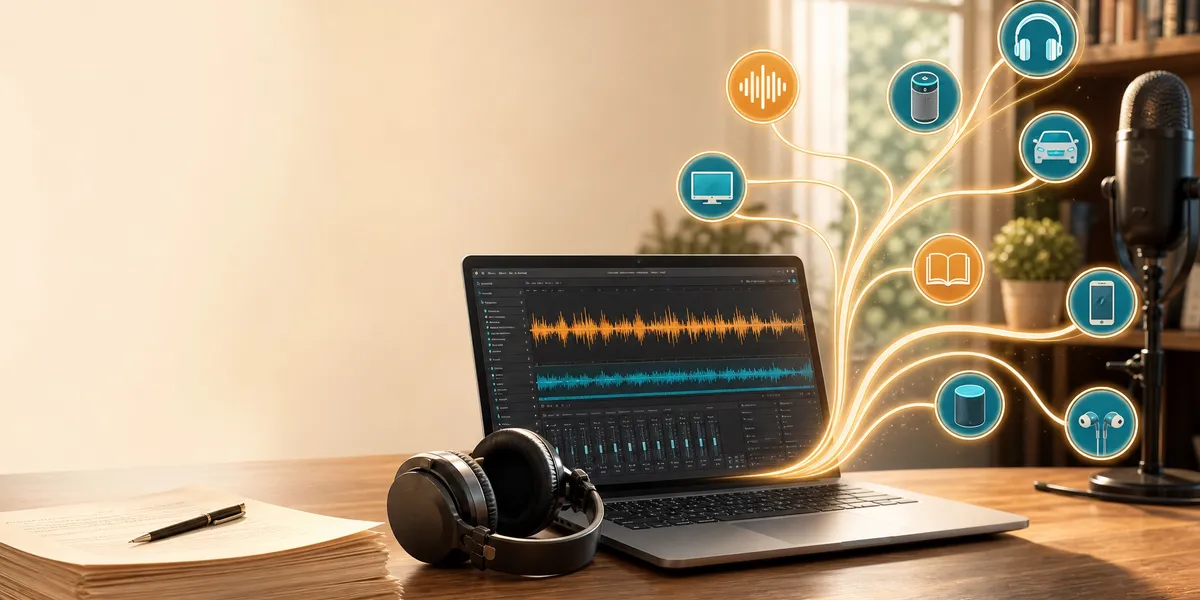
INaudio distributes your audiobook to 40+ retail and library platforms from a single dashboard — including Audible itself.
Best for: Authors who want maximum reach without managing multiple accounts
Royalty rate: 80% of net receipts from retailers
Distribution: 40+ platforms including Audible, Apple Books, Google Play, Kobo, Scribd, Spotify, Barnes & Noble, Libro.fm, OverDrive, Hoopla, and dozens of international storefronts
Exclusivity: None — you keep all rights
INaudio (rebranded from Findaway Voices after the Spotify acquisition) is the heavyweight of wide audiobook distribution. You upload your finished audio files, set your own list price, and INaudio pushes your audiobook everywhere.
The 80% royalty rate applies across all platforms. You won’t earn quite as much per Audible sale as you would with ACX’s exclusive rate, but you gain access to every other platform — and when you add up revenue across all channels, many authors earn more going wide than they did exclusive.
INaudio accepts both human-narrated and AI-narrated audiobooks, though you must disclose AI narration. They also offer a marketplace to find narrators if you haven’t produced your audiobook yet.
Who it’s best for: Any author who wants their audiobook available everywhere without the hassle of managing separate accounts at each retailer. If you’re leaving ACX exclusivity, INaudio is the most straightforward replacement.
2. Authors Republic — Best for Global Reach
Best for: Authors targeting international audiobook markets
Royalty rate: 70-80% of net sales
Distribution: 50+ retail partners including Audible, Apple Books, Google Play, Kobo, Storytel, BookBeat, and dozens of regional platforms
Exclusivity: None
Authors Republic distributes to over 50 retail partners — more than almost any other aggregator. The platform stands out for its international reach, placing audiobooks on regional platforms across Europe, Asia, and Latin America that other distributors miss.
The royalty structure is transparent: you earn 70-80% of net sales across all platforms. Authors Republic also provides detailed sales analytics broken down by platform and region, so you can see exactly where your listeners are.
Like INaudio, Authors Republic distributes to Audible as part of its network. You don’t need ACX to get your audiobook on Audible — you just won’t get the ACX-exclusive royalty rate.
Who it’s best for: Authors with books that have international appeal, especially in genres like romance, thriller, and fantasy that perform well on European and Asian audiobook platforms like Storytel and BookBeat.
3. Google Play Books — Best Free AI Narration Option
Best for: Authors who want a free AI-narrated audiobook with zero production cost
Royalty rate: 52% of list price (you set the price)
Distribution: Google Play Books only
Exclusivity: None
Google Play Books’ auto-narration feature lets you turn any ebook into an audiobook for free. Upload your ePub, choose an AI voice, and Google generates the narration automatically. No recording, no production costs, no waiting weeks for a narrator.
The 52% royalty rate is lower than what you’d earn through aggregators, but the zero production cost changes the math entirely. A traditional audiobook narrator costs $100-$500 per finished hour — for a 10-hour book, that’s $1,000-$5,000 upfront before you sell a single copy. Google’s auto-narration eliminates that barrier.
The quality has improved significantly in 2026. AI voices now handle pacing, emphasis, and pronunciation far better than early versions. For nonfiction and straightforward fiction, the narration is professional enough for commercial release.
Who it’s best for: First-time audiobook publishers who want to test the format without financial risk, and nonfiction authors whose content doesn’t require dramatic character performance.
4. Lantern Audio — Best Full-Service Option
Best for: Authors who want production and distribution handled together
Royalty rate: 80% of net receipts
Distribution: 20+ outlets including Audible, Apple Books, Kobo, Storytel, OverDrive, Hoopla, and library systems
Exclusivity: None
Lantern Audio is both a production company and a distribution service. If you need help producing your audiobook — casting narrators, directing recording sessions, editing audio — Lantern handles the entire process. Then they distribute the finished audiobook across their retail and library network.
The 80% net royalty matches INaudio’s rate, and Lantern’s library distribution is particularly strong. OverDrive, Hoopla, and Mackin Educational Resources are all part of their network, which matters if you’re publishing nonfiction, educational content, or children’s books that perform well in library systems.
Who it’s best for: Authors who want a single partner for both production and distribution, especially those publishing content suited to library audiences.
5. PublishDrive — Best for Keeping 100% Royalties
Best for: High-volume authors willing to pay a monthly fee instead of a revenue share
Royalty rate: 100% of net receipts (subscription model)
Distribution: Audible, Google Play, Kobo, OverDrive, Bookmate, and more
Exclusivity: None
PublishDrive is the only major audiobook distributor that pays 100% of net receipts. Instead of taking a cut of your sales, they charge a monthly subscription fee. If your audiobooks generate consistent revenue, this model saves you money compared to percentage-based distributors.
The distribution network includes the major platforms — Audible, Google Play, Kobo, and OverDrive — plus some niche international outlets. It’s smaller than INaudio’s or Authors Republic’s network, but covers the platforms where most sales happen.
PublishDrive also distributes ebooks and print books, so you can manage your entire catalog from one dashboard. If you’re already using them for your ebook distribution, adding audiobooks is seamless.
Who it’s best for: Authors with multiple audiobooks generating steady monthly revenue. The subscription fee makes sense once your audiobook income exceeds the monthly cost. Not ideal for single-book authors or those just starting out.
6. Apple Books — Best for Direct Publishing
Best for: Authors who want to sell directly on Apple’s platform with no middleman
Royalty rate: 70% of list price (you set the price)
Distribution: Apple Books only
Exclusivity: None
Apple Books accepts direct audiobook submissions through iTunes Connect. You don’t need ACX or an aggregator to get your audiobook on Apple’s platform — you can upload directly and keep a larger share of each sale.
The 70% royalty rate is significantly higher than what you’d earn through an aggregator distributing to Apple Books (since the aggregator takes their cut first). If Apple Books is a major revenue channel for you, going direct makes financial sense.
The submission process is more technical than using an aggregator. You’ll need to meet Apple’s audio specifications, provide proper metadata, and handle the upload yourself. But once set up, you keep more per sale and maintain a direct relationship with the platform.
Who it’s best for: Tech-comfortable authors who sell well on Apple’s platform and want to maximize per-sale earnings there. Combine with an aggregator for other platforms.
7. Kobo Writing Life — Best for the Rakuten Ecosystem
Best for: Authors with an established Kobo ebook audience who want to add audiobooks
Royalty rate: 45% of list price
Distribution: Kobo, Walmart (select markets)
Exclusivity: None
Kobo Writing Life lets you self-publish audiobooks directly on Kobo’s platform. If you already publish ebooks through Kobo and have built an audience there, adding audiobooks keeps your catalog in one place and cross-promotes to existing readers.
The 45% royalty rate is the lowest on this list, which is the main drawback. However, Kobo’s audiobook subscription service has been growing rapidly, particularly in Canada, Australia, and parts of Europe where Kobo has stronger market share than in the US.
You handle production yourself — Kobo doesn’t offer narrator matching or production services. Upload your finished audio files, set your price, and publish.
Who it’s best for: Authors who already have a loyal Kobo readership and want to offer audiobooks where their existing fans shop. Not recommended as your only audiobook platform.
Quick Comparison: ACX Alternatives at a Glance
| Platform | Royalty Rate | Distribution Reach | Pricing Control | AI Narration | Exclusivity |
|---|---|---|---|---|---|
| INaudio | 80% of net | 40+ platforms | Yes | Accepted | None |
| Authors Republic | 70-80% of net | 50+ platforms | Yes | Accepted | None |
| Google Play Books | 52% of list | Google Play only | Yes | Built-in (free) | None |
| Lantern Audio | 80% of net | 20+ platforms | Yes | Accepted | None |
| PublishDrive | 100% of net | Major platforms | Yes | Accepted | None |
| Apple Books | 70% of list | Apple Books only | Yes | Accepted | None |
| Kobo Writing Life | 45% of list | Kobo, Walmart | Yes | Varies | None |
| ACX (exclusive) | 40% of net | Audible, Amazon, iTunes | No | Accepted | 7 years |
| ACX (non-exclusive) | 25% of net | Audible, Amazon, iTunes | No | Accepted | 7 years |
Every alternative on this list gives you pricing control and zero exclusivity requirements — two things ACX still doesn’t offer.
How to Choose the Right ACX Alternative
Your best option depends on three factors:
Where are your listeners?
If most of your audiobook sales come from Audible, you can still reach Audible through INaudio or Authors Republic without ACX exclusivity. You’ll earn slightly less per sale but gain access to every other platform.
If you sell well internationally, Authors Republic’s 50+ partner network gives you the widest global reach. If your audience skews toward Apple device users, publishing directly on Apple Books at 70% is hard to beat.
What’s your production budget?
If you haven’t produced your audiobook yet, your budget shapes which platforms make sense:
- $0 budget: Google Play’s free AI narration lets you publish at no cost
- Under $100: Use AI narration tools like ElevenLabs to produce your audiobook, then distribute through INaudio or Authors Republic
- $1,000-$5,000: Hire a professional narrator and distribute wide through an aggregator
- Full service: Lantern Audio handles production and distribution together
How many audiobooks will you publish?
Single-book authors do best with INaudio or Authors Republic — the percentage-based model means you only pay when you earn. High-volume authors publishing multiple audiobooks per year should look at PublishDrive’s subscription model, where 100% royalties add up fast across a larger catalog.
Can You Use Multiple Platforms at Once?
Yes — and you should. The most effective audiobook strategy combines direct publishing on high-royalty platforms with an aggregator for everything else.
A common setup looks like this:
- Apple Books direct — 70% royalty on Apple sales
- Google Play Books — free AI narration or direct upload at 52%
- INaudio or Authors Republic — wide distribution to Audible, Kobo, Scribd, Spotify, libraries, and international platforms
This approach maximizes your per-sale earnings on your strongest platforms while ensuring you’re available everywhere else. Just make sure you exclude platforms from your aggregator where you publish directly — otherwise you’ll create duplicate listings.
For a broader look at the wide vs. exclusive decision across all book formats, see our full breakdown.
What About ACX’s New Royalty Model?
ACX is rolling out a new royalty model in May 2026 that bumps exclusive rates to 50% and non-exclusive to 30%. Early adopters report average earnings increases around 45% compared to the old model.
That’s a meaningful improvement — but the core trade-offs remain. The 7-year exclusivity contract still locks your audiobook to three platforms. You still can’t control pricing. And 50% exclusive on Audible alone is still less than what many authors earn across all platforms at 80% with INaudio.
The new model makes ACX more competitive for authors whose audiobook revenue comes almost entirely from Audible. If 80%+ of your audiobook income is Audible-based, the higher per-sale rate might outweigh the opportunity cost of being locked out of other platforms.
For everyone else, the math still favors going wide.
How to Get Your Book Ready for Any Platform
Before you can distribute on any of these platforms, you need two things: a finished book and a finished audiobook file.
If you’re still writing your book, Chapter helps you get from idea to finished manuscript faster. Over 2,147 authors have used it to write and publish more than 5,000 books — and the faster you finish your manuscript, the sooner you can turn it into an audiobook and start earning across every platform on this list.
Once your manuscript is done, you have three paths to a finished audiobook:
- AI narration — fastest and cheapest. ElevenLabs, Murf, or Google Play’s free auto-narration can produce a commercial-quality audiobook in hours
- DIY recording — most control. Record it yourself with a $200-$300 home studio setup
- Professional narrator — highest quality. Costs $100-$500 per finished hour but delivers the best listening experience for character-driven fiction
Whichever production method you choose, every platform on this list accepts the standard audio format: MP3 or M4A files at 192 kbps or higher, with chapter markers.
FAQ
What is the best alternative to ACX for audiobook publishing?
The best alternative to ACX is INaudio (formerly Findaway Voices) for most indie authors. INaudio distributes to 40+ platforms including Audible itself, pays 80% of net receipts, requires no exclusivity, and lets you set your own price — addressing every major limitation of ACX.
Can you distribute to Audible without using ACX?
Yes, you can distribute to Audible without ACX by using aggregators like INaudio or Authors Republic. Both distribute to Audible as part of their retail network. You won’t earn ACX’s exclusive royalty rate, but you avoid the 7-year lock-in and gain access to dozens of additional platforms.
Are AI-narrated audiobooks accepted on ACX alternatives?
Yes, most ACX alternatives accept AI-narrated audiobooks in 2026. INaudio, Authors Republic, PublishDrive, and Apple Books all accept AI narration with proper disclosure. Google Play Books goes further, offering free built-in AI narration that generates your audiobook automatically from an ePub file.
How much do audiobook distributors charge?
Audiobook distributor costs vary by model. INaudio and Lantern Audio take 20% of net receipts (you keep 80%). Authors Republic keeps 20-30%. PublishDrive charges a monthly subscription instead, letting you keep 100% of net. Apple Books and Google Play charge nothing upfront and pay 70% and 52% of list price respectively.
Should I go exclusive with ACX or distribute wide?
You should distribute wide unless 80% or more of your audiobook revenue comes from Audible specifically. Going wide through an aggregator like INaudio gives you access to 40+ platforms at 80% royalties with no lock-in. ACX exclusivity pays a higher per-sale rate on Audible but blocks you from every other platform for 7 years.