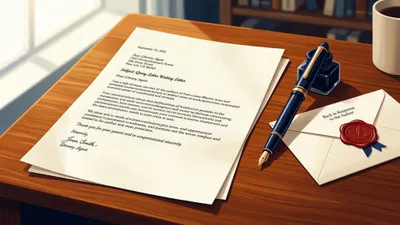
You can absolutely get a literary agent without knowing anyone in publishing. Most traditionally published authors — including debut bestsellers — found their agent by sending a cold query letter through the slush pile, not through a personal introduction.
In this guide, you’ll learn:
- Why connections are not required (and what agents actually look for instead)
- The step-by-step cold query process that gets manuscripts requested
- Where to find agents who are actively seeking new writers
- How to build a complete literary agent submission checklist
Here is exactly how to do it.
Do You Really Need Connections to Get a Literary Agent?
No. The vast majority of agent-author relationships start with a cold query letter. According to WordsRated’s literary agent statistics, agents receive thousands of unsolicited queries each year and sign new clients directly from the slush pile. One agent received 3,627 cold queries in 78 days and made 31 offers of representation from that batch alone.
Connections can help — a referral from an agented author means your query gets read faster. But referrals are not required, and agents know this. Their job is to find great books, regardless of who sent them.
What actually matters is three things: a polished manuscript, a compelling query letter, and targeting the right agents. You control all three.
Step 1: Finish and Polish Your Manuscript
No agent will consider an unfinished novel. For fiction, your manuscript must be complete, revised, and as close to publishable as you can get it before you send a single query.
This means multiple drafts. Most books go through 3 to 7 drafts before they are ready. Your first draft captures the story. Subsequent passes tighten pacing, deepen characters, and eliminate weak prose.
Consider investing in a developmental edit or at minimum getting feedback from beta readers. Agents can spot an unrevised manuscript within the first page. The query process is competitive — only about 1-4% of queries result in an offer — so your manuscript needs to be your best work.
Nonfiction works differently. If you are writing nonfiction, you sell on a book proposal rather than a finished manuscript. Your proposal includes a market analysis, chapter outline, author platform overview, and sample chapters.
Step 2: Research Agents Who Represent Your Genre
Sending your mystery novel to an agent who only represents literary fiction is a guaranteed rejection. Research is the most important part of the process — and the step most writers rush through.
Where to Find Literary Agents
QueryTracker (free). The largest searchable database of literary agents. Filter by genre, response times, and acceptance rates. You can also track your submissions and see other writers’ reported response times.
Publishers Marketplace ($25/month). Shows recent book deals — which agent sold what, to which publisher, and for how much. This is the best way to find agents who are actively selling books in your genre right now.
Manuscript Wishlist (MSWL). Agents post exactly what they want to read on manuscriptwishlist.com. If your book matches an agent’s wishlist, mention it in your query. This is one of the strongest personalization signals you can use.
Acknowledgments pages. Open books similar to yours and read the acknowledgments. Authors almost always thank their agent by name. If a published book feels similar to yours in tone, genre, or subject matter, the agent who represented it is a strong candidate.
Social media. Many agents share submission preferences, manuscript wishlists, and query tips on Twitter/X, Instagram, and TikTok. Follow agents in your genre to learn what they are looking for.
Build a Target List of 40-80 Agents
You will likely query many agents before finding the right match. The average querying author sends around 44 queries, and successful authors often query 60-100 agents. Create a spreadsheet with:
- Agent name and agency
- Genres they represent
- Submission guidelines (every agency has different rules)
- Whether they are open to queries
- Any personal connection points (they mentioned loving a comp title, they represent an author you admire)
Prioritize agents who have recently sold books similar to yours. A recent sale means they have active editor relationships in your genre.
Step 3: Write a Query Letter That Gets Requests
Your query letter is everything. It is a one-page business letter with a single purpose: make the agent want to read your manuscript. Generic queries get a 1-3% request rate. Personalized, well-crafted queries get 8-15%.
The Query Letter Formula
Personalized opening (1-2 sentences). Address the agent by name. Mention why you chose them specifically — a book they represented, a wishlist item that matches your manuscript, or a conference panel you attended.
The hook (1 paragraph). Introduce your main character, their goal, the obstacle in their way, and the stakes if they fail. Think of this as a movie trailer for your book. You want the agent to need to know what happens next.
Book details (1-2 sentences). Title, genre, word count, and any comparable titles (“for fans of [Book A] meets [Book B]”).
Author bio (1-2 sentences). Relevant credentials only. Publishing credits, relevant expertise, or platform. If you have no credits, keep this brief and confident. Many debut authors have no prior publications — agents know this and do not hold it against you.
Professional close. Thank them for their time. Include your contact information.
Study query letter examples that worked to see these elements in action. The pattern is consistent: a sharp hook, a concise pitch, and a confident bio — all in under 400 words.
What NOT to Do in a Query Letter
- Do not address it “Dear Agent” or “To Whom It May Concern”
- Do not compare your book to mega-bestsellers (“the next Harry Potter”)
- Do not include your life story
- Do not mention that your family loved the book
- Do not send the same generic letter to every agent
- Do not exceed one page
Step 4: Follow Each Agency’s Submission Guidelines Exactly
Every agency has specific submission requirements. Some want the query letter only. Some want the first 5 pages pasted into the email body. Some want a synopsis. Some want 50 pages attached as a PDF. Some have online submission forms.
Follow the rules precisely. According to Jane Friedman, failing to follow submission guidelines is one of the fastest ways to get rejected. It signals that you did not do your research — and if you cannot follow basic instructions, agents worry about working with you long-term.
Before submitting to each agent, check:
- Their agency website for current guidelines
- Whether they are currently open to queries (many agents close periodically)
- Required materials (query only, query + pages, query + synopsis)
- Preferred format (email, online form, postal mail)
- Response time expectations (some agents only respond if interested)
Literary Agent Submission Checklist
Literary agent submission checklist — a complete list of everything you need before you start querying:
- Finished, polished manuscript (fiction) or book proposal (nonfiction)
- Query letter — personalized for each agent, under 400 words
- Synopsis — 1-3 pages summarizing your entire plot, including the ending
- First pages — polished opening chapter(s), typically first 5-50 pages depending on agency requirements
- Comp titles — 2-3 recently published books similar to yours (published within the last 3-5 years)
- Word count — confirmed and within genre standards
- Agent target list — 40-80 researched agents with personalization notes
- Submission tracker — spreadsheet or QueryTracker account to log queries and responses
- Author bio — brief paragraph with relevant credentials
- Genre classification — accurate category (literary fiction, thriller, romance, etc.)
Step 5: Query in Batches (Not All at Once)
Do not send all 60 queries on the same day. Query in batches of 8-12 agents at a time, starting with your second-tier choices — not your dream agents.
Why batches work:
You can refine your query. If your first batch of 10 queries gets zero requests, your query letter needs work. Revise it before sending the next batch. If you sent all 60 at once, you have burned through your entire list with a weak query.
You get feedback. Some agents send personalized rejections with useful notes. Incorporate that feedback before querying the next batch.
You protect your best shots. Save your top-choice agents for later batches, once your query is tested and refined.
Wait 4-8 weeks between batches to allow response time. Most agents take 4-12 weeks to respond to queries, and some only respond if interested.
Step 6: Use Side Doors (Without Needing Connections)
Cold queries through the slush pile are the most common path, but there are several “side door” strategies you can use — none of which require existing connections.
Writing Conferences
Attend writers’ conferences that include agent pitch sessions. Many conferences — like Writer’s Digest Annual Conference, ThrillerFest, and regional SCBWI events — offer one-on-one pitch meetings with agents. You get 10 minutes to pitch your book face-to-face.
This is not about “networking.” It is a structured, paid opportunity to pitch directly to agents who are actively looking for new clients. You walk in a stranger and walk out with a request to submit.
Writing Contests
Agents judge online writing contests regularly. Competitions like PitchWars (now sunsetted, but similar events have replaced it), WriteMentor, and Twitter pitch events (#PitMad, #DVPit) put your work directly in front of agents who are building their lists.
If an agent-judge likes your entry, they will contact you and request more material. This is a warm introduction that you earned through your writing, not through knowing someone.
Query a Junior Agent at a Top Agency
Newer agents at established agencies are actively building their client lists. They have the same access to editors and publishers as senior agents at their agency, but they are hungrier for new clients and more likely to take on debut authors.
A junior agent at a top agency is often a better fit for a debut author than a senior agent with a full client list. They have more time to develop your career and are deeply invested in each client’s success.
Step 7: Handle Rejections Strategically
You will get rejected. A lot. Even successful authors faced dozens — sometimes hundreds — of rejections before signing with an agent. The key is to treat rejection as data, not as a verdict on your writing.
Form rejections (no personalized feedback) are the most common. They mean the agent was not the right fit, not that your book is bad. Agents reject manuscripts for reasons that have nothing to do with quality — they already represent something similar, they are not connecting with the voice, or their list is full.
Personalized rejections are valuable. If an agent takes time to explain why they passed, pay attention. If multiple agents mention the same issue — slow pacing, unclear stakes, a weak opening — that is actionable feedback.
Revise and requery. If your first 20-30 queries produce zero or very few requests, stop querying. Revise your query letter, your opening pages, or both. Then resume with fresh batches.
How Long Does It Take to Get a Literary Agent?
Getting a literary agent typically takes 6 to 18 months of active querying, though some authors find representation faster and others take longer. The timeline depends on your genre, the market, your query letter quality, and whether your manuscript is ready.
The writers who succeed are the ones who treat querying as a professional process, not a lottery. They research agents thoroughly, personalize every query, revise based on feedback, and keep writing their next book while they wait.
Can You Get a Book Deal Without an Agent?
Yes, but your options are more limited. Small and independent presses often accept unagented submissions. Some publishers have open submission periods. And self-publishing allows you to bypass the gatekeeping process entirely.
If your goal is a traditional deal with a Big Five publisher — Penguin Random House, HarperCollins, Simon & Schuster, Hachette, or Macmillan — you need an agent. These publishers do not accept unsolicited manuscripts. But the Big Five are not the only path to a successful book.
Many authors are choosing to write and publish independently using AI-assisted tools like Chapter. Over 10,000 authors have used Chapter to create books, with results including $60,000 in revenue in 48 hours and being featured in USA Today and the New York Times. If you want to get your book into the world on your own timeline, self-publishing with the right tools gives you complete control over your career.
Should You Query or Self-Publish?
The right path depends on your goals:
| Factor | Traditional (Agent + Publisher) | Self-Publishing |
|---|---|---|
| Timeline | 2-4 years from query to bookshelf | Weeks to months |
| Advance | $5,000-$50,000+ typical debut | No advance (you earn from sales) |
| Royalties | 10-15% of cover price | 35-70% depending on platform |
| Creative control | Publisher decides cover, title, edits | You decide everything |
| Distribution | Bookstores, libraries, wide retail | Primarily online, POD for physical |
| Marketing | Some publisher support + your own efforts | 100% your responsibility |
Both paths produce successful authors. The question is which trade-offs match your priorities.
If you are pursuing traditional publishing, query agents using the process above. If you want speed, control, and higher royalties, explore how to self-publish a book and use AI writing tools to accelerate the process.
Common Mistakes That Kill Your Chances
Querying too early. Your manuscript is not ready after your first draft. Revise, get feedback, revise again. Agents can tell within the first page whether a manuscript has been polished.
Not personalizing queries. A generic query signals laziness. Agents want to see that you researched them specifically, not that you mass-emailed 100 agents at once.
Choosing the wrong comp titles. Comparing your debut novel to Harry Potter or The Da Vinci Code makes you look out of touch with the market. Use recent, mid-list titles in your genre.
Ignoring genre conventions. Your 180,000-word debut literary fiction novel will be extremely hard to sell. Know the word count expectations for your genre and stay within range.
Giving up too soon. Many authors quit after 10-20 rejections. The average is 44 queries. Some bestselling authors queried over 100 agents. Persistence is not optional in this process.
FAQ
How Many Queries Should You Send to Literary Agents?
You should send queries to 40-80 literary agents who represent your genre. The average querying author sends approximately 44 queries before receiving an offer of representation. Send in batches of 8-12 to allow time for refining your query letter based on responses.
Do Literary Agents Charge Upfront Fees?
No, legitimate literary agents never charge upfront fees. Agents earn a 15% commission on domestic book sales and 20% on foreign rights. They only get paid when they sell your book. Any agent asking for reading fees, editing fees, or retainers before making a sale is not operating according to industry standards.
What Is the Acceptance Rate for Literary Agents?
The acceptance rate for literary agents is approximately 1-4% of all queries received. Most agents receive hundreds to thousands of queries per month and only sign a handful of new clients per year. Personalized queries that demonstrate genuine research into the agent’s preferences have significantly higher request rates than generic submissions.
Can You Query Multiple Agents at the Same Agency?
Generally, no — do not query multiple agents at the same agency simultaneously unless their submission guidelines explicitly allow it. Most agencies treat a rejection from one agent as a rejection from all agents at that agency. Check each agency’s policy before submitting.
How Long Do Literary Agents Take to Respond to Queries?
Most literary agents take 4-12 weeks to respond to query letters. Some agents operate on a “no response means no” policy, meaning you will not hear back if they are not interested. Track your submissions and follow up politely after the stated response window has passed — typically with a brief, professional email.