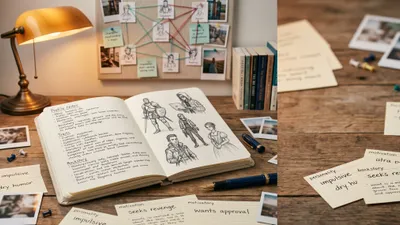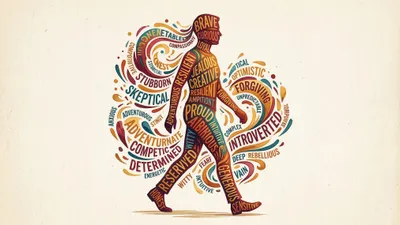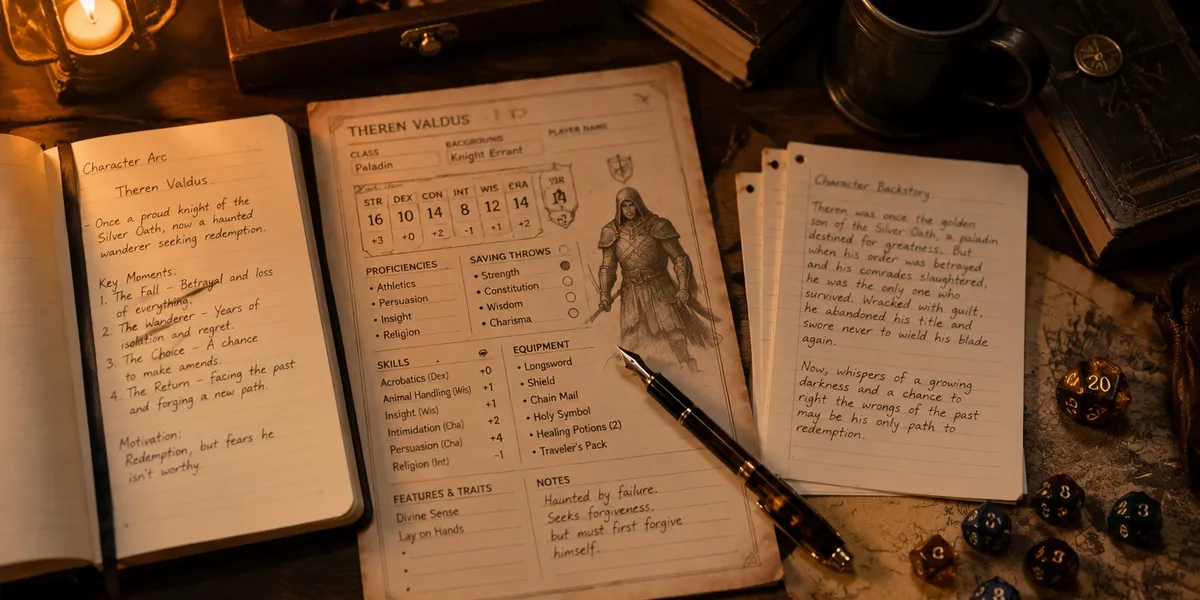
A character sheet template for writers is a structured, stat-block-style document — inspired by tabletop RPG character sheets — that helps you track everything about a fictional character in one place: attributes, skills, flaws, backstory, relationships, and story role.
In this guide, you’ll learn:
- A free, copy-paste character sheet template with 8 sections you can fill out right now
- How RPG-style stat blocks help you write more consistent, layered characters
- Genre-specific character sheet variations for fantasy, romance, thriller, and sci-fi
- The difference between a character sheet, a character profile, and a character development template
Here’s the complete template, section by section.
What Is a Character Sheet Template (and Why Borrow From RPGs)?
A character sheet template is a one-page (or multi-page) reference document that catalogs a fictional character’s core attributes, abilities, personality traits, weaknesses, and story role. The format borrows from tabletop RPGs like Dungeons & Dragons, where every player fills out a character sheet before the game begins.
Why does this matter for fiction writers? Because RPG character sheets solve the same problem novelists face: they force you to define what your character can do, what they can’t do, and what happens when they’re under pressure — before the story starts.
A traditional character profile asks questions like “What’s your character’s favorite food?” That’s useful. But a character sheet asks “What’s your character’s biggest weakness, and how does it create conflict?” That’s structural.
The stat-block format also helps you spot imbalances. If your protagonist is strong in every category — smart, brave, charismatic, skilled — you’ve built a character with no friction. RPG players know that the best characters have dumped stats. Your fiction characters should too.
The Complete Character Sheet Template (Free, Copy-Paste)
Copy this template into your writing tool of choice. Fill out as much or as little as you need — protagonists deserve the full sheet, while minor characters might only need the first two sections.
Section 1: Identity Block
CHARACTER SHEET — [Character Name]
━━━━━━━━━━━━━━━━━━━━━━━━━━━━━━━━━
Full Name:
Aliases/Nicknames:
Age:
Gender/Pronouns:
Role in Story: [Protagonist / Antagonist / Mentor / Sidekick / Love Interest / Other]
One-Line Summary: [Who they are in 10 words or fewer]
Start here. The “One-Line Summary” is the most important field — if you can’t describe your character in ten words, you don’t know them well enough yet. Think of it like a character’s tagline: “A disgraced surgeon rebuilding her life in a small coastal town.”
Section 2: Core Attributes (The Stat Block)
This is where the RPG format really shines. Rate each attribute on a scale of 1-10 to get a quick visual snapshot of your character’s strengths and weaknesses.
CORE ATTRIBUTES (rate 1-10)
━━━━━━━━━━━━━━━━━━━━━━━━━━
Physical Strength:    [ /10]
Intelligence:         [ /10]
Charisma:             [ /10]
Emotional Resilience: [ /10]
Resourcefulness:      [ /10]
Moral Compass:        [ /10]

STRONGEST ATTRIBUTE:
WEAKEST ATTRIBUTE (the "dump stat"):
The dump stat is critical. In D&D, a wizard with low Strength creates interesting tactical decisions. In fiction, a brilliant detective with low Emotional Resilience creates interesting story decisions. Your character’s weakness should directly generate conflict in your plot.
Compare two stat blocks side by side — your protagonist and antagonist — and you’ll immediately see where they clash and where they’re uncomfortably similar. That’s where your best scenes live.
Section 3: Skills and Abilities
SKILLS & ABILITIES
━━━━━━━━━━━━━━━━━━
Primary Skill (what they're known for):
Secondary Skills:
Hidden Talent (revealed under pressure):
Trained Abilities (learned, not innate):
Limitations/Restrictions on Abilities:
Every skill should come with a limitation. A master swordsman who can beat anyone in single combat but freezes in large battles. A hacker who can crack any system but has zero social skills. Limitations create the gaps that your plot fills.
The “Hidden Talent” field is especially useful for plotting. It gives you a credible way to get your character out of a tight spot later in the story — as long as you plant seeds for it early.
Section 4: Psychology and Personality
PSYCHOLOGY
━━━━━━━━━━
Core Personality Traits (3-5):
Character Flaws (2-3):
Fear (what terrifies them):
Shame (what they hide):
Coping Mechanism (how they handle stress):
Attachment Style: [Secure / Anxious / Avoidant / Disorganized]
MBTI or Enneagram (optional shorthand):
The Fear/Shame pair is the engine of your character’s internal conflict. Fear drives what they avoid. Shame drives what they hide. When your plot forces them to face both simultaneously, you get your story’s emotional climax.
Don’t skip the Coping Mechanism field. It tells you how your character behaves under stress — which is how readers actually experience personality on the page. A character who copes with humor reads completely differently from one who copes with control, even if their backstory is identical.
Section 5: Backstory and History
BACKSTORY
━━━━━━━━━
Origin (where they grew up, social class, family structure):
Defining Childhood Event:
The Wound (the event that shaped their worldview):
What They Believe Because of the Wound:
Key Relationships Before the Story:
What They Were Doing Immediately Before Page 1:
The “Wound → Belief” connection is the backbone of character development. Your character experienced something painful (the Wound), which taught them a lesson about the world (the Belief). Your story’s job is to challenge that belief.
For example: a character whose parent abandoned them (Wound) believes “everyone leaves eventually” (Belief). Your story puts them in a situation where someone refuses to leave — and they have to decide whether to trust it.
Keep the backstory section focused on what matters to the plot. You don’t need your character’s complete childhood timeline. You need the one event that broke them and the belief it created.
Section 6: Goals, Motivation, and Conflict
GOALS & MOTIVATION
━━━━━━━━━━━━━━━━━━
External Goal (what they want — the plot goal):
Internal Goal (what they need — the emotional goal):
Motivation (why they want it):
Stakes (what happens if they fail):
Primary Obstacle (the main thing standing in their way):
Internal Conflict (how their want and need clash):
The Want vs. Need split is what separates flat characters from compelling ones. If your character’s external goal and internal goal are the same thing, you don’t have enough conflict.
A romance protagonist might want to stay independent (external goal) but need to learn to trust someone (internal goal). A thriller protagonist might want to catch the killer (external) but need to confront their own capacity for violence (internal). The tension between these two goals is your character arc.
Section 7: Relationships and Dynamics
RELATIONSHIPS
━━━━━━━━━━━━━
Ally (who supports them):
Rival (who challenges them):
Mentor (who teaches them):
Love Interest (if applicable):
Foil Character (who contrasts them):
Most Complicated Relationship:
Relationship They'd Die For:
Relationship That Could Destroy Them:
The last three fields are the ones that matter most for plotting. “Most Complicated Relationship” tells you where your best dialogue scenes are. “Would Die For” tells you where your highest-stakes scenes are. “Could Destroy Them” tells you where your darkest scenes are.
If you’re writing a foil character, fill out both character sheets and compare them section by section. The best foils share some attributes but diverge sharply on others — that’s what makes the contrast meaningful.
Section 8: Story Role and Arc
STORY ROLE
━━━━━━━━━━
Archetype: See character archetypes
Arc Type: [Positive Change / Negative Change / Flat Arc / Corruption Arc]
Starting State (who they are at the beginning):
Midpoint Shift (what changes them):
Ending State (who they become):
Theme They Embody:
Scene Where They're Most Themselves:
Scene Where They're Least Themselves:
The “Most Themselves / Least Themselves” fields are a trick I use in my own writing. The scene where your character is most themselves reveals their authentic personality to the reader. The scene where they’re least themselves reveals how far the story has pushed them from their comfort zone.
Together, those two scenes define the emotional range of your character — and they’re often the scenes readers remember most.
How to Fill Out Your Character Sheet (Step by Step)
Don’t try to complete every field in one sitting. Here’s the workflow that works best:
Step 1: Start with the Identity Block and Stat Block. These two sections take 10 minutes and give you a working sketch of who this character is. You can start writing scenes with just this much.
Step 2: Fill in Goals and Motivation next. This section connects your character to your plot. Without it, you have an interesting person with nowhere to go.
Step 3: Add Psychology and Backstory. These sections explain why your character wants what they want and why they behave the way they do. Fill these in after you’ve written a few scenes and have a feel for the character’s voice.
Step 4: Complete Relationships and Story Role last. These sections require you to know your other characters too. Come back to them once your cast is taking shape.
Step 5: Revise during and after your first draft. Your character sheet is a living document. Characters evolve as you write them. Update the sheet to match who they’ve become — not who you originally planned.
Character Sheet Variations by Genre
The core template works for any genre, but some categories deserve extra fields. Add these sections based on what you’re writing.
Fantasy Character Sheet Additions
FANTASY EXTENSIONS
━━━━━━━━━━━━━━━━━━
Magic System / Powers:
Power Source:
Cost of Using Power:
Combat Style:
Faction/Allegiance:
Cultural Background (in-world):
Languages Spoken:
Signature Weapon or Artifact:
Fantasy characters need their abilities grounded in your world’s rules. The “Cost of Using Power” field is particularly important — it prevents your characters from becoming overpowered and keeps the stakes real.
Romance Character Sheet Additions
ROMANCE EXTENSIONS
━━━━━━━━━━━━━━━━━━
Love Language: [Words / Touch / Acts / Gifts / Time]
Attachment Wound:
What They Find Attractive:
What They Think They Want in a Partner:
What They Actually Need in a Partner:
Emotional Armor (how they protect themselves from intimacy):
The Moment They Start Falling:
The “Think They Want vs. Actually Need” split mirrors the Want vs. Need framework from the Goals section — but applied to romance specifically. It’s the engine of every great love story.
Thriller/Mystery Character Sheet Additions
THRILLER EXTENSIONS
━━━━━━━━━━━━━━━━━━━
What They're Hiding:
Who They're Hiding It From:
Breaking Point (what makes them crack):
Moral Line (what they won't cross — or will they?):
Alibi/Cover Story:
Investigative Method (if detective/investigator):
For thriller characters, the “Moral Line” field drives your plot. The moment your character crosses it — or refuses to — is the turning point of your story.
Sci-Fi Character Sheet Additions
SCI-FI EXTENSIONS
━━━━━━━━━━━━━━━━━
Augmentations/Implants:
Relationship with Technology:
Home World/Station/Colony:
Faction/Corporation Affiliation:
Ethical Stance on [Core Tech of Your World]:
What Makes Them Human (if that's in question):
Character Sheet vs. Character Profile vs. Character Development Template
These three tools serve different purposes. Use the right one for what you need:
| Tool | What It Focuses On | Best For |
|---|---|---|
| Character Sheet (this post) | Attributes, abilities, stats, story role — the RPG-style overview | Quick reference during writing, spotting character imbalances, comparing characters side by side |
| Character Profile | Deep personal details — 50+ questions about appearance, history, preferences | Getting to know a character intimately, especially protagonists |
| Character Development Template | Arc mapping — tracking how a character changes across the story | Plotting transformation arcs, tracking turning points |
Use all three together for major characters. Start with the character sheet to define the broad strokes. Fill out the profile to deepen your knowledge. Use the development template to plan their arc across your plot.
For minor characters, the character sheet alone is usually enough. You need to know their role, their key trait, and their relationship to your protagonist — not their childhood pet’s name.
How to Use AI to Fill Out Your Character Sheet Faster
If you’re staring at a blank character sheet and struggling to fill it in, AI tools can help you brainstorm — fast.
Our Pick — Chapter
Chapter’s fiction writing tools let you develop characters through guided AI conversations. Describe your story premise, and Chapter helps you build consistent characters that fit your genre and plot structure.
Best for: Fiction writers who want AI-assisted character creation that stays consistent with their story’s world and tone.
Why we built it: Over 2,147 authors have used Chapter to create more than 5,000 books — and strong characters start with strong planning.
You can also use AI prompts for character development to brainstorm specific fields on your sheet. Feed the AI your character’s core concept and ask it to suggest flaws, backstory wounds, or relationship dynamics. Then edit the suggestions to fit your vision.
The key is using AI as a brainstorming partner, not a replacement for your creative judgment. Generate options, then choose the ones that serve your story.
Common Mistakes When Using Character Sheet Templates
Filling out every field for every character. Your protagonist needs the full sheet. The bartender who appears in one scene does not. Match the depth of your character sheet to the character’s importance in your story.
Making all attributes high. A character who scores 8+ in every stat block category is boring. The best characters have clear weaknesses that create conflict. Drop at least two attributes below 4.
Treating the sheet as permanent. Your character sheet should change as you write. If your character surprises you during a scene — and they will — update the sheet. The document serves the story, not the other way around.
Confusing backstory with personality. Backstory explains why a character is who they are. Personality explains how they show up on the page. Don’t fill the backstory section and leave psychology blank.
Skipping the relationships section. Characters don’t exist in isolation. Your protagonist’s relationships define their world. A character with no meaningful connections reads as hollow, no matter how detailed their stat block is.
Can You Use a D&D Character Sheet for Fiction Writing?
You can adapt a D&D character sheet for fiction writing, but you’ll need to translate the game mechanics into story mechanics. D&D’s six core attributes — Strength, Dexterity, Constitution, Intelligence, Wisdom, and Charisma — map surprisingly well to fiction when you reframe them.
Strength becomes physical capability and willingness to use force. Dexterity becomes grace under pressure and quick thinking. Constitution becomes emotional and physical endurance. Intelligence becomes problem-solving and knowledge. Wisdom becomes intuition and emotional intelligence. Charisma becomes social influence and presence.
The template in this guide already adapts the best elements of the D&D format for fiction writers — keeping the stat-block structure while replacing game-specific mechanics with story-specific categories.
If you’re a tabletop player who also writes fiction, you already understand the core principle: constraints create interesting characters. A character who’s great at everything is boring to play and boring to read.
How Many Character Sheets Do You Need for a Novel?
You need a full character sheet for every point-of-view character and your primary antagonist. That’s your non-negotiable minimum. For a single-POV novel, that’s two sheets. For a multi-POV epic fantasy, you might fill out five to eight.
Supporting characters — recurring allies, love interests, mentors — deserve a partial sheet. Fill out the Identity Block, Core Attributes, and Relationships sections. Skip the deep psychology unless they have their own subplot.
Minor characters — the ones who appear in a few scenes — need only a name, a one-line summary, and their relationship to your main character. A sentence in your notes is fine.
Here’s a rough guide:
| Character Importance | Sections to Complete | Time Investment |
|---|---|---|
| POV / Protagonist | All 8 sections | 45-60 minutes |
| Antagonist | All 8 sections | 30-45 minutes |
| Major Supporting | Sections 1-4, 6-7 | 20-30 minutes |
| Minor / Recurring | Sections 1-2 only | 5-10 minutes |
| Walk-on | Name + one-line summary | 1 minute |
Where to Store Your Character Sheets
Your character sheet is only useful if you can find it while you’re writing. Here are the best options:
Notion or Google Docs — Best for writers who like linked databases. You can tag characters by story, create relationship maps, and search across all your sheets.
Scrivener — Built-in character sketch templates that live alongside your manuscript. Great if you already use Scrivener for drafting.
Physical notebook — Some writers think better on paper. Print the template, fill it by hand, and keep it next to your keyboard while you write.
Chapter — Keeps your character planning integrated with your actual writing workflow. Your character details live in the same tool where you draft, so you never lose context switching between apps.
Whatever you choose, the important thing is keeping your character sheets accessible during writing. A beautifully detailed character sheet buried in a folder you never open is worthless. Pin it, bookmark it, or tape it to your wall.
FAQ
What is a character sheet template for writers?
A character sheet template for writers is a structured document that helps you catalog a fictional character’s core attributes, personality, backstory, goals, and story role in one place. Inspired by tabletop RPG character sheets, it uses a stat-block format to help you spot strengths, weaknesses, and conflicts before you start writing.
How is a character sheet different from a character profile?
A character sheet focuses on attributes, abilities, and story function — like an RPG stat block. A character profile dives deeper into personal details with 50+ questions about appearance, preferences, and history. Use the sheet for quick reference and the profile for deep character knowledge.
Do I need a character sheet for every character in my novel?
You need a full character sheet for POV characters and your main antagonist. Supporting characters need partial sheets covering identity, attributes, and relationships. Minor characters who appear in only a few scenes need just a name and a one-line description.
Can I use a D&D character sheet for writing a novel?
You can adapt a D&D character sheet for fiction writing by translating game mechanics into story mechanics. The six core D&D attributes — Strength, Dexterity, Constitution, Intelligence, Wisdom, Charisma — map well to fiction when reframed as physical capability, grace under pressure, endurance, problem-solving, intuition, and social influence.
What’s the best tool for creating character sheets?
The best tool depends on your workflow. Chapter integrates character planning with AI-assisted writing. Notion works well for linked databases and relationship maps. Scrivener keeps character sketches alongside your manuscript. Choose the tool that keeps your sheets accessible while you write.