You can direct an audiobook narrator effectively — even if you’ve never set foot in a recording studio — by preparing a character voice guide, writing clear pacing notes, and communicating your creative vision before the first session starts.
In this guide, you’ll learn:
- How to build a character voice guide your narrator can actually use
- The pre-production steps that save hours of re-recording
- How to give direction during sessions without micromanaging
- Tips for directing dual narration and remote recording sessions
Here’s the complete process, from prep work to final review.
What Does an Audiobook Director Actually Do?
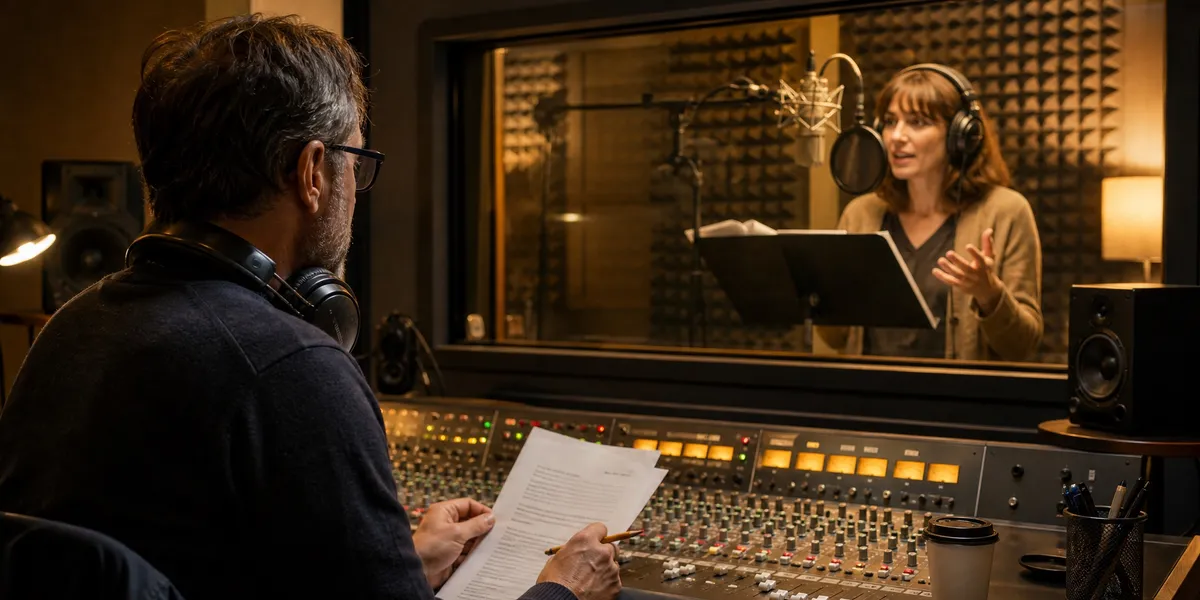
An audiobook director guides the narrator’s performance to match the author’s creative vision — covering pacing, character voices, emotional tone, and consistency across the entire recording.
Think of it like directing a one-person play. Your narrator brings the vocal talent. You bring the roadmap. Without direction, even skilled narrators can misread a character’s emotional arc, choose the wrong pacing for a tense scene, or drift into inconsistent accents across chapters.
Most self-published authors direct their own audiobooks. Traditional publishers hire dedicated directors, but indie authors who learn this skill produce audiobooks that compete with Big Five productions — without the Big Five budget.
If you’re still deciding whether to hire a narrator or record yourself, directing skills matter either way. Even self-narrating authors benefit from thinking like a director.
How to Prepare Before the Recording Session
Preparation is 80% of great audiobook direction. The more you give your narrator before they hit the booth, the fewer retakes you’ll need.
Read Your Book Like a Listener
Before you direct anyone, re-read your own book — but this time, read it out loud. You’ll catch awkward phrasing, tongue-twister sentences, and pacing issues that look fine on the page but sound terrible spoken aloud.
Mark any passages where you stumbled. Those are spots where your narrator will struggle too. Fix them in the manuscript or add pronunciation notes.
Build a Character Voice Guide
This is the single most valuable directing tool you can create. A character voice guide gives your narrator a reference sheet for every speaking character in your book.
For each character, include:
- Name and pronunciation — especially for fantasy or non-English names
- Age and personality — a 19-year-old rebel sounds different from a 60-year-old professor
- Vocal qualities — pitch (high, low, gravelly), speed (quick-talker, deliberate), energy (bubbly, subdued)
- Accent or dialect — be specific (“light Southern Georgia” vs. “Southern”)
- Emotional arc — how the character changes over the book
- Reference voice — an actor or public figure who sounds like what you imagine (narrators find this extremely helpful)
A narrator working from a detailed character guide can voice 20+ characters consistently across a 10-hour audiobook. Without one, you’re relying on guesswork — and you’ll spend studio time explaining what you could have written down.
Write a Tone and Pacing Brief
Beyond individual characters, your narrator needs to understand the book’s overall feel. Write a one-page brief covering:
- Genre tone — Is this a cozy mystery (warm, playful) or a psychological thriller (tense, clipped)?
- Pacing notes — Which chapters are fast-paced action? Which are slow, reflective moments?
- Emotional peaks — Flag the 3-5 most emotionally intense scenes so your narrator can prepare
- Pronunciation guide — Made-up words, place names, foreign phrases, and any words you’ve seen people mispronounce
If you’re writing your book with AI writing tools, you can generate a first draft of this brief from your manuscript and then refine it manually.
How to Give Direction During Recording Sessions
Walking into a recording session without a plan leads to vague feedback, wasted time, and a frustrated narrator. Here’s how to direct with confidence.
Start with a Table Read
Before recording begins, schedule a 30-minute table read of the first chapter. This is where you and the narrator align on tone, character voices, and pacing — before any audio gets recorded.
During the table read:
- Listen to the narrator’s instincts first — they’re professionals
- Note where their interpretation differs from yours
- Discuss character voices and agree on each one
- Record voice samples for every character as a reference file
This upfront investment saves hours of re-takes later. Many narrators say the table read is the most important part of the entire production.
Give Specific, Actionable Feedback
The difference between a great director and a bad one is the quality of their notes.
Bad direction:
- “Make it more emotional”
- “That doesn’t sound right”
- “Can you try it again?”
Good direction:
- “She’s holding back tears here — keep the voice steady but add a slight crack on the last word”
- “This is sarcasm, not anger — lighter tone, slight smile in your voice”
- “Slow down by about 20% through this paragraph — the reader is processing a revelation”
Specific notes give your narrator something concrete to work with. Vague notes force them to guess — and guessing wastes everyone’s time.
Use the Sandwich Method for Corrections
When you need to redirect a narrator, frame it positively:
- What worked — “That pacing was perfect”
- What to change — “But let’s make the character’s tone more weary than angry”
- Encouragement — “Your instinct for the rhythm is spot-on, so this should click fast”
Narrators perform better when they feel safe taking creative risks. A director who only gives negative feedback gets a narrator who plays it safe — and safe performances are forgettable.
Track Character Voice Consistency
During long recordings, character voices can drift. A narrator recording Chapter 1 on Monday and Chapter 15 on Thursday might subtly shift a character’s pitch or accent.
Create an audio reference system:
- Record a 30-second voice sample for each character before production starts
- Label each sample clearly (character name, vocal description)
- Have the narrator listen to the relevant samples at the start of each session
- Mark any sections where a voice sounds inconsistent for pickup recording later
Some narrators color-code their scripts — assigning each character a highlight color so they can see at a glance who’s speaking in a dialogue-heavy scene. Encourage this technique, especially for books with two or more narrators.
How to Direct Pacing and Emotional Dynamics
Pacing is where most self-directed audiobooks fall flat. A narrator reading at the same speed and energy for 8 straight hours produces an audiobook that puts listeners to sleep.
Map Your Book’s Energy Curve
Before recording, mark each chapter with an energy level from 1 (quiet, reflective) to 5 (intense, fast-paced). Share this map with your narrator.
- Level 1-2: Introspective chapters, character development, quiet conversations
- Level 3: Standard narrative pacing, the baseline
- Level 4-5: Action scenes, emotional climaxes, arguments, revelations
This gives your narrator a visual guide to energy shifts. They won’t accidentally deliver a funeral scene at the same clip as a chase sequence.
Direct the Spaces Between Words
Great audiobook direction isn’t just about what’s said — it’s about the pauses.
- Short pauses (0.5 seconds) between sentences within a scene
- Medium pauses (1-2 seconds) at scene transitions
- Long pauses (2-3 seconds) at chapter breaks or major reveals
- Dramatic beats — a half-second pause before a key word can transform a line
Tell your narrator where to breathe. Literally mark pause points in the script with [pause] notations where they’d be most effective. This is especially important for structuring audiobook chapters so transitions feel natural.
Coach Spatial Awareness in Dialogue
Characters don’t all stand at the same distance from the listener. Direct your narrator to adjust projection based on spatial context:
- A character whispering across a table should sound intimate and close
- A character shouting across a battlefield should sound projected and distant
- A character speaking in an echo-filled cathedral should sound slightly more deliberate
This creates a three-dimensional audio experience that separates amateur audiobooks from professional productions.
Dual Narration Audiobook Tips
Dual narration — where two narrators share the performance — is one of the fastest-growing trends in audiobook production, especially in romance and thrillers.
Dual vs. Duet Narration: Know the Difference
Dual narration splits the book by chapter or POV. Each narrator records their chapters independently. This works well for books with alternating first-person perspectives.
Duet narration has both narrators sharing scenes — one voices the male characters, the other voices the female characters, even within the same chapter. This creates a more immersive, dialogue-driven experience but requires tighter coordination.
Choose your format based on your book’s structure. Alternating POV chapters? Go dual. Heavy back-and-forth dialogue? Consider duet.
Coordinate Between Narrators
Even if your two narrators never share a studio, they need to share context:
- Exchange sample chapters before recording so each narrator knows the other’s style
- Agree on pronunciation for all character names, places, and made-up terms
- Match energy levels — if Narrator A reads Chapter 3 at a tense, clipped pace, Narrator B’s Chapter 4 shouldn’t feel like a different book
- Create a shared character guide that both narrators reference
The biggest risk in dual narration is inconsistency. Two narrators recording in isolation can produce audiobooks that sound like two separate productions stitched together. Your job as director is to unify them.
Manage the Second Narrator’s Cold Start
In duet narration, the second narrator often comes into dialogue cold — they haven’t been immersed in the scene the way the first narrator has.
To solve this:
- Have Narrator A record their sections first
- Send those recordings to Narrator B before their session
- Let Narrator B listen and match the emotional energy
- Review both tracks together and flag any tone mismatches
This extra step adds time but dramatically improves the final product. For more on structuring multi-narrator projects, check out the full guide to audiobook narration costs — which covers pricing for dual narration as well.
How to Direct a Remote Audiobook Recording
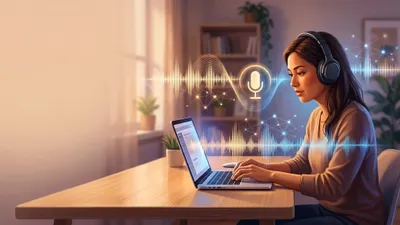
Most audiobook direction in 2026 happens remotely. Your narrator might be in a home studio in Nashville while you’re reviewing from your living room in Portland. Here’s how to make it work.
Set Up a Live Monitoring System
The ideal remote directing setup:
- Video call (Zoom, Google Meet) running between you and the narrator’s studio
- Live audio feed from the narrator’s microphone so you hear broadcast-quality audio, not laptop-mic quality
- Shared script (Google Docs or similar) where you can both see and annotate in real time
- Recording software (the narrator handles this on their end)
With this setup, you can direct in real time — giving notes between takes just like you would in a physical studio.
Batch Your Feedback for Asynchronous Direction
If real-time directing isn’t possible, use an asynchronous feedback loop:
- Narrator records a batch of chapters (typically 3-5)
- They send you the raw audio files
- You listen and create timestamped notes (“At 14:32 — character sounds too angry, should be resigned”)
- Narrator re-records flagged sections
- Repeat until the full book is complete
Timestamped notes are critical. Telling a narrator “somewhere in Chapter 7, the villain sounded off” is useless. Telling them “at 14:32, reduce the villain’s energy by 30% — he’s scheming here, not raging” is actionable.
Ensure Audio Quality Across Remote Studios
When directing remotely, audio consistency is your responsibility. Check that your narrator’s setup meets professional audiobook standards:
- Noise floor below -60dB
- Consistent microphone distance (6-8 inches)
- No room echo or ambient noise
- Sample rate of 44.1kHz, 16-bit WAV files
- Peak levels between -3dB and -6dB
Request a 5-minute test recording before committing to a full production. A narrator with a great voice but a bad room will produce unusable audio.
Common Mistakes When Directing an Audiobook Narrator
Even experienced authors make these directing errors. Avoid them and your production will run smoother.
- Over-directing — Giving notes on every single line kills the narrator’s natural flow. Direct the big moments and trust them on the rest.
- Skipping the prep work — Walking into a session without a character guide or tone brief wastes the narrator’s time and your money.
- Ignoring the narrator’s instincts — Professional narrators bring years of experience. If their interpretation surprises you, listen before redirecting — they might be right.
- Forgetting consistency checks — Character voices drift over long recordings. Schedule regular voice-check sessions.
- Neglecting the listener’s perspective — You know your book intimately. Your listener doesn’t. Direct for clarity, not just artistry.
How Much Does It Cost to Direct an Audiobook?
The cost of audiobook direction depends on whether you’re hiring a professional director or doing it yourself.
Self-directing: Free, but requires preparation time (8-15 hours for a typical novel).
Professional audiobook director: $100-$300 per finished hour of audio. A 10-hour audiobook costs $1,000-$3,000 for direction alone — on top of narrator fees.
Full-service production houses: Bundle narration, direction, editing, and mastering for $300-$600 per finished hour. This is the hands-off option, but you sacrifice creative control.
For most self-published authors, self-directing with a professional narrator is the sweet spot — you keep creative control and save $1,000-$3,000 on direction fees.
If you’re working with AI narration tools like text-to-audiobook AI, the direction process shifts from coaching a human to fine-tuning AI voice parameters — but many of the same principles (character consistency, pacing, emotional dynamics) still apply.
How Long Does It Take to Direct an Audiobook?
Directing an audiobook typically takes 2-4 weeks for a standard novel (60,000-80,000 words), broken down as:
- Pre-production prep: 8-15 hours (character guide, tone brief, manuscript markup)
- Recording sessions: 20-40 hours of studio time for a 10-hour finished audiobook (narrators typically record at a 2:1 to 4:1 ratio)
- Review and pickups: 5-10 hours for listening, notes, and re-recording flagged sections
- Post-production: Handled by the audio engineer, but you’ll review the final master
Plan for 4-6 weeks total if you factor in scheduling, shipping files back and forth, and the audio engineer’s editing time. The full audiobook production timeline covers every step from manuscript to finished files.
What Should You Include in a Narrator’s Direction Package?
Send your narrator a complete direction package before the first recording session. Include:
- Final, proofread manuscript — formatted for easy reading (large font, double-spaced, wide margins)
- Character voice guide — one page per major character, bullet points for minor characters
- Pronunciation guide — audio recordings of tricky words are even better than phonetic spellings
- Tone and pacing brief — genre feel, energy map, emotional peaks
- Reference audiobooks — 2-3 published audiobooks that match the tone you want
- Contact protocol — how and when the narrator can reach you with questions
This package typically takes 8-12 hours to prepare. It’s the most time-intensive part of directing — but it’s also the part that makes everything else go smoothly.
Once your audiobook is directed and produced, you’ll need to publish it on Audible or distribute through other platforms to reach listeners.
FAQ
How do you direct an audiobook narrator if you’re not a professional director?
You direct an audiobook narrator by preparing a character voice guide, writing a tone and pacing brief, and giving specific feedback during recording sessions. Professional experience helps, but thorough preparation matters more — most successful indie audiobooks are directed by the author using structured preparation documents.
What is dual narration in audiobooks?
Dual narration is an audiobook format where two narrators split the performance, typically by chapter or point-of-view character. Each narrator records their sections independently. It differs from duet narration, where both narrators share scenes and voice their respective characters within the same chapter.
How much does an audiobook narrator cost to hire?
An audiobook narrator typically costs $100-$400 per finished hour of audio, depending on experience and demand. A 10-hour audiobook runs $1,000-$4,000 for narration alone. Some narrators work on a royalty-share basis through platforms like ACX, reducing your upfront costs in exchange for ongoing royalty splits.
Can you direct an audiobook remotely?
Yes, you can direct an audiobook remotely using video calls, live audio feeds, and shared scripts. Most audiobook production in 2026 happens remotely. The key is establishing a clear feedback system — either live direction during recording or timestamped notes on recorded audio batches.
What makes a good audiobook narrator?
A good audiobook narrator has strong vocal range, consistent character differentiation, excellent breath control, and clear articulation. They can maintain vocal consistency across days of recording, take direction well, and bring emotional nuance to the performance. The best narrators treat every book like a one-person theatrical performance.