You can write a wedding toast that makes the entire room laugh, cry, and raise their glasses — even if you’ve never spoken in front of a crowd before.
In this guide, you’ll learn:
- The 5-part structure behind every memorable wedding toast
- How to open strong without the cliché “for those who don’t know me” line
- What to say (and what to never say) at the mic
- Exactly how long your toast should be
Here’s how to write a wedding toast people will talk about for years.
What Is a Wedding Toast?
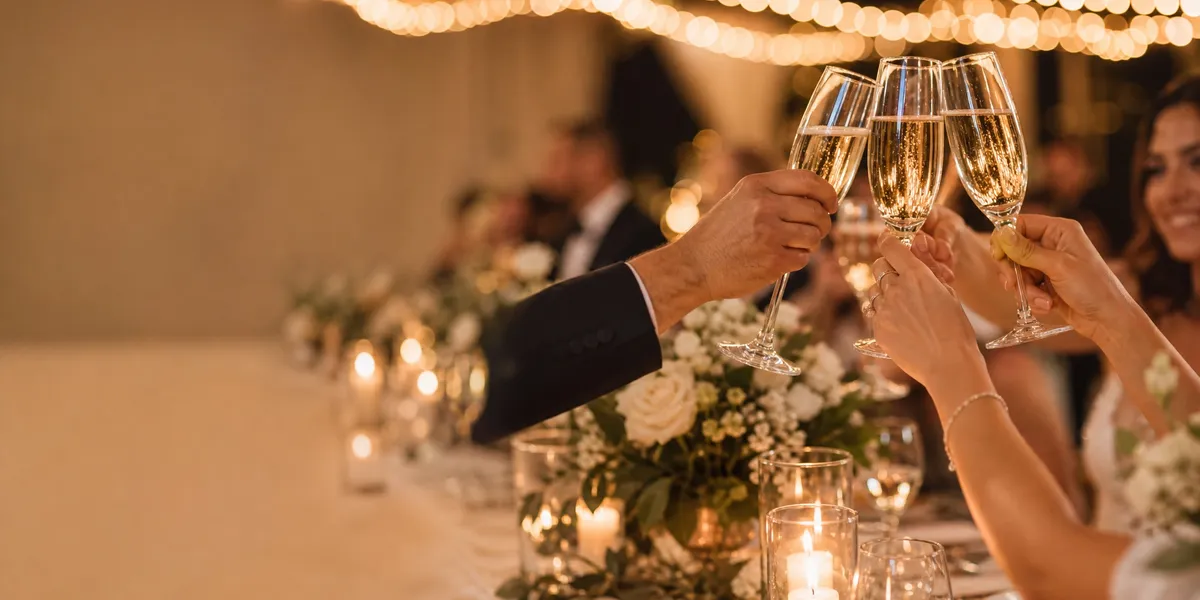
A wedding toast is a short speech given at a wedding reception to honor the couple, share a personal story, and invite guests to raise their glasses in celebration. It typically lasts two to three minutes and is delivered by the best man, maid of honor, parents, or close friends.
The difference between a toast and a full wedding speech is length and format. A toast is shorter, more personal, and always ends with everyone lifting their glasses together. A speech can run longer and doesn’t require a collective gesture at the end.
How Long Should a Wedding Toast Be?
A wedding toast should be two to three minutes when spoken aloud. That translates to roughly 250 to 400 words on paper.
Most people underestimate how fast two minutes goes at the microphone. Anything under 90 seconds feels rushed — like you didn’t prepare. Anything over four minutes and you’ll watch guests start checking their phones.
Write your toast out fully, then read it aloud with a timer. If you’re over three minutes, cut the weaker material. Your best story and your closing are what people will remember.
Step 1: Know Your Role and Audience
Before you write a single word, answer two questions: What’s your relationship to the couple? And who’s in the room?
Your relationship shapes the tone. A best man speech leans funnier. A parent’s toast tends toward heartfelt. A friend’s toast can go either way — but it should always feel personal.
The audience matters because Grandma is sitting three tables away from the college roommates. Your toast needs to land with both groups. That means no inside jokes without context, no stories that require an NDA, and nothing that would make the couple’s parents wince.
Quick role guide:
| Role | Tone | Focus |
|---|---|---|
| Best man | Funny + heartfelt | Groom’s journey, couple’s story |
| Maid of honor | Warm + emotional | Bride’s character, friendship |
| Parent | Proud + loving | Growth, values, welcome to family |
| Close friend | Personal + genuine | Shared memories, what the couple means to you |
| Sibling | Mix of humor + love | Growing up together, seeing them change |
Step 2: Use the 5-Part Wedding Toast Structure
Every great wedding toast follows five beats. You don’t need to reinvent the format — just fill each section with your genuine words.
Part 1: The Hook (15-20 seconds)
Skip “Hi, I’m [name], and I’m the best man.” Everyone knows who you are. Instead, open with energy.
Strong openers that work:
- A specific detail: “The first time I met [partner’s name], [name] called me at 2 AM to tell me they’d found the person they were going to marry.”
- A light joke: “I was told to keep this under three minutes. That’s longer than it took [name] to fall in love, so I think we’ll be fine.”
- A genuine observation: “I’ve known [name] for 22 years, and I have never seen them this happy.”
The hook should identify who you are and your relationship to the couple within the first two sentences — but do it through story, not introduction.
Part 2: The Story (60-90 seconds)
This is the heart of your toast. Pick one story that reveals something true about the person or couple you’re honoring.
A good toast story has three qualities:
- It’s specific. “They’re a great person” is not a story. “They drove four hours in a snowstorm to help me move — and never once complained” is a story.
- It’s appropriate. If you wouldn’t tell it in front of the couple’s grandparents, cut it.
- It connects to the relationship. The best stories show a quality in your friend that explains why this marriage makes perfect sense.
You only need one story. Two at most. More than that and your toast becomes a rambling highlight reel. Pick the story that says the most with the fewest words.
Part 3: The Pivot to the Couple (15-20 seconds)
After your story, pivot from “what I know about my friend” to “what I see in this couple together.” This is the emotional bridge.
Examples:
- “And then [partner] came along, and I watched [name] become the best version of themselves.”
- “I knew this was real when [name] started actually cooking dinner instead of ordering takeout every night.”
- “The way they look at each other tells you everything you need to know.”
Part 4: The Wish (15-20 seconds)
This is where you speak directly to the couple. Offer a genuine wish, a piece of advice, or a short quote about love.
Keep it simple. The most powerful wishes are specific:
- “I hope you never stop leaving each other stupid notes on the fridge.”
- “May your worst day together still be better than your best day apart.”
- “My one piece of advice: always be the first one to say sorry.”
Avoid generic Hallmark language. If you’ve heard it on a greeting card, write something more personal.
Part 5: The Raise (10 seconds)
End by asking everyone to stand and raise their glasses. Use the couple’s actual names — not “the bride and groom” or “the happy couple.”
“Please stand and raise your glass — to Sarah and James.”
That’s it. Short, clear, and final. The room stands, glasses go up, and you’re done.
How to Write a Wedding Toast for the Bride
Writing a toast for the bride specifically means focusing on her character, your relationship with her, and what you’ve watched her become. This is most common for the maid of honor, a sibling, or a parent.
Share a story that shows who she is — not just who she is as a partner. Then connect that quality to why this marriage is so right.
If you’re the maid of honor, your toast carries weight because you know the bride’s whole story. Reference the friendship. Be specific. “I’ve watched her stress about this wedding for 14 months, and I have never seen her more sure about anything” lands harder than “she deserves the best.”
How to Write a Wedding Toast for the Groom
Toasting the groom follows the same structure, but the content shifts. If you’re the best man, your audience expects a little more humor — but don’t sacrifice sincerity for laughs.
The strongest best man toasts balance a funny story with a genuine moment. Open with something that gets a laugh, then shift into why you respect who your friend has become. End with something real about the couple.
Check out our full best man speech guide for a deeper breakdown with examples and templates.
Wedding Toast Examples by Role
Here are quick structural blueprints you can adapt:
Best Man Toast Structure
- Funny opening about knowing the groom
- One embarrassing-but-appropriate story
- Pivot: “Then [bride] showed up and changed everything”
- Genuine compliment about the couple together
- Raise glasses to the couple by name
Maid of Honor Toast Structure
- Warm opening about the friendship
- Story that shows the bride’s best quality
- Pivot: the moment you knew the groom was the one
- Wish for their future
- Raise glasses
Parent Toast Structure
- Express how proud you are (briefly)
- Short memory from the child’s life
- Welcome the new partner into the family
- Blessing or wish
- Raise glasses
For a customizable framework you can adapt to any occasion, see our speech writing template.
7 Common Wedding Toast Mistakes to Avoid
- Going over four minutes. The longer you talk, the more you lose the room. Respect everyone’s time.
- Reading from your phone. Print your toast or use a small card. Reading from a phone screen kills eye contact and feels impersonal.
- Making it about you. Your toast is about the couple. Your stories should reveal something about them, not showcase your own adventures.
- Inside jokes without context. If half the room doesn’t get the joke, it’s not landing. Either add context or cut it.
- Mentioning exes. Never. Not even as a joke. Not even if “everyone knows the story.”
- Drinking too much before your toast. One drink to take the edge off is fine. Three drinks and you’re slurring through the most important speech of your friend’s wedding.
- Winging it. Even if you’re naturally funny and charming, write it down. The nerves hit differently when 150 people are staring at you and the room goes quiet.
How to Practice Your Wedding Toast
Writing the toast is half the work. Delivering it well is the other half.
Practice out loud at least five times. Your voice will shake the first two or three attempts — that’s normal. By the fifth run, your body knows the words and the nerves become manageable.
Practice in front of a mirror first, then in front of one trusted person. Ask them: “Did any part drag? Was anything confusing? Did the joke land?”
On the day itself:
- Bring a printed copy. Cue cards or a single printed page. Never rely on memory alone.
- Make eye contact. Look at the couple during the personal moments. Look at the room during the funny parts.
- Speak slowly. Nerves make you rush. Deliberately slow your pace by 20% and it’ll sound natural to the audience.
- Hold the microphone against your chin. If you’re not used to microphones, rest it gently against your chin so it follows your head naturally. You won’t have to think about mic position while you’re speaking.
- Pause after the laughs. When the room laughs, stop talking and wait. Rushing through a laugh line kills the next sentence.
Can AI Help You Write a Wedding Toast?
Yes — AI writing tools can help you brainstorm stories, organize your structure, and polish your language. They’re especially useful when you’re staring at a blank page and can’t figure out where to start.
Our Pick — Chapter
Chapter’s AI writing assistant helps you draft and refine personal writing projects, including wedding toasts and speeches. Tell it your relationship to the couple, share a few memories, and it generates a structured draft you can personalize.
Best for: Turning scattered thoughts and memories into a polished, structured toast Pricing: $97 one-time (nonfiction) Why we built it: Because the hardest part of any writing project is getting the first draft out of your head and onto the page.
The key is using AI as a starting point, not a finished product. Your toast needs to sound like you — not like a chatbot. Use the AI draft as scaffolding, then rewrite it in your own voice with your real stories and specific details.
For more on how AI can assist with speech writing and personal projects, see our guide on how to write a speech.
How to Turn Your Wedding Toast Into Something Lasting
Some wedding toasts are so good that people ask for a copy afterward. If yours resonates, you might consider expanding it into a longer tribute.
You could write a tribute book for the couple as a wedding gift — combining your toast with photos, letters from other guests, and memories from the friendship. Or if you’ve given several toasts and speeches over the years, you might turn that experience into a speech-writing book to help others.
If you’re involved in the wedding planning process itself, you might also find our wedding planning book guide useful.
What Makes a Great Wedding Toast?
The difference between a forgettable toast and one people remember for years comes down to three things:
- Specificity. Generic praise (“They’re amazing”) is forgettable. Specific details (“She once drove six hours just to bring me soup when I was sick”) stick in people’s minds.
- Brevity. The best toasts leave the audience wanting more, not less. Under three minutes. Every time.
- Genuine emotion. You don’t need to be a great writer or a natural comedian. You need to mean what you say. Sincerity always beats polish.
Your toast doesn’t need to be perfect. It needs to be real.
FAQ
How Long Should a Wedding Toast Be?
A wedding toast should be two to three minutes long, which translates to roughly 250 to 400 words when written out. Anything over four minutes risks losing the audience’s attention, while anything under 90 seconds feels underprepared.
What Do You Say in a Wedding Toast?
In a wedding toast, you introduce yourself briefly, share one meaningful story about the person or couple, pivot to a genuine compliment about their relationship, offer a wish for their future, and close by asking everyone to raise their glasses.
Who Gives a Toast at a Wedding?
Wedding toasts are traditionally given by the best man and maid of honor. Parents, siblings, and close friends may also give toasts. Most receptions include two to four toasts total to keep the evening flowing.
Can You Write a Wedding Toast the Night Before?
You can write a wedding toast the night before, but you’ll produce a stronger toast with at least a week of lead time. Writing early gives you time to choose the right story, edit for length, and practice your delivery at least five times.
Should You Memorize Your Wedding Toast?
You should not fully memorize your wedding toast. Bring a printed copy or cue cards as a safety net. Memorization sounds rehearsed and creates risk — one forgotten line can derail your entire speech. Glancing at notes between sections keeps you natural.